


 Shkruar nga Pamfleti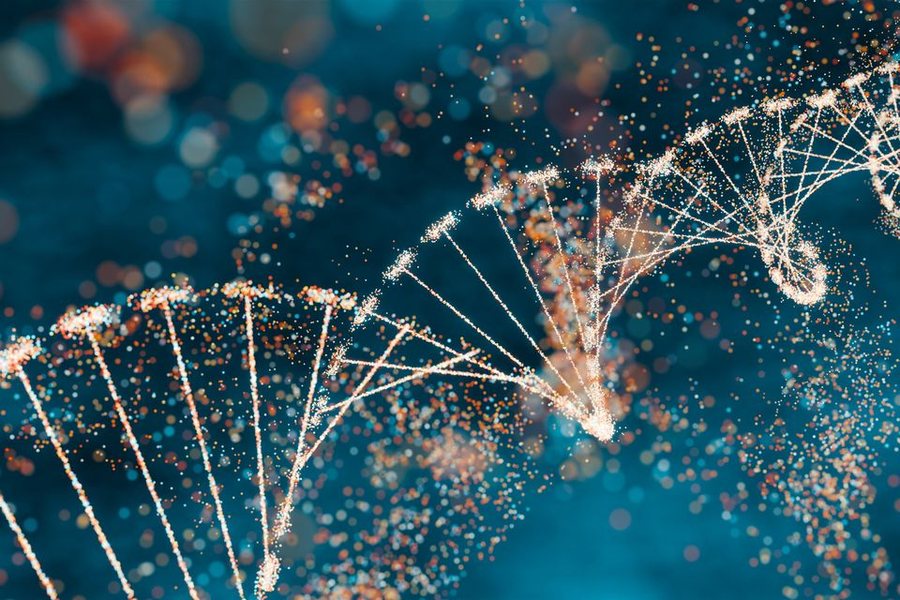
Work has begun on a controversial project that aims to create the building blocks of human life synthetically from scratch, in what is believed to be a world first, writes the BBC.
The study has until now been taboo due to fears that it could lead to "designer children" or unforeseen changes for future generations.
But now, the world's largest medical charity, the Wellcome Trust, has pledged an initial £10 million to launch the project and says it has the potential to do more good than harm, speeding up treatments for many incurable diseases.
Dr. Julian Sale, from the MRC Laboratory of Molecular Biology in Cambridge, which is part of the project, said that "it represents the next big step forward in biology."
The long-term goal is to, through this new control over DNA structure, better understand the role of genes and create treatments for diseases that currently have no cure.
"The sky's the limit. We're looking at therapies that will improve people's lives as they age, that will lead to healthier aging and less disease as they age."
"We are trying to use this approach to generate disease-resistant cells that we can use to restructure damaged organs, for example in the liver and heart, and even in the immune system," emphasized Dr. Julian Sale.
But critics fear the study opens the door to unscrupulous researchers seeking to create improved or modified humans.
“We like to think that all scientists are there to do good, but science can be repurposed for harm and for war,” said Dr. Pat Thomas, director of the campaign group Beyond GM.
“Science is not always neutral. There is a risk that this technology could be used for other purposes, including biological weapons or the creation of genetically ‘enhanced’ humans.”
Other professors, such as Bill Earnshaw from the University of Edinburgh, also say that current legal and ethical restrictions may not be enough to stop entities with dubious intentions.
To address these concerns, a parallel programme of social and ethical research will be led by sociology Prof Joy Zhang at the University of Kent. This programme will gather public and expert views on the potential impacts of the project.
Dr. Tom Collins from the Wellcome Trust, who approved the funding, told BBC News:
“This technology will develop one day, with or without us. Our approach is to do this now, in the most open and responsible way possible.”
This development comes on the 25th anniversary of the completion of the Human Genome Project, which for the first time mapped all of human DNA. The new project aims to go beyond that, not just to read the code of life, but to create it from scratch.
Every cell in our body contains a molecule called DNA that carries the genetic information it needs. DNA is made up of just four much smaller building blocks, called A, G, C, and T, which are repeated over and over in different combinations.







Lini një Përgjigje