


 Shkruar nga Pamfleti
Astrobiologists at the Max Planck Institute for Astronomy are searching for life in space. One star system in particular is of particular interest to them.
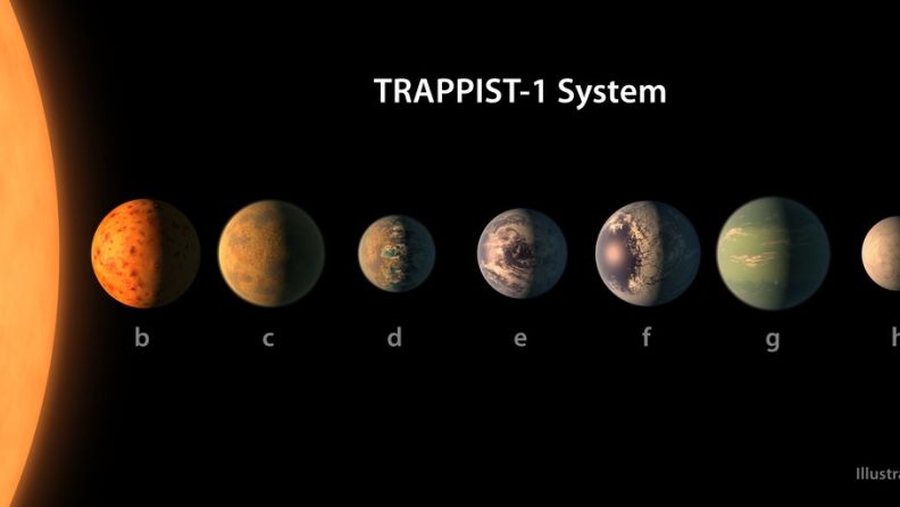
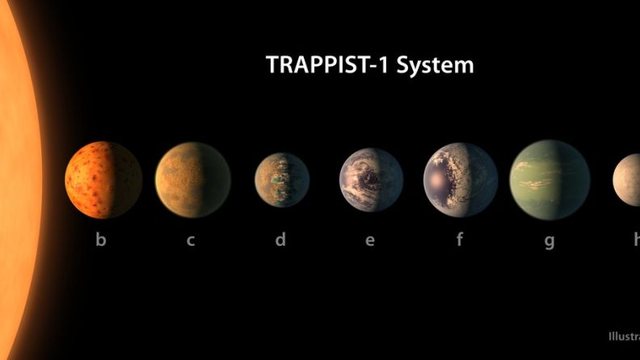
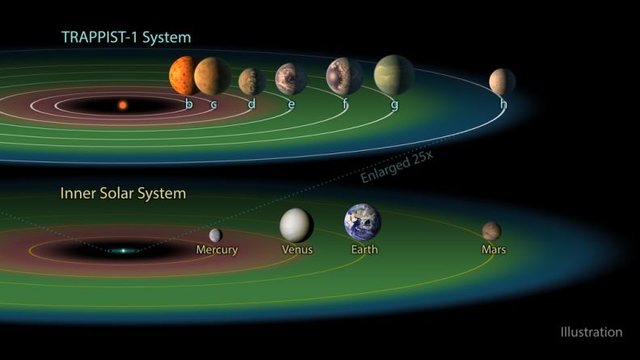
Seven worlds orbit a small star about 40 light-years from Earth. For astrobiologists, the TRAPPIST-1 system is something of a testing laboratory for what may be the biggest question of all: could there be life out there in space?
“ The system is extremely intriguing, ” says Eva-Maria Ahrer, a postdoctoral researcher at the Max Planck Institute for Astronomy (MPIA) in Heidelberg.
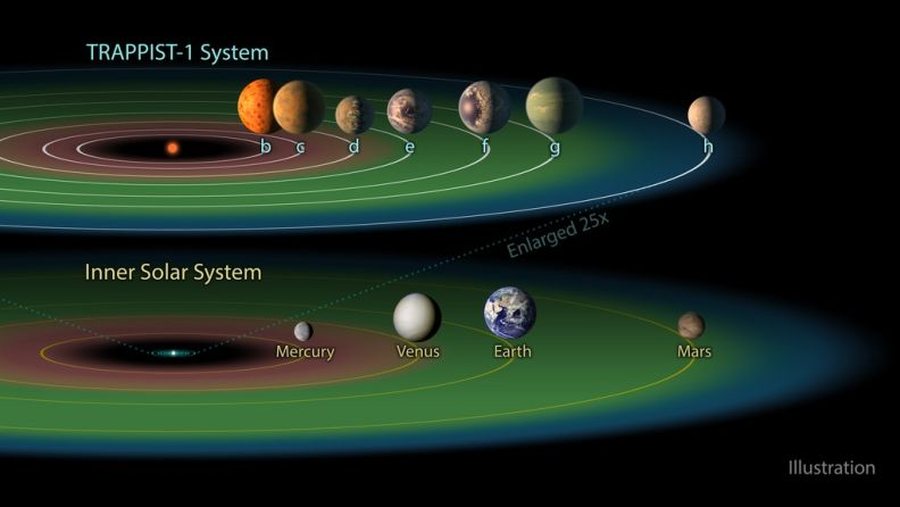
Some of the seven Earth-sized planets are located in the so-called habitable zone, the region where, in theory, liquid water and, therefore, life could exist.
-Decoding atmospheres using light
Researchers at the institute study the atmospheres of these distant planets. Using data like those from observations with the James Webb Space Telescope, they analyze which gases can be detected, and whether any of them are biosignatures that point to past or present life. To do this, they examine the starlight passing through a planet's atmosphere. By analyzing the brightness and color, they can determine which gases it contains.
" In the case of larger planets, we can often clearly detect water vapor or carbon dioxide, " says Ahrer.
But for small, Earth-like planets like those in the TRAPPIST-1 system, the task is much more difficult. Their atmospheres are thin and the signals are weak, often pushing measurements to the limits of what is technically possible.
-Can life exist on other planets?
There are complications caused by the stars themselves. TRAPPIST-1 is a so-called red dwarf, small and relatively cool, but very active. Radiation and stellar explosions can distort measurements and can also change or even strip planetary atmospheres.
“ The star is currently one of the biggest uncertainties when it comes to interpretation, ” says Ahrer.
It's intriguing to explore whether life could exist on planets orbiting a star that's nothing like the Sun. This uncertainty is precisely what makes the system so scientifically interesting. After all, TRAPPIST-1 is fundamentally different from our solar system.
"It's intriguing to explore whether life could exist on planets orbiting a star that's nothing like the Sun ," says Ahrer.
-Being in the habitable zone is not enough
So far, however, the findings have been disappointing. “Currently, there is no planet in another system for which we have convincing evidence of conditions favorable for life,” says MPIA spokesman Markus Nielbock, adding that the habitable zone itself is only a rough indication.
"This criterion is not particularly significant. Mars is also in such a zone, and yet it is hostile to life, " he says.
What will matter most is how quickly observation methods continue to improve and how accurately atmospheres can be analyzed in the future.
"With increasingly refined measurement techniques, significant progress in the search for a 'second Earth' is possible over the coming decades ," Nielbock concluded.






Lini një Përgjigje