


 Shkruar nga Pamfleti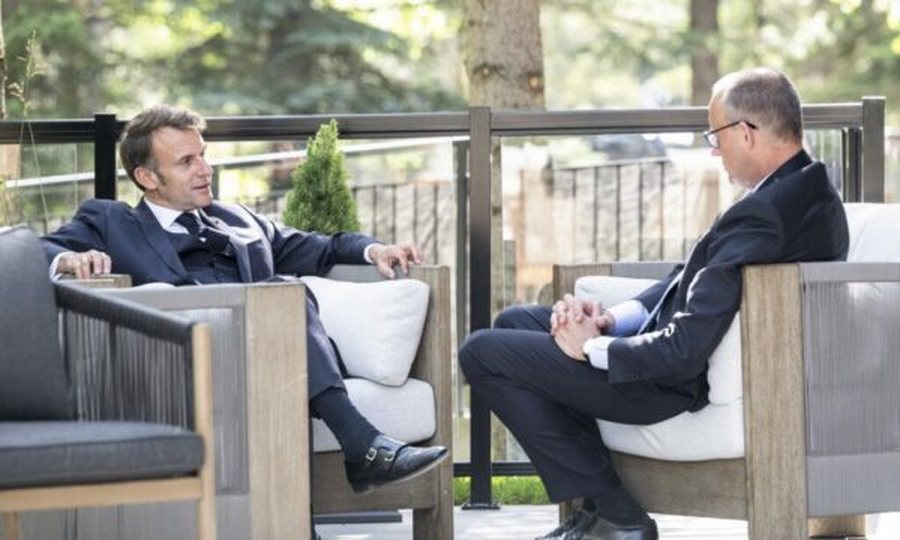
German Chancellor Friedrich Merz has provided detailed explanations regarding his proposal for a form of gradual integration of the Western Balkan countries into the European Union, an idea that he presented together with French President Emmanuel Macron.
During his stay in Tivat, Merz explained that the initiative aims to bring the countries of the region closer to European institutions before the completion of the full membership process. According to him, the proposal has found broad support both among the European Union member states and in the Western Balkan countries.
The German Chancellor said that the new phase will create opportunities for gradual participation in European structures. One of the envisaged forms is the inclusion of countries from the region as observers in European Council meetings, while a similar model could be considered for the European Parliament, if this is supported by the institution itself.
According to Merz, this approach aims to send a political signal that the enlargement process is entering a more concrete and dynamic phase. He stressed that each Western Balkan country will be treated on the basis of individual progress and that the process will focus on practical steps.
The Chancellor underlined that the main objective has not changed. According to him, the full membership of the Western Balkan countries in the European Union remains the ultimate goal, as the EU has a strategic interest in the integration of the region and the Balkan countries themselves continue to express their willingness to become part of the European bloc.
Merz argued that the current enlargement model forces candidate countries to wait until all negotiations and ratification procedures are completed before they can participate in European institutions. He said the new proposal aims to change this approach by creating intermediate forms of participation.
According to him, the implementation of the plan will also require formal decisions from institutions and member states, but the discussions held so far have shown support for a solution that will bring the region closer to the European Union more quickly.
Merz said that the citizens and governments of the Western Balkans must receive a clear message that the European perspective remains open and that the integration process will be accompanied by concrete benefits.
He mentioned several measures that could be implemented even without full membership, such as the inclusion of countries in the region in the European SEPA payment system, expanding participation in the Erasmus+ program, and integration into the European roaming system.
Meanwhile, in Kosovo, the proposal has been met with reservations. The Speaker of the Parliament, Glauk Konjufca, stated that Kosovo supports any initiative that accelerates the region's European integration, but opposes models that could create permanent forms of waiting outside of full membership.
According to him, Kosovo's position remains focused on full integration into the European Union and not on mechanisms that could replace or indefinitely postpone membership.



Lini një Përgjigje