


 Shkruar nga Pamfleti
Kosovo appears to be heading towards new extraordinary elections again, in the absence of a consensus to elect the country's new president.
A week before the deadline for parliament to elect the country's president, Kosovo appears to be heading towards new extraordinary elections. The two largest opposition parties, the Democratic Party of Kosovo (PDK) and the Democratic League of Kosovo (LDK), with whom Kosovo Prime Minister Albin Kurti held talks on the presidential issue, say that this issue is now closed, there is no agreement with the leader of the winning party, Vetëvendosje, Albin Kurti.
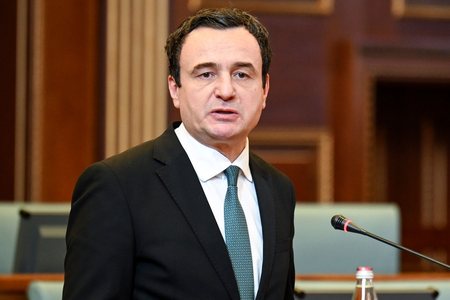
The Prime Minister on Monday, 20.04, after the failure of a deal with the leader of the LDK, Lumir Abdixhiku, said that the leader of the LDK had rejected all the offers he had made to him, thus publicly disclosing for the first time what he had offered to the LDK.
Offer for LDK
"We offered that the LDK, in co-government with the Vetëvendosje Movement and other partners, would have the deputy prime minister, the Ministry of Foreign Affairs and three other ministries. I preferred that Abdixhiku become my deputy prime minister and that we start a new chapter," Kurti declared, adding that he also offered the LDK the post of speaker of the Kosovo Assembly, but they refused.
After the rejection by the LDK, according to Kurti, Kosovo is heading towards elections, which he has called unnecessary.
"In this way, Kosovo is heading towards new, unnecessary elections that waste the state's time and the Kosovo budget's resources. New elections cost at least 10 million euros and will not bring a solution because we will not have the number of 80 MPs to form a quorum. We should have tried harder and our offer to govern should not have been rejected," Kurti declared.
LDK leader Lumir Abdixhiku, for his part, said that he did not accept Kurti's offers because he believes that the president should not be, as he puts it, "an extension of the government," just as a party, "referring to Vetëvendosje," cannot lead the three main institutions in the country, the Parliament, the Government, and the Presidency.
"We have not requested any position for LDK or for me, and with that, in these circumstances, LDK cannot do more. LDK leaves the discussion open with other parties. We have not heard any other proposal except that the president be from Vetëvendosje. LDK considers this issue closed from this moment on. We will get ready for the worst, most difficult and most incomprehensible scenario of new and extraordinary elections," said Abdixhiku.
Message to PDK
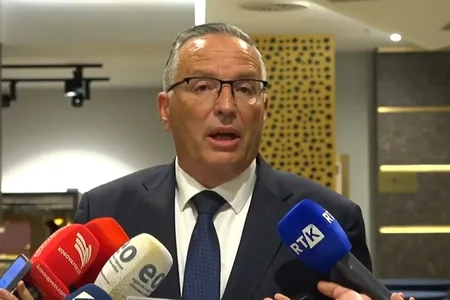
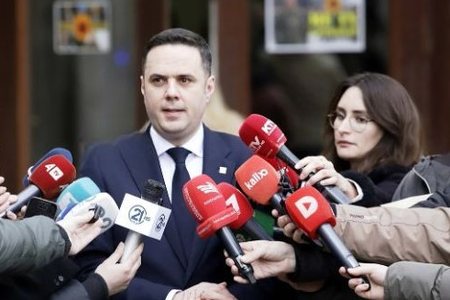
After failing to reach an agreement with the LDK, Kurti said he had also sent a message to the leader of the Democratic Party of Kosovo, Bedri Hamza, to see if he could reach an agreement with this party on the issue of the president, without disclosing his offer. The PDK, in the afternoon, convened the Party's Steering Council and for more than five hours of discussions, this party said that it "considers its contribution to the election of the president concluded."
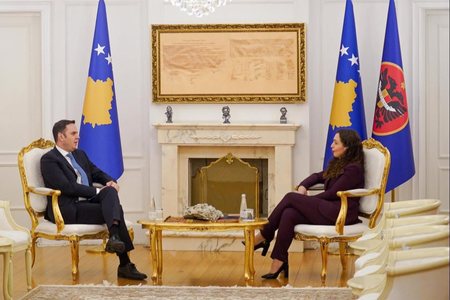
Albin Kurti meeting with Bedri Hamza Albin Kurti meeting with Bedri Hamza
"PDK has demonstrated full willingness to contribute to the election of the new President and to unblocking the situation, supporting the possibility of a consensual candidate, without any conditioning or request for inclusion in co-government. For PDK, institutional stability has been a matter of principle and state interest, not an object of political negotiation. Despite this constructive approach, the lack of political will and institutional seriousness on the part of the current government is once again making the election of the new President impossible. Consequently, PDK considers its contribution to this process to be complete," the PDK statement states, among other things.
It further states that this party assesses that "Kosovo is facing successive political and institutional crises, directly caused by the parliamentary majority, which through continuous blockades and lack of state responsibility is paralyzing the normal functioning of institutions, politicizing them and damaging civic and state interests."
Successive political crises
On April 28, the deadline set by the Constitutional Court to elect the president of Kosovo expires, and after this deadline, the parliament is automatically dissolved and extraordinary elections must be held within 45 days. The president of Kosovo, according to the Constitution, is elected with two-thirds of the votes in the first two rounds or with 61 votes in the third round, but 80 deputies are needed in the hall for the session to be held. The Vetëvendosje Movement, with its partners in government, the non-Serb minorities, has only 66 seats in the assembly, out of 120 seats in the Kosovo parliament. After the end of the mandate of president Vjosa Osmanitsi and the failure of the assembly to elect a new president, on April 4, according to the Constitution, the speaker of the assembly, Albulena Haxhiu, was appointed acting president, who cannot hold this position for more than six months. Haxhiu herself, who comes from the Vetëvendosje Movement, has repeatedly called on political parties to reach a consensus on the election of the president, saying that the country should not go to new extraordinary elections. / DW


Lini një Përgjigje