


 Shkruar nga Pamfleti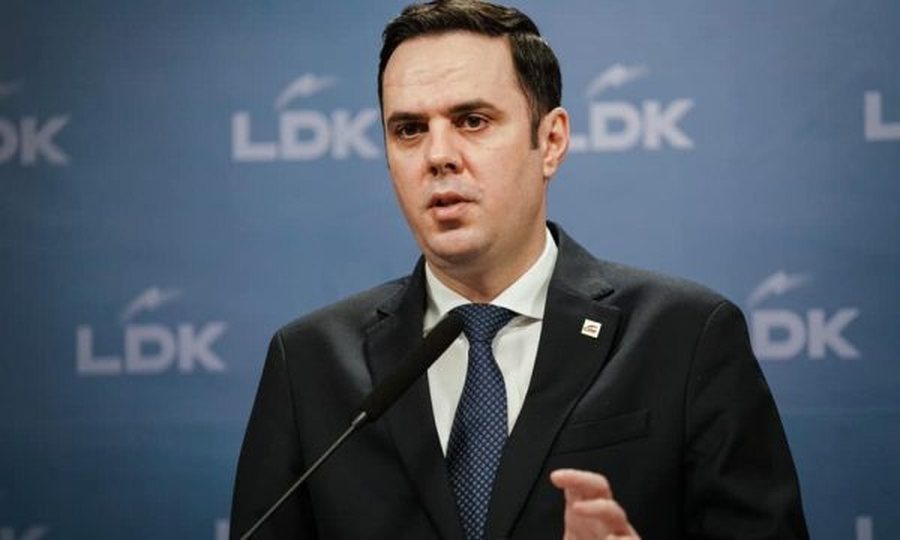
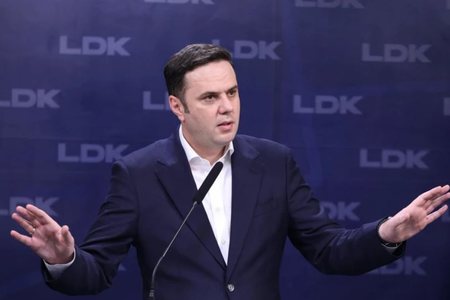
The debate over Lumir Abdixhiku's leadership is no longer just about the fate of the LDK leader. The clash has opened up a discussion about the strategy, political identity and ability of Ibrahim Rugova's party to return as a real governing alternative in Kosovo...
The public debate that has erupted within the Democratic League of Kosovo after the June 7 parliamentary elections has become the most important political test for the oldest party in the country. Although a formal procedure for the dismissal of Lumir Abdixhiku has not yet been initiated, developments show that the crisis goes beyond the figure of the leader and affects the political future of the LDK in a scene where the Vetëvendosje Movement remains the largest parliamentary force.
Former President of Kosovo, Vjosa Osmani, who led the LDK electoral list in the June 7 elections, stated that several meetings were held at the party headquarters where the discussion focused not only on Lumir Abdixhiku, but also on the political direction and priorities of the party for the coming period.
Osmani also explained that so far no signatures have been submitted to initiate the statutory procedure for dismissing the leadership. This means that the political debate has been made public, but has not yet entered the institutional phase.
Meanwhile, a group of LDK Assembly delegates has begun collecting signatures to call an extraordinary assembly, where the dismissal of Lumir Abdixhiku could be put to a vote. According to KOHA, the statute requires the support of 1/3 of the 355 delegates, or 118 signatures. As of Sunday, this threshold had not been reached.
The mechanism is foreseen in the LDK statute and constitutes the official way to challenge the party's leadership. The fact that the required number of signatures is missing shows that there is still no internal consensus to officially open the leadership race.
The initiative came after criticisms articulated immediately after the election results. The LDK branches in Peja, Lipjan and the Second Branch in Pristina demanded the resignation of Lumir Abdixhiku, arguing that the result did not meet expectations. The same position was expressed by the newly elected MP Hykmete Bajrami. In response, Abdixhiku demanded the resignation of the branch leaders in Peja and Lipjan, attributing to them the responsibility for the electoral performance in those areas.
Although the LDK increased its representation in the Assembly, the political dilemma remains open. In the June 7 elections, the party received 16.69 percent of the vote and secured 18 mandates, three more than in the December 28 elections, but remained the third largest political force in Kosovo. The numerical increase did not change the political balance and has fueled the debate about whether the current strategy is enough to restore the LDK as a contender for the country's government.
These developments reflect broader changes in the political system in Kosovo. The rise of the Vetëvendosje Movement in recent years has changed the relationship between government and opposition, weakening the traditional role of historical parties as the main governing alternatives. In this context, the crisis in the LDK is not only related to its leadership, but also to its ability to redefine political strategy and restore electoral trust.
Founded by Ibrahim Rugova, the Democratic League of Kosovo remains one of the most important parties of the post-war period and traditionally represents the political center-right. For this reason, developments within it have a wider impact on Kosovo's political life, as the functioning of an organized opposition remains an essential element of parliamentary democracy.
The debate has also been fueled by statements from historical figures in the party. Former LDK vice-president Agim Veliu called the demands for Lumir Abdixhiku to take political responsibility legitimate, arguing that after several election cycles the party has failed to return as the main alternative for governing Kosovo. He also criticized the way party leaders reacted to criticism from local branches. These statements represent his personal position and not the official position of the LDK.
So far, the internal challenge has not turned into a formal contest for the party leadership. The lack of the necessary number of signatures indicates that the balance of power within the LDK remains unclear, while the political debate has shifted from the figure of the leader to questions about the party's identity, strategy and future direction.
The way this crisis will end is expected to affect not only the future of the LDK, but also the configuration of the entire Kosovar opposition. In a political scene where Vetëvendosje continues to remain the dominant force, the ability of the LDK to return as a governing alternative will directly affect political balances and the formation of future coalitions.




Lini një Përgjigje