


 Shkruar nga Pamfleti
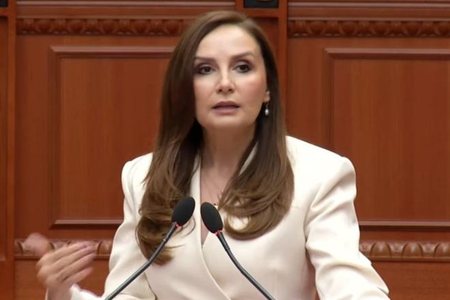
The strengthening of the lek has not been accompanied by a more developed economy or increased welfare for citizens. According to Democratic Party MP Jorida Tabaku, the depreciation of the euro is bringing direct consequences for immigrants, exporters, agriculture, tailoring and businesses that provide income in foreign currency, while making expenses in lek.
In a video published on social media, Tabaku rejects the idea that the current exchange rate level is evidence of the strengthening of the Albanian economy.
According to her, a strong national currency should be based on increased production, exports, productivity and competitiveness. She argues that none of these factors justify the euro's decline to current levels.
"The value of 93 lek that the euro has reached does not come from more sophisticated production, nor from the growth of the manufacturing economy, nor from increased productivity, nor from increased exports," she says.
The Democratic MP emphasizes that the impact of the exchange rate is particularly felt by businesses that receive cash in euros, but pay salaries, taxes and other expenses in lek. According to her, this situation automatically reduces their income and harms the competitiveness of exporters, tailors and domestic manufacturers in international markets.
Tabaku also discusses the effect that the euro's depreciation has on Albanian families who rely on remittances. She points out that the same amount of money sent by emigrants is now exchanged for less lek, reducing the purchasing power of thousands of families.
"Agriculture is lost, Albanian exports are lost, tailoring is lost, production is lost and the Albanian family is lost," Tabaku emphasizes.
According to her, the problem is not only related to the exchange rate, but to the economic model that, according to her, has created this situation. The MP argues that the Albanian economy relies less on production and exports, while it has become more dependent on foreign exchange and capital flows that do not necessarily originate from the real economy.
In this context, Tabaku states that the strengthening of the lek is not translating into benefits for the majority of citizens. According to her, while the perception of a stable economy is being created, in practice businesses are losing revenue, producers are facing difficulties and families are receiving less from remittances.
The DP MP is seeking a strategy that, according to her, supports the manufacturing sectors, exporters, agriculture and families affected by the exchange rate, attributing the situation to the economic model followed by the government.
"The Albanian economy is losing from the devaluation of the euro. Albanian production is losing. Albanian agriculture is losing. This is the result of an economic model that has failed today ," Tabaku concludes.



Lini një Përgjigje