


 Shkruar nga Mauro Carlo Zanella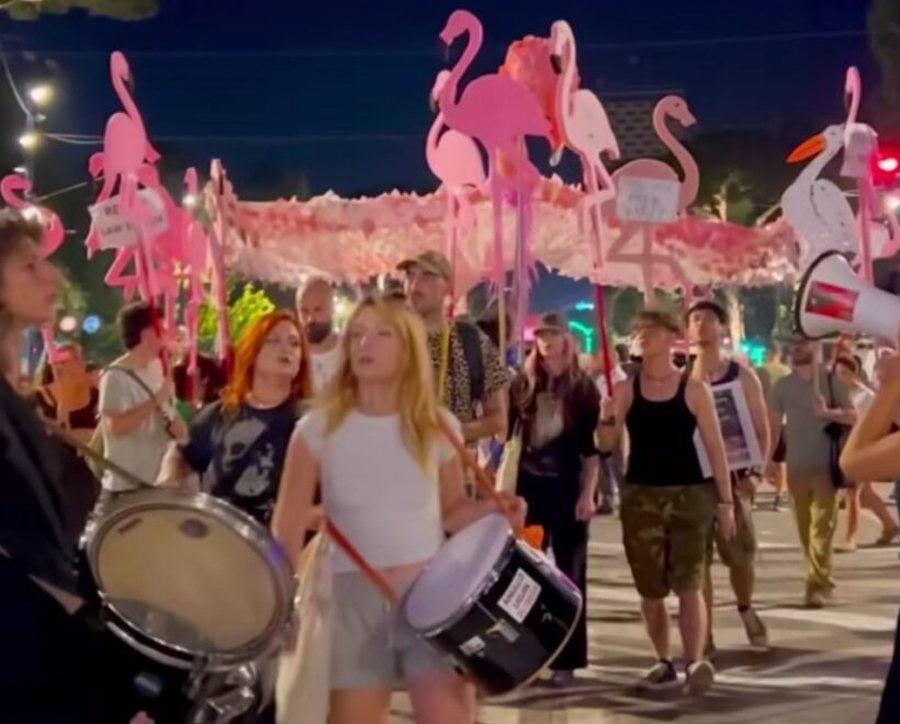
From the protection of pink flamingos to the revolt against oligarchy and systemic corruption, Tirana is experiencing a rare civic awakening. The Italian journalist's testimony on a movement that, according to him, is challenging not only the government, but the entire political and economic model that has dominated Albania for decades...
Having returned to Italy two days ago, after a trip to Albania, I continue to follow through social networks and people I met there what is now called the “Flamingo Revolution.” I have been to Tirana three times and this time I had the opportunity to experience up close a phenomenon that, I believe, can teach us a lot.
From a country where until a few weeks ago political and social apathy seemed to reign, today comes a powerful example of civic engagement, peaceful resistance, and hope for change.
Only on May 11, 2025, Edi Rama's self-proclaimed Socialist Party had received 53.27 percent of the votes, while its Social Democratic ally, linked to the Tom Doshi clan (the boss of Shkodra), had secured 3.1 percent.
On the other hand, the opposition led by Sali Berisha had received 32.93 percent. In total, the government and what many protesters consider to be the other side of the same political coin controlled 89.3 percent of the vote.
Three small opposition parties - two from the center and one from the left - split the remaining electorate and secured one mandate each. However, turnout in the election was only 44.83 percent, a figure that testifies to the citizens' great distrust of the political system.
In late May, peaceful protests, initially launched by just a few dozen environmental activists and the small Together Movement party against Ivanka Trump and Jared Kushner's resort project on Sazan Island and the Narta Lagoon protected area, took an unexpected turn.
The violent reaction of the private security guards guarding the area was filmed and the footage quickly spread on social media. What began as an ecological protest turned into a broad civic movement within days. Public outrage grew rapidly, bringing tens of thousands of citizens to the streets.
Tirana became the epicenter of the protests, which have been taking place non-stop for 50 days. Every evening, rallies are organized in front of the Prime Minister's Office building, followed by marches that traverse various streets of the capital, involving more and more citizens.
"Albania is not for sale", "Albania needs a revolution", "Resign!", "It's over for you", "No to corruption", "Rama and Berisha in prison", "We want a new Albania" are just some of the slogans heard every day at the protest.
Starting from the protection of a natural oasis where pink flamingos nest, the movement quickly expanded to a much broader range of concerns related to the country's misgovernance. At the heart of the revolt is corruption, which, according to protesters, has reduced politics to a never-ending race for power, neglecting the public interest and solving the real problems of citizens.
The protests have involved not only residents of Albania, but also Albanians in the diaspora and those living in neighboring countries. At the core of their demands is the need for a sustainable development model, one that creates jobs in the service of the community and not in the function of foreign capital speculation or the profits of a handful of oligarchs.
Slowly, the movement was joined by pensioners living on minimal pensions, exploited workers, young people forced to emigrate due to lack of prospects, people with disabilities who feel abandoned by the state, students and entire families seeking a fairer Albania.
What is most striking is the peaceful nature of this movement. Despite the great anger that the economic and political situation has produced, protesters have chosen to express themselves through marches, speeches, and civic organizing, avoiding clashes and violence.
The peaceful revolt of this people, who persistently continue their daily struggle, should serve as inspiration for all peoples who see their rights threatened by a narrow elite of people, who are increasingly enriched, without any ethical principles and with the complicity of corrupt politicians.
Regardless of how this movement will end, one thing already seems clear: a civic voice has awakened in Albania that no longer accepts silence.




Lini një Përgjigje