


 Shkruar nga Pamfleti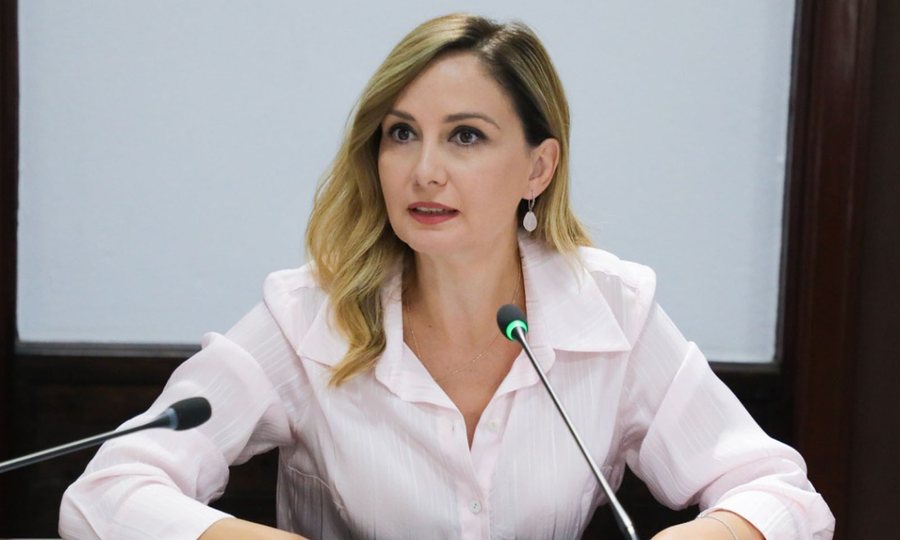
Democratic Party MP Jorida Tabaku has reacted again to the historic devaluation of the euro, claiming that the unusual strengthening of the lek cannot be explained only by tourism, foreign investments or remittances, but is related to the entry of dirty money into the Albanian economy.
In a video published on social networks, Tabaku stated that the euro has reached its lowest historical level since its introduction into the Albanian economy, while, according to her, the government can no longer deny this phenomenon.
"The devaluation of the euro by almost a third of its value and the fact that today the euro has reached its historical minimum since its introduction into the Albanian economy, is a fact that no one, not even the government, can deny," said Tabaku.
The Democratic MP referred to SPAK's recent investigations, emphasizing that in just one of the operations conducted in recent weeks, 491 assets suspected of having been created through money laundering were seized.
According to her, sectors such as construction, tourism and gambling have long been identified as high-risk areas for money laundering, while criminal investigations, according to Tabaku, are confirming this concern.
She claimed that the criminal activity under investigation for the period 2019–2021 is related to the circulation of around 2 billion euros per year, capital that, according to her, has influenced the deformation of the exchange rate, competition and the real estate market.
"There is no economic model, no explanation related to foreign investment, remittances or tourism, that justifies this devaluation of the euro," she declared.
Tabaku also focused on the impact that, according to her, this phenomenon has on exporting businesses, especially the garment industry, which generates revenues in euros, while covering costs and salaries in lek.
"How can a fashion house that manufactures and ships products abroad compete with money laundering, when the income from its products has been devalued by almost 30 percent?" she asked.
The MP also raised concerns about rising apartment prices, arguing that the middle class is finding it increasingly difficult to afford to buy a home.
"Over 90 percent of the Albanian population suffers the consequences of money laundering: on the dinner table, in their pockets, in daily expenses, in business and in increased prices," said Tabaku.
In conclusion, the DP MP described the situation as an alarm for the Albanian economy, claiming that the depreciation of the euro is not an indicator of a stronger economy, but a consequence of a system deformed by informality, corruption and criminal capital.
"This is the greatest damage being done to the Albanian economy. This is the criminalization of the economy," Tabaku concluded.


Lini një Përgjigje