


 Shkruar nga Pamfleti
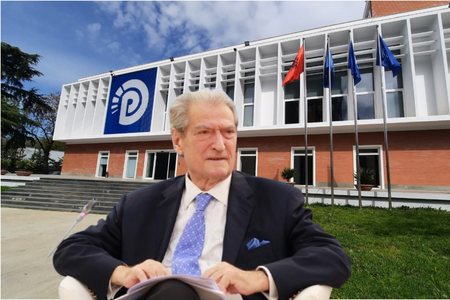
The DP led by Berisha hopes to raise international awareness of the allegations of election manipulation. Berisha was in Brussels where he participated in a summit of the IDU, a grouping of parties from around the world that belong to the spectrum of center-right and conservatives. This is Berisha's first meeting after May 11 with one of the groups that supported him even before the elections, even approving a resolution...
On May 11, the 'Greater Albania Alliance' coalition led by Sali Berisha received perhaps the most disappointing result since 1997 in the parliamentary elections.
With only 50 deputies in the new Parliament hall compared to Prime Minister Edi Rama's 83 mandates, Sali Berisha's opposition will find the parliamentary battle that begins in September, when the new Parliament is constituted, even more difficult.
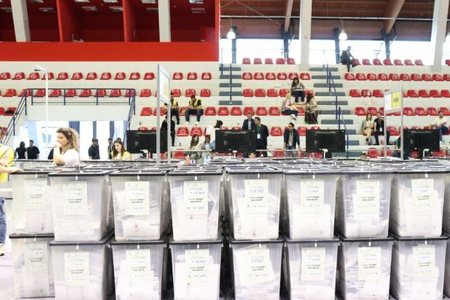
A day after the elections, Berisha warned against recognizing the election results, accusing Edi Rama and his government of distorting the will of the Albanians. Berisha said that there are facts and evidence that prove what the Democrats consider an 'electoral massacre'.
On the other hand, Prime Minister Edi Rama received a series of messages from his European counterparts congratulating him on winning his 4th governing term and successfully passing the European Political Community summit held in Tirana.
An opposition attempt to stage a protest to sensitize delegations attending the Summit about what they consider to be 'vote theft' was accompanied by incidents between several opposition figures and media representatives. These incidents even had more resonance than the purpose for which the protest was called.
Now, Berisha's Democratic Party hopes to raise international awareness of the election fraud allegations. Berisha was in Brussels to attend a summit of the IDU, a grouping of parties from around the world that belong to the center-right and conservative spectrum. This is Berisha's first meeting since May 11 with one of the groups that supported him before the elections, even approving a resolution.
But it seems that the coming weeks will be crucial, at least according to the plan that the Democrats had in reserve before the elections.
All the evidence and facts, which they claim are related to the electoral manipulation, will be submitted not only to the European Parliament and the Parliamentary Assembly of the Council of Europe, but to every European chancellery and beyond. The attention will be on the US Congress and Senate. Germany, Great Britain, Austria, Greece, are also expected to be the first chancelleries to be informed about what Berisha's Democrats claim: the electoral massacre.
As during the campaign, Berisha will lead the process in the denunciation phase. Also part of the group that will engage with the international factor will be Oerd Bylykbashi, Albana Vokshi, Jozefina Topalli, Fatmir Mediu, Tritan Shehu, but also Jorida Tabaku. The latter won the mandate from the open list, being the most voted name in the open lists of the DP, but also with a fairly good reputation in relation to internationals, which will be used in the "battle" that seems to be moving beyond the borders.
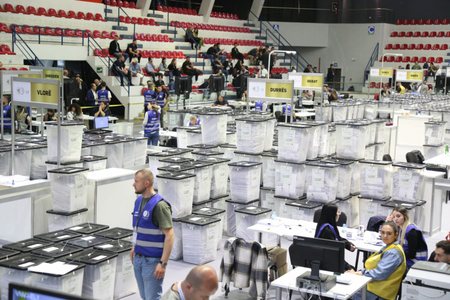
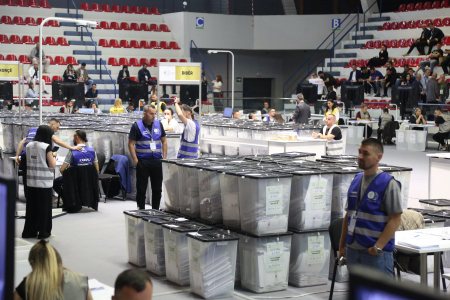
After the vote counting is completed, the Democrats will start contesting the results in the electoral institutions and in parallel, any evidence will be filed with international chancelleries and institutions. The goal is that by the time the final report on the May 11 elections is drafted by the OSCE/ODIHR, Berisha will have informed the international factor that the process was manipulated.
The former Prime Minister, who aimed for a 3rd return to power on May 11, expressed optimism that after the preliminary report on the ODIHR elections, the opposition would achieve its final goal. Berisha brought to attention the results he had in 2001, when he lost the elections almost under the same conditions, but at that time he managed to prevent the PS led by Fatos Nano from receiving the result of 84 mandates, i.e. the votes that enabled him at that time to elect the President and all the heads of independent institutions, without the consensus of the opposition.
But from 2001 to today, a full 24 years have passed and many things have changed, not just in the configuration and way in which institutional leaders are elected, but also on the world stage.
The next two months are expected to be decisive in terms of the claims of Berisha's DP and its allies in relation to May 11, while there is still no clear position on what the Democrats will demand in relation to the process. Berisha has said in a public statement that the stolen 'loot' must be returned. It now remains to be seen whether he will achieve his goal or archive the next failure. /Pamphlet/


Lini një Përgjigje