


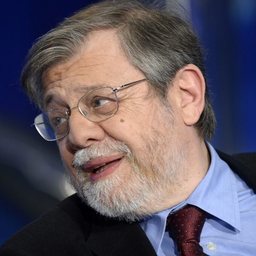
 Shkruar nga Angelo Panebianco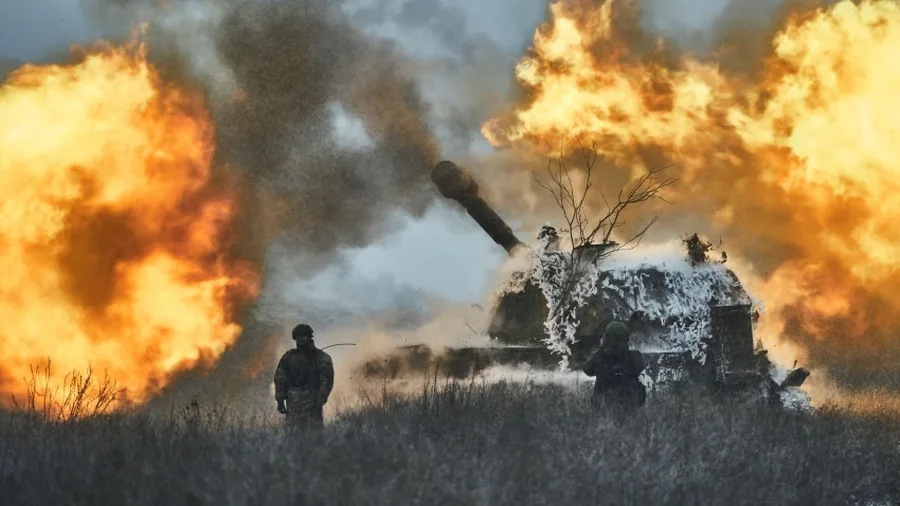
In the past, to militarily expand an empire, it was usually enough to eliminate the elites of the conquered peoples...
Niccolo Machiavelli writes in The Prince that it is difficult to maintain the rule of conquered populations if they have different customs or languages from the conquerors, or if they are accustomed to living freely. This is the real reason for the fragility of Vladimir Putin's imperial ambitions. In the past, to expand an empire militarily, it was usually enough to eliminate the elites of the conquered peoples. The populations were then incorporated into the empire without resistance. Except in rare cases, they accepted submission to the rule of the conquerors. But in the contemporary world, the combined forces of nationalism and democracy have changed the situation.
Nationalism is based on the principle that only a government whose members share the same nationality as the governed is endowed with the seal of legitimacy. Democracy, on the other hand, implies the claim that the inhabitants are citizens qualified for rights as well as duties rather than subjects, and that they have the power to have a say in who and how they should be governed.
Putin, in his dream of expanding his empire, underestimated the immense weight of these two forces. Superior military capability could allow him to dominate the enemy. But even if Putin were to succeed, including Ukraine or large parts of it and perhaps aiming to conquer other states in the former Soviet Union, the expanded empire would have feet of clay. It can be safely assumed that it would not last long.
It would be forced to apply such massive doses of coercion against hostile populations that it would exhaust and weaken itself. It is extremely difficult to govern or control someone else for a long time using coercion alone.
It is true, and it has so far worked to Putin’s advantage, that even the current US President, Donald Trump, is driven by a vision in which there is little or no room for the wishes of people who find themselves forced to defend themselves, their territory, and their right to freedom in the face of imperialist aggression. Trump, like Putin and Xi Jinping, seems to think that the only things that matter are negotiations between himself and those who lead the other great powers. In Trump’s version, such agreements, in order to last, require the economic comfort of the powers involved. The sanctions recently imposed on Russian oil seem simply part of a negotiating strategy.
Given his worldview, Trump fails to pay attention to two facts. The first, whether on Ukraine or Taiwan, is that economic convenience is not the primary driving force behind the invasion of Ukraine or the threat of invasion of Taiwan. Instead, there are two circumstances: on the one hand, the imperial ideal on which the rulers of Russia and China rely for much of their legitimacy in the eyes of Russians and Chinese; on the other, the fear of the spread of the virus, the fear that, in the case of Ukraine and Taiwan, democracy might serve as a “bad example” for Russian and Chinese citizens, that is, that, in the long run, it might foster “democratic fantasies” in the minds of these citizens.
The second fact that Trump, like Putin and Xi Jinping, underestimates is that various human groups, in the contemporary era, are no longer passively at the mercy of great powers, no longer dutifully doing what these powers order them to do. Thus, in the case of Ukraine, Trump is not only confronted with Putin’s rigidity, his unwillingness to end the war without being able to claim victory. He is also confronted with the unwillingness of Ukrainians to submit to any dictates agreed upon between Trump and Putin. It is not just Zelensky who is “stubborn.” It is Ukrainians who are stubborn, unwilling to let others decide their fate and that of their country.
Although these are very different situations, similar forces are at work in the Middle East. The weaknesses of Trump’s peace plan are well-known. Its main strength lies in the involvement of Arab states, which are certainly no strangers to the prospect of lucrative deals that Trump has put on the table. It must be said that even in Israel, there are forces, especially the ultra-Orthodox religious component, that underestimate the power of nationalism, in this case, Palestinian nationalism.
Sooner or later, perhaps sooner than later, a Palestinian state will emerge. If Israel's security is guaranteed, if the Palestinians are no longer led by the forces that seek its destruction, then the creation of a Palestinian state will also be in the Israeli interest. Whether it concerns Ukraine or Palestine, it is no longer possible to close Pandora's box: the nationalist spirit can no longer be kept in a cage.
Of course, a potential Palestinian state would offer stronger guarantees for all Palestinians first and foremost, but also for Israelis, if it adopted democratic rules and procedures: except for fanatics, most citizens of a democracy are usually unwilling to support leaders who are willing to undertake war adventures, with all the losses and destruction that this entails.
This conclusion applies to both heads of government and observers of international politics. It is right to pay attention to what leaders do. But if we do not also take into account what ordinary people think and want, conflicts cannot be understood or managed./ Adapted from “Pamphlet” by “Corriere Della Sera”



Lini një Përgjigje