


 Shkruar nga Lutfi Dervishi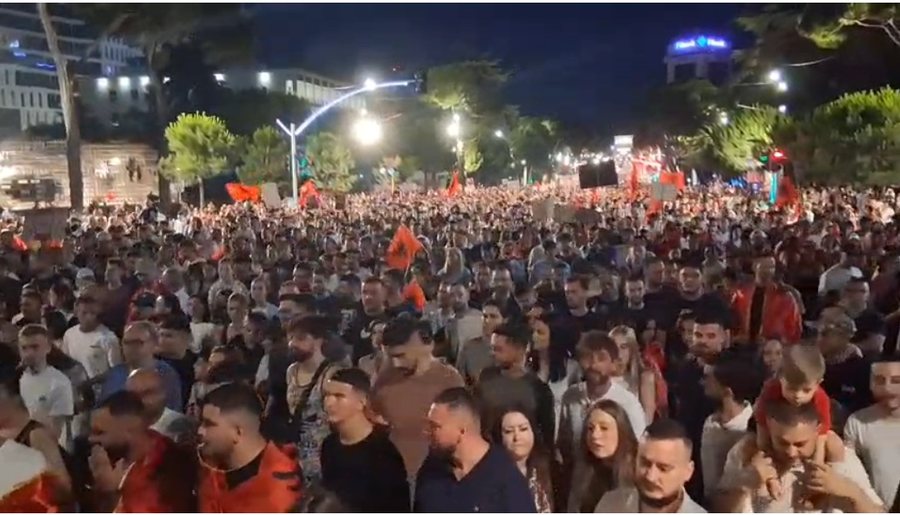
Society in the streets is protesting both against the government and against the old way of doing politics, of which the traditional opposition is also a part.
After more than two weeks of non-stop protest, the question is no longer how long the resistance in the streets will last, but how the political system will react.
Among the many slogans, the one that defines this moment is "New Albania" - a clear demand for a change of paradigm.
Political history shows that when a critical mass of discontent builds up in society, it sooner or later finds representation. The question that will define the coming weeks is: Who will read and who will "catch" this change first?
The current dynamics dictate four possible scenarios:
1. Co-optation by power: Changing the rules of the game without changing the actors.
This is the most pragmatic scenario for the ruling party. If the government continues to treat the protest as a passing "blip/wave," it risks misunderstanding the depth and scope of the crisis.
Dissatisfaction, among other things, stems from fatigue with the concentration of power, greed, and arrogance.
To survive, the government may choose to change first, not by retreating, but by opening up the game; changes to the electoral code, opening up lists, or new mechanisms of direct democracy (referendums). For the SP, this would be a forced "self-correction" process to recover lost ground before crashing into the tide.
2. Challenge from the new:
The civic movement (along with the new parties) that are being fed by this protest have the moral advantage, but they suffer from fragmentation and the genetic disease that everyone thinks they are "first." Currently, they risk competing with each other for second or third place in a race where the rules of the game have not yet been corrected.
For this pole (without excluding a new party) to be the winner of this moment, it must move from the phase of spirit and anger to the phase of structure and coordination. If they manage to build a minimum common platform and absorb, channel and structure the energy of the square, they can become the main beneficiaries of this equation. If not, the energy will be dispersed and will return to apathy and disappointment.
3. Conventional opposition
The largest opposition party finds itself faced with a paradox: this is the largest post-communist protest, but it is not taking place under its own banner. The public is protesting both against the government and against the old way of doing politics, of which the traditional opposition is also a part.
The opposition can only benefit if it understands that declarations of "support" are not enough. It must change itself before it claims to recycle power. This requires a radical openness to new figures, the closing of old accounts of internal squabbles, and a program that resonates with the part of the party that was not publicly visible until yesterday.
The most dangerous scenario remains that of the status quo: attempting to ignore, ridicule, compromise, or hijack the protest, waiting for it to die down from time consumption or fatigue.
4. Radicalization
There is a breaking point where the government's strategy of exhausting the protest backfires. If it continues with "we do our job, you do yours," the situation can spiral out of control, no matter how trivial the incident.
The moment citizens feel that no one is listening to them by marching, they may decide to change course and, when no one is able to control the protest anymore, the scene shifts towards a clash.
At this point, the cost is no longer simply political for one party, but existential for the stability of the country.
Whatever the outcome, this protest has already produced a result that time will not undo: it has broken fear and apathy and created a new political climate. Public space has been reconfigured and citizens have realized that they are not alone.
In this new reality, the winner will not be the one who resists the longest, but the political actor who will understand the fastest that the country has changed forever.







Lini një Përgjigje