


 Shkruar nga Thoma Gëllçi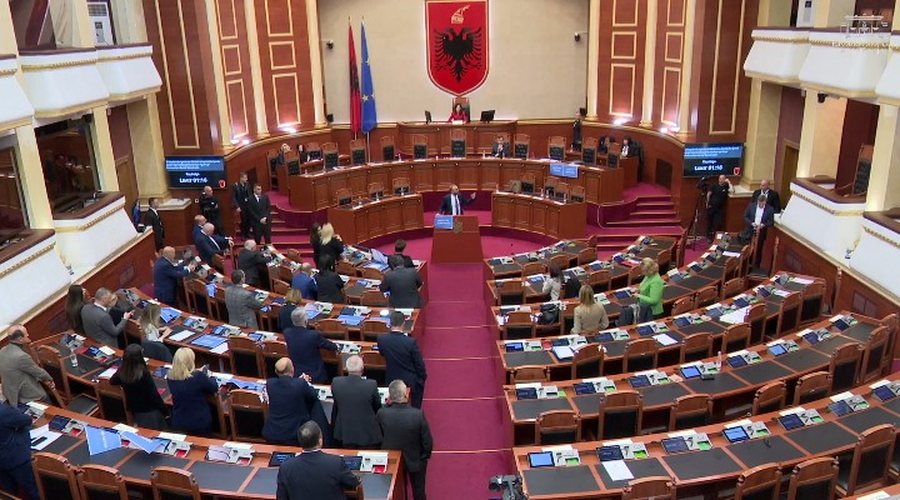
The parliament has turned into an endless television soap opera. The sessions are monologues that begin with “People of Albania!” and end with “Thank you for your attention!”. The opposition speaks to get into the news, the majority to stay in line....
When I published an article a few days ago comparing the way American and Albanian democracy work in approving the budget, there were many opposing reactions. Some told me: "What if a compromise is not reached, what happens?! In Albania, but also in Greece, this compromise would never be reached, since the goal is to overthrow the government."
Another, with the usual Albanian realism, added: "If that American system were practiced in Albania (I think Europe also functions like Albania), that budget would never be approved. (Albanian fury!) In our country, the opposition without power behaves as if it has everything in hand."
Both, in their own way, were right, because the system we have built is such that even if you want to compromise, you have no one to talk to. But at the same time, this shows that my first article left many things unexplained. I am also convinced that if you only change the law on the approval of the budget, nothing will happen. The opposition will never allow the budget to pass, because its goal is to overthrow the government. And no constructive criticism can be expected from the majority, because the deputies in the hall (all of them without exception) do not represent the people, but the party.
In theory, Albania is a parliamentary republic with a separation of powers. In practice, it is a multi-branch government, where every other branch of government is fed by the majority's core. I can even say that the Parliament itself is simply a branch of the government. In its current state, the Parliament of Albania is no longer a legislative power, but a tool of political reproduction. The President, who leaves Parliament only with the will of the parliamentary majority, is not above the parties, but another branch of the government that changes only because his offices are not in the same building as the Prime Minister.
As for independent justice, it is simply an illusion. In Albania, they call SPAK justice, when in fact justice should be the court, while the prosecution is only one of the parties in the process. As for the public administration? It remembers every day who appointed it. In a normal country, powers are divided to control each other; in ours they are united so as not to speak.
Don't think that in the US Americans are more politically cultured than Albanians or that the political war is milder. No, the political war is fierce, but the opposition there does not aim to overthrow the government. And why? Because the government cannot be overthrown. There are no early elections in the US. Even if a president is dismissed, he is immediately replaced by the vice president according to the constitutional order. Political war aims to politically discredit the opponent for the next elections, not to overthrow the system.
In the US, all three branches of government are elected by the people through separate elections. That's why there are elections for the president, for congressmen and senators, and even for judges. It has often happened that the president is from one party, while the congress is from another. This creates real balance.
Meanwhile, in Albania, popular representation has died quietly. At least in Enver's time, there was a farce: the party candidate was announced in every village and people listened to his speech about the "great achievements of socialism." Today, there is no speech, no candidate to recognize, no opportunity to change him. The people no longer choose, they approve the list that comes to them from the party office. Once we voted for a single candidate, today we vote for a closed list, that is, a group of candidates that others have chosen for us.
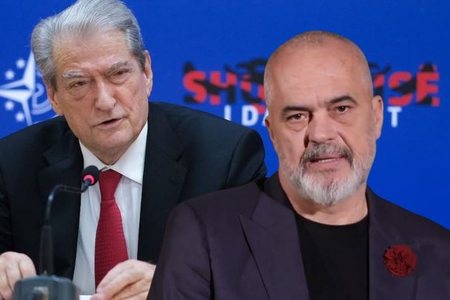
This system did not come about by chance. It was the product of the agreement of April 2008, when Sali Berisha and Edi Rama sat down at night to change the Constitution. It was said that it was “for modernizing the system”, but in reality it was for concretizing power. Deputies are elected from closed lists and thus the parties gained absolute control over representation. The party leader decides who enters, who leaves, who speaks and who remains silent. From that night on, Albanian pluralism received the final blow: the people were excluded from the game and democracy became the property of the party leaders.
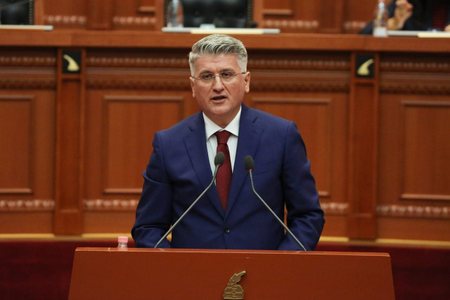
The parliament has turned into an endless television soap opera. The sessions are monologues that begin with “People of Albania!” and end with “Thank you for your attention!” The opposition talks about getting into the news, the majority about not getting out of line. In the end, everything ends with green cards raised in perfect synchrony, like soldiers on parade.
Under these conditions, it is useless to talk about a “balance of power”. We only have a balance of emotions: when one side is happy, the other is angry. And this is the new definition of Albanian democracy: an order where everyone talks about the people, but no one listens.
In normal countries, political debate is a clash of ideas; in Albania, it is a clash of microphones and chairs. The argument is not important, but the volume. A minister presents the budget, an opposition MP calls it a “corruption budget”, another from the majority calls it a “transformative budget”. Shortly after, the vote: 74 in favor, 42 against. And the word “people” is mentioned dozens of times, but never to be questioned. The people are like the studio audience: they applaud when the lights go on.
Someone might say: “The country has changed a lot, we have become part of the world.” It is true, we have become part of the world, but with the opposite instruction manual. While Western democracies fear the concentration of power, we fear its distribution. Here, everything that is divided is seen as a loss: power, wealth, even microphones. And we proudly say: “We have stability!” But, ironically, the highest stability is provided by dictatorship.
In this “stability,” power does not change, it only circulates. Whoever is in opposition is preparing to inherit the same system. No one wants the separation of powers, because it would take away something precious: the security of control. Each rotation is like the changing of the palace guards — the parliament remains the same, only the uniforms change color.
I often hear it said that the Albanian people are tired of politics. No, the people are tired of the lack of it. Politics is the art of debate, of choosing between alternatives. What we have is power management with a democratic vocabulary. Reforms are like daily makeup: the powder changes, but the face remains the same.
At the end of the day, this creates a political culture where the word “compromise” has become an insult. The MP who thinks differently is called “bought,” the journalist who asks too many questions is called “paid,” the citizen who thinks “disappointed.” And so, slowly, society learns to stop asking questions.
Instead of asking “who wins,” perhaps we should ask “who loses.” Because every time we vote for closed lists, every time the budget passes without debate, every time institutions fall silent, we gradually lose the idea of representation. And when it loses representation, democracy remains silent.
This is the greatest irony: in the name of stability, we have built a system that has no brakes. Each power is in a love affair with the other and all share the role of sovereign among themselves. The people are there only as a formality, like that witness at a wedding who is asked at the end: “Do you agree?” — and answers “yes,” because the ceremony must continue.
While the world looks for ways to limit power, we look to make it more comfortable. And in this country, everything has an expiration date, except power.
Therefore, if someone asks me today if Albania has a separation of powers, I will answer with a smile: yes, we do, but it is all shared at the same table. And at that table, the green card is king.
Therefore, when I write about the need for compromise, I am not talking about changing a specific law, but about the urgent need to restore the right to representation. The people must have their own representatives in the Assembly.


Populli do ti ketë përfaqësuesit e vet në Kuvënd, edhe kur, 'Kuvëndet e partive' do jenë vullnet i të përfaqësuarëve.