


 Shkruar nga Irena Beqiraj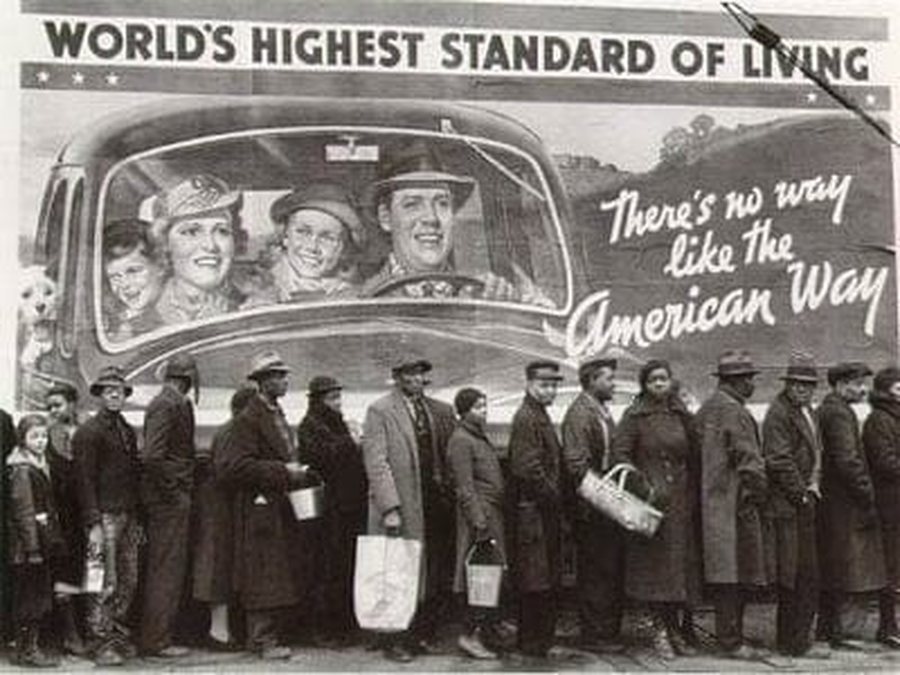
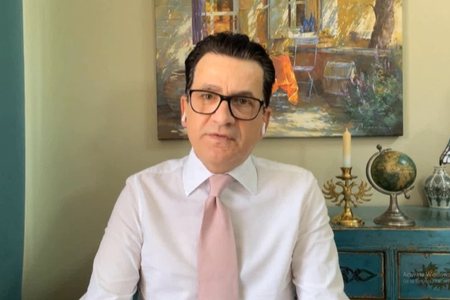
All of this came to mind as a provocation from an even more brutal debate between two well-dressed and beautiful women (one a minister and the other an opposition MP), who, via video call, debate and refute each other with "measurements" about poverty in Albania.
On a frosty winter morning in 1933, a photographer in New York City captured dozens of men in tattered coats standing in the snow, in rows, with sacks in their hands, their eyes downcast. In the background and above them, a large billboard showing a smiling family in a shiny car dominated the scene, with the slogan: "The highest standard of living in the world."
A truly brutal combination.
All of this came to mind as a provocation from an even more brutal debate between two well-dressed and beautiful women (one a minister and the other an opposition MP), who, via video call, debate and refute each other with "measurements" about poverty in Albania.
I am very modestly bringing to the attention of the two economists that if there is an economic concept where quantitative measurement has no value in having the final say, it is poverty.
Poverty was first discussed in the sterile language of data in 1899, when Seebohm Rowntree, the son of a wealthy businessman, set himself the task of determining a "poverty line" by calculating how much it cost to provide basic food, shelter, and clothing.
Anyone who could not afford to buy these basic foods, which included a portion of pea pudding with bacon for Sunday, was below the poverty line.
Since then, the idea of a poverty line and measuring the percentage of the population living below this line has not gone out of fashion, while the lines have been expanded to two, the absolute line and the relative line.
According to INSTAT, in 2024, 19.2% of Albanians live at the absolute poverty line or with an average monthly income below 27,028 lek per individual. While, 40.5% of the population live below the relative line, meaning 40.5% of society is at risk of poverty or social exclusion. And this must be said to be the highest figure in Europe.
In 1779, Adam Smith in his book "The Wealth of Nations" wrote: "A linen shirt, for example, is not, strictly speaking, a necessity of life. The Greeks and Romans lived very comfortably without wearing linen. But, at the present time, in the greater part of Europe, an honourable workman would be ashamed to appear in public without a linen shirt..."
Smith's goal was not only to show that poverty is relative, but, more importantly, that it should be closely linked to participation in society.
Because above all, we are social beings, and just as we need bread and a bed to sleep in, we need to socialize.
Well, Smith tells us that if a person does not have the necessary money to participate in society, even though the Eurostat, Instat, or World Bank manuals do not include them among the poor, they are poor.
But let's move on to the 20th century. Amartya Sen, the Nobel Prize winner in economics, has an even more interesting definition of poverty. He defines poverty as the lack of freedom.
And the argument here is no longer whether they have bread and margarine or the necessities defined in the World Bank or Eurostat manuals, but whether they are truly limited in what they can do in their lives. This approach goes beyond the simple measurement of income and focuses on multidimensional aspects of human well-being, such as access to education, health care and the ability to participate in society, or political freedom.
In this sense, poverty is when a pensioner's day turns into a battle over whether to eat three meals a day or buy medicine.
Poverty is feeling the hollow, gnawing pain of an empty stomach. Spending a school day with a headache, not because you're sick, but because there simply wasn't enough food in the house.
Poverty is the mother who skips meals so that her children can eat, a quiet act of sacrifice that will never appear in any institution's statistics; it is the worker who puts off the day with a bottle of water and two slices of bread, working 16 hours as the last test of survival; it is the girl who kills herself not only because her friends make fun of her for not having clothes to wear like them, but because she lives in the absence of hope that one day things can get better.
Poverty is when the little material comfort you have accumulated can be snatched away at any moment by an unexpected medical bill or a period of unemployment.
The debate over the poverty rate, using statistical measurements like a drunkard holding a neon sign not for illumination but for support, is like the bread line under the 1933 New York City billboard, as they reveal the same cynical truth: treating the poor as statistics, not people who deserve dignity more than survival.


Lini një Përgjigje