


 Shkruar nga Denis Dyrnjaja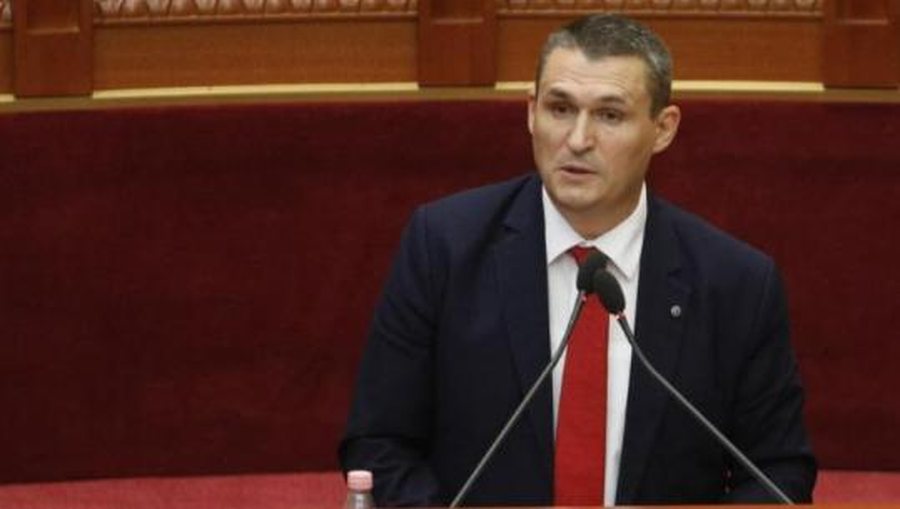
This absurd picture is the product of a long and distorted political transition...
In every democratic state, accountability is the foundation of the rule of law. Every institution must provide explanations for its activities before the bodies determined by the Constitution. In parliamentary republics, such as Albania, this role belongs to the Assembly as a representative of the sovereign, that is, the people. On paper, this is a pure democratic logic, the political power that stems from the will of the people controls the law enforcement power that exercises the functions by right recognized by the constitution and approved by the people by referendum. Due to the peculiarities of Albania, mainly in the political degradation of power in corruption, the opposite happens. Instead of control serving transparency, it has turned into a constitutional farce, where persons who may be subject to investigation question their investigators.
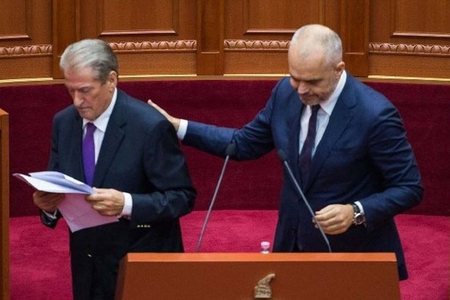
This absurd picture is the product of a long and distorted political transition. In a country with weak institutions and a high level of corruption, the logic of democratic control often turns into an instrument of political protection. Deputies who are, have been or may be under investigation by the Special Prosecutor's Office 'SPAK', today ask the leaders of that institution in the parliament hall about the way they are doing their work and duty. At first glance, this may seem like a normal exercise of parliamentary oversight and therefore a normal constitutional and democratic form. But in essence, it is a reversal of the constitutional function, where the prosecutor who raises and defends the charge in court is questioned by the investigated or the candidate for defendant and accused in court.
The irony is even greater if we remember that the Justice Reform itself, which brought into being SPAK and GJKKO, was approved by a parliament contaminated by corruption and criminal connections. Thus, the reform began as a project to clean up the system, but was associated from the outset with a structural conflict of interest, the legislators who approved the laws were potentially the object of their implementation.
Today, when SPAK has started to act in reality, this contradiction has become apparent. Investigations and convictions of former ministers, deputies and high-ranking officials have created a new sense of responsibility in the public, but also a defensive reaction in politics. And this reaction is manifested in the Assembly, where the heads of justice institutions report annually to those who may be in their files. Instead of transparency, these sessions often turn into an arena of hidden pressures, subtextual questions and political signals.
Constitutionally, reporting by the prosecution to the Assembly is not problematic in itself. It also exists in many developed democracies. But the difference is that in those countries, reporting is done on criminal prosecution policies and institutional performance, not on concrete investigations. In Albania, the dividing lines between these concepts are unclear. MPs often cross the line, demanding accountability for issues that are under investigation, transforming accountability into pressure.
This situation has direct consequences for the rule of law. First, it erodes the de facto independence of justice, which, although constitutionally protected, is faced with a political power that still possesses the mechanisms of public influence. Second, it distorts civic perception; when the public sees the prosecutor being questioned by the suspect, the impression is created that everyone is the same and that justice is a game of power, not a fair mechanism of equality. Third, it risks turning justice reform into a fragile political process, dependent on the balances of the moment.
In this context, Albania is faced with a fundamental question: how to preserve the principle of accountability without undermining the independence of justice? The solution does not lie in abolishing parliamentary reporting, but in reviewing the way it is exercised. Reporting should be based on performance indicators, not criminal files, on institutional transparency, not on the content of investigations. It is also possible to consider an intermediate supervisory mechanism, composed of professionals, that is, technicians in the field, but also a minority of personalities from the field who are organically linked to the criminal law enforcement bodies. This solution would ensure a better balance between control and independence of powers.
As long as in the Assembly hall, those who should be investigated will question those who should be investigated, Albania will remain hostage to a constitutional paradox, a democracy where the law is in theory equal for all, but in practice, still obliged to give explanations before those it is tasked with punishing.






Lini një Përgjigje