


 Shkruar nga Pamfleti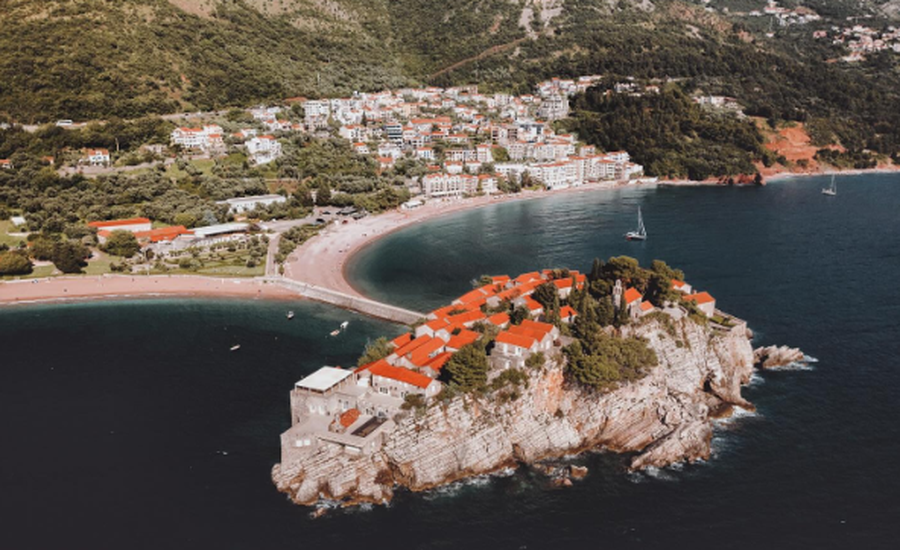
Despite the increase in tourists, Montenegro is losing millions from short stays, high taxes and informality that are eroding the foundation of the tourism economy.
Montenegro, once one of the brightest stars of tourism in the Adriatic, is facing a silent economic crisis that risks undermining the entire tourism sector.
Although according to official data for the first half of 2025, there was a 6.3% increase in the number of tourists, with over 940 thousand visitors, the reality is much less optimistic.
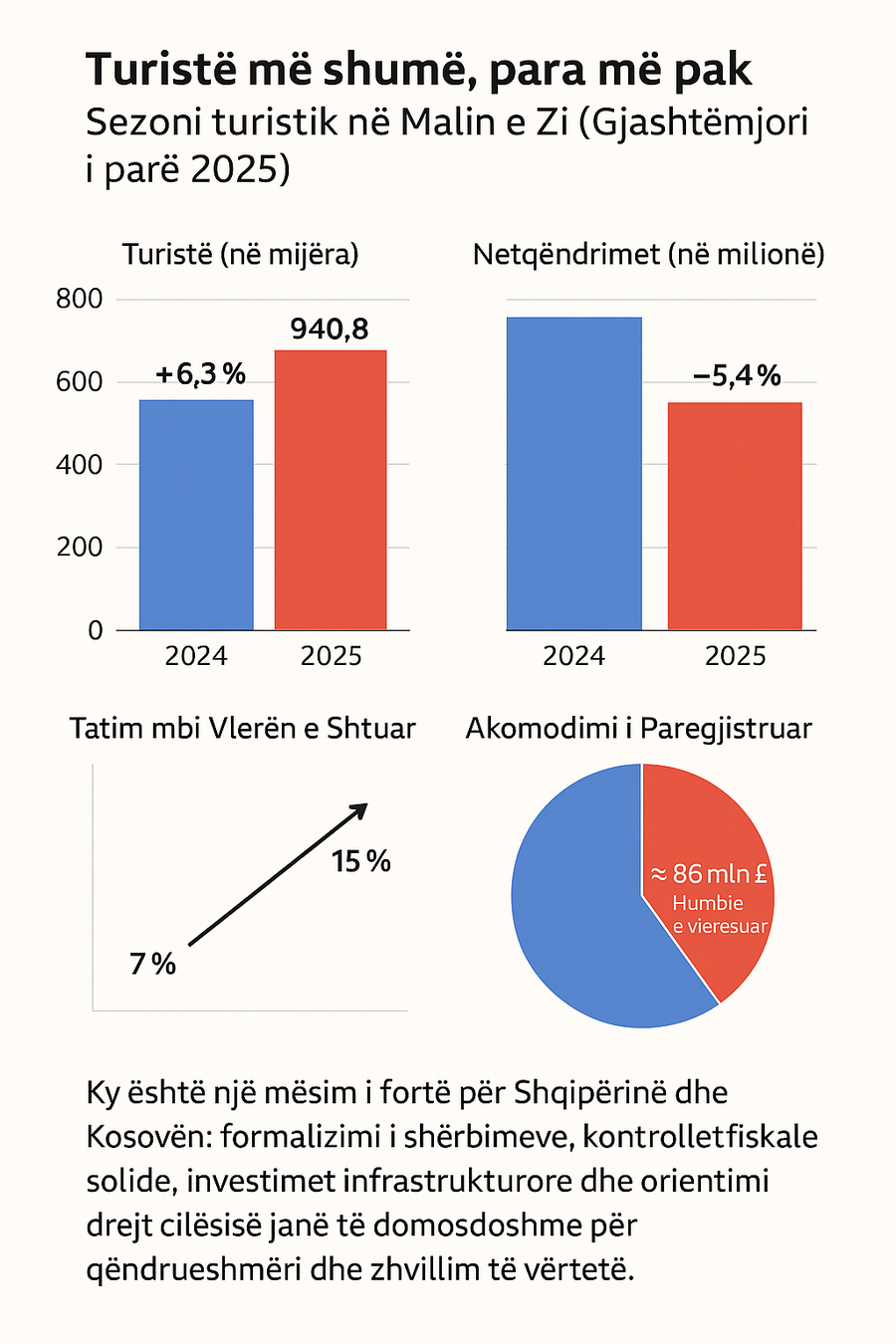
The number of nights spent by tourists has decreased by over 272 thousand, which translates into less consumption, less income for tourism operators and less profit for the state.
This decline is particularly noticeable in the accommodation sector, where many businesses are facing increased operating costs. The increase in VAT from 7% to 15% for accommodation has negatively affected small and medium-sized businesses, which are the mainstay of coastal tourism in Montenegro. The lack of a sustainable national strategy for tourism development, unplanned construction, dilapidated infrastructure and heavy traffic are just some of the symptoms of a sector suffering from improvisation and a lack of vision.
Moreover, informality remains an open wound. A large part of private accommodations operate in the black, without declaring tourists and without paying taxes, creating a large gap between statistics and reality on the ground. This gray economy not only deprives the state budget of revenue, but also distorts competition in the market and damages the quality of service.
In this bleak picture, what is most striking is the lack of a long-term plan to orient tourism towards quality, not just numbers. Montenegro cannot rely solely on increasing the number of visitors, when they stay less, spend less and leave with no desire to return. The international tourism market is increasingly competitive, and countries that do not professionalize their offer simply fall off the scene.
This is a valuable lesson for Albania, which is at different stages of tourism development, but which shares the same risks: informality, lack of strategy and saturation with statistics that do not translate into well-being. If we want tourism to be not just a season of excitement, but a stable pillar of the national economy, we must learn from the failure of our neighbor. Because improvised tourism does not bring development, it only brings illusions./ Pamphlet




Lini një Përgjigje