


 Shkruar nga Gjergj Zefi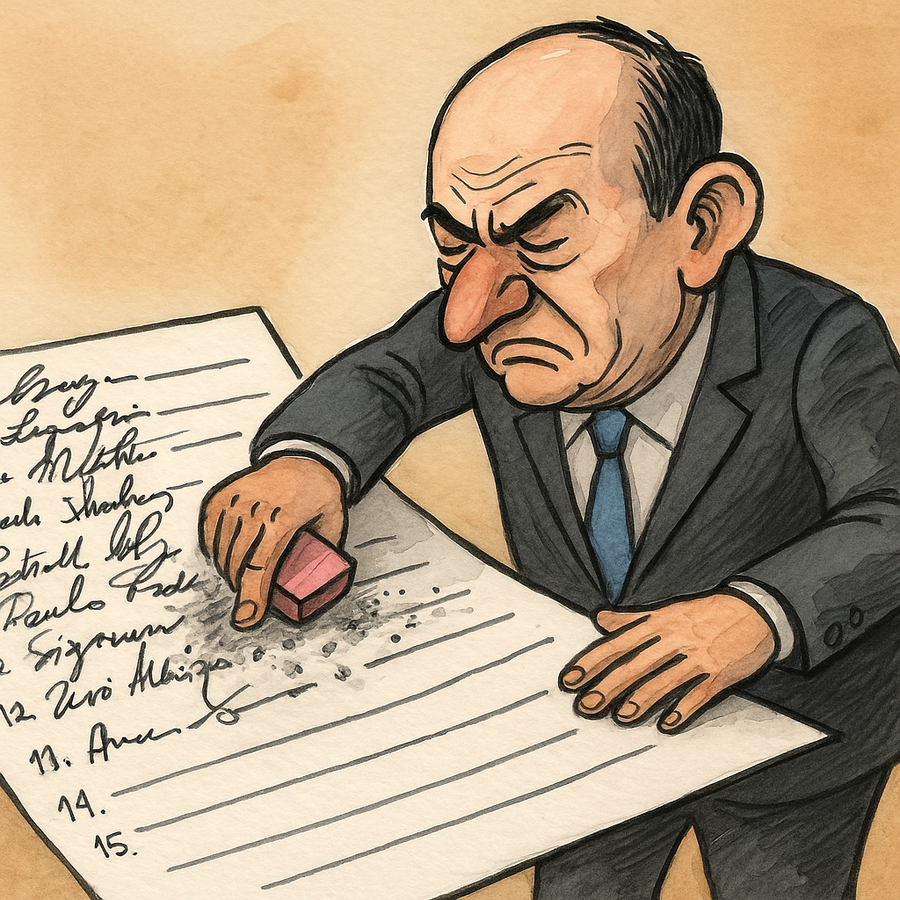
Thirty-five discarded and withdrawn signatures speak of an opposition that has no stance, no responsibility, and no institutional weight...
In childhood, “march, march game” served to stop the game when defeat seemed inevitable. No one discussed the rules. Words were enough. The game was over. Today, the opposition uses the same reflex in politics.
Whenever the political process does not yield the desired result, the opposition does not try to change the game through strategy. It declares the game invalid. It leaves the Assembly. It rejects the elections. It delegitimizes the process. This action does not produce an alternative. It produces a vacuum.
In a democratic system, politics does not function as child's play. Defeat requires confrontation. Failure requires analysis. Repeated withdrawal shows a lack of willingness to play by the rules that the opposition itself has accepted.
When the opposition says "march, march, play," it does not punish the government. It punishes itself. It gives up the only tool it has, political representation. It replaces battle with refusal and strategy with justification.
This is the real problem. The opposition does not behave like an actor seeking power. It behaves like a player who does not accept defeat. In politics, this behavior does not create change.
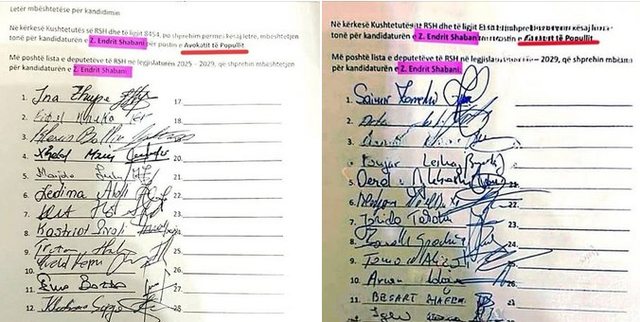
The case of Endri Shabani's candidacy for Ombudsman exposed this behavior in the most naked way possible. Thirty-five opposition MPs officially signed on for his candidacy. Then, they withdrew, not individually, but as a group. No transparency. No political explanation. No institutional accountability.
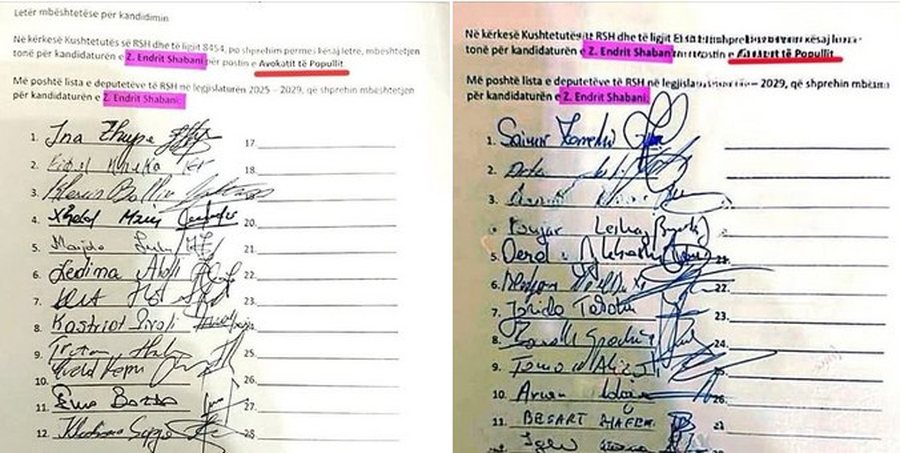
The signature is not a formal gesture. The signature is a political act. The MP who signs assumes a public and institutional stance. The MP who withdraws from his signature turns the Assembly into a child's play and the opposition into a spineless structure.
This is not a technical episode. It is a symptom. The opposition did not fail in the face of the majority. The opposition failed in the face of itself. It failed to take a stand even for a constitutional institution that requires minimal consensus and political maturity. It failed to defend a candidacy that it itself produced.
When 35 MPs sign and then withdraw, we are dealing with political collapse. The MP no longer acts as a representative of the sovereign. He acts as a temporary figure waiting for a signal from above. This mechanism destroys the idea of the opposition as an alternative to power and reduces it to a body without decision-making autonomy.
At this point, the opposition did not lose a procedural battle. It declared the game itself invalid. It said “march, march game” and shied away from responsibility. This reflex does not produce political pressure. This reflex produces political misery.
An opposition that cannot defend its own brand cannot defend its vote, its institution, or its public interest. An opposition that retreats from its initiatives as soon as it faces pressure is not preparing for governance, but for permanent justification.
The election of the Ombudsman requires seriousness, stability and credibility. The opposition chose to withdraw. This act did not harm the process, nor the candidate. This act damaged the opposition in the eyes of the public and deepened the perception that we are dealing with a structure incapable of making sustainable decisions.
In politics, the game is not canceled. The game continues and the responsibility remains. The Albanian opposition continues to behave as if politics is a game that can be stopped whenever it does not like the result. This is not oppositionism. This is a rejection of the elementary rules of democracy./ Pamphlet






opozita eshte zvaranike pa bosht, dhe shkon nga deshtimi ne deshtim