


 Shkruar nga Pamfleti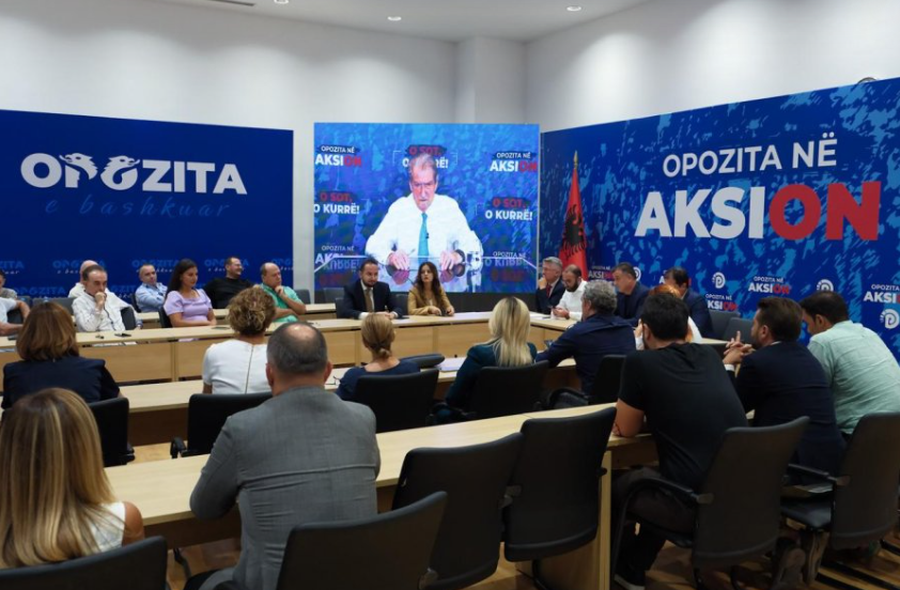
After the 'liberation' of the DP by Lulzim Basha, Berisha promised competition and new potential; but in 2 elections, he won unopposed. Today, 80% of the National Council and 90% of the branch leaderships are the same individuals for 20-30 years. On July 1, the new leaders will be 'elected', but the names have been predetermined by Berisha. The scheme: 2-3 new names to cover the unchanging old caste...
When Sali Berisha and his "army" forcibly usurped the DP headquarters, he said: "Today we removed Lulzim Basha's lock and opened the party, to re-establish it not with appointments from each other's leaders, but with new principles and potential at every level of leadership and with competition."
Following this declaration and the application of elections with the "1 member - 1 vote" principle, Sali Berisha was re-elected party leader in May 2022 with two puppet rivals.
He was re-elected party leader in May 2026, not accepting rival candidates, with the excuse that it was a "reconfirmation process", although according to the DP Statute, Sali Berisha was not supposed to run, because he lost the parliamentary elections.
In fact, in the DP there is a "power caste" unchanged for 30-36 years, led by Sali Berisha, Tritan Shehu and Jozefina Topalli and other leaders in the Presidency, Secretariats, Departments and the National Council, most of the same individuals who have been vegetating for 2-3 decades.
For example, 80% of the members of the National Council and 90% of the chairmen and members of the presidencies in the 77 branches of the DP that were elected 2 months ago, are the same individuals for 20-25, and some even for 30 years, despite the fact that they are called new elections and leaders.
Likewise, 80% of the DP Presidency, in the Secretariats and Departments and the Democratic Women's Forum, are the same faces for more than 2 decades, who, for their rule at the head of the party, justify themselves by saying that they were elected according to the Statute, when the president himself was reappointed in violation of the Statute.
In the party's Presidency, 9 members such as Flamur Noka, Albana Vokshi, Agron Gjekmarkaj, Elda Hoti, Tomor Alizoti, Gazment Bardhi, Luçiano Boçi, Oerd Bylykbashi, Edi Paloka, Jorida Tabaku and Besart Xhaferri, are self-appointed "Ex-officio", because they hold leadership positions in the party, but also appointed by the chairman and by each other as "loyal staff at the head of the party".
Speaking on behalf of the structures and membership, Sali Berisha and this eternal ruling dome in the DP have appointed 17 other members of the Presidency, MPs and former MPs, and have formally approved them in the National Council, where 80% are the same individuals for 20-30 years.
The eternal "bureaucrats" of the DP, themselves and those they have appointed to the Presidency, call themselves "elected" by the structures and membership, although the membership hates them and considers them to be interest-seekers with the "Rama" government.
In fact, these have created their own closed network, as self-appointed rulers at the head of the DP; who not only do not move from their posts, but attack and expel from the party those who ask them for rotation through open competition.
On July 1, the DP will elect members of the Presidency, Vice-Presidents, heads of the National Council, Secretariats and Departments, saying that the National Council will approve them, but the names have been predetermined by Sali Berisha and his family and clan.
Will Sali Berisha "rotate" with new names with clean morals and potential in the DP Presidency and leadership structures, or will he keep the "rags" he currently has, who have been unable to bring the party to power for 4 mandates?
There are rumors that Sali Berisha will replace 2-3 outdated individuals with new "unblemished" names, according to this scheme of demagogy and rule of autocrats: "Into a barrel of stinking water, 1 glass of clean water is poured and it is called 'cleansing and renewal' of the management team."/ Pamphlet





Berisha zbret nga kali jo kur vritet kali, por ai vetë