


 Shkruar nga Pamfleti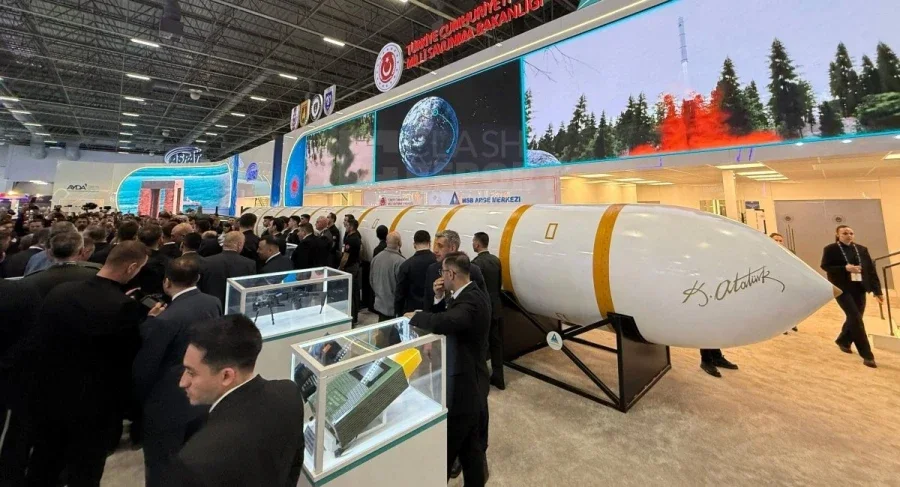
The missile, named "Yildirimhan," which means "lightning" in Turkish, was presented at the SAHA 2026 defense industry fair at the Istanbul Expo Center.
Turkey has unveiled a prototype of an intercontinental ballistic missile (ICBM) for the first time, aiming to strengthen its military autonomy and increase its role in the Middle East, but also within NATO. The missile, called “Yildirimhan,” which means “lightning” in Turkish, was presented at the SAHA 2026 defense industry fair at the Istanbul Expo Center.
The system was developed by the Turkish Defense Ministry's research and development center and is considered one of Ankara's most ambitious military projects to date. However, Turkey's grand unveiling of an intercontinental ballistic missile (ICBM) turned controversial after a promotional video created with artificial intelligence showed the weapon hitting targets that appeared to be in the United States, Turkey's NATO ally.
The Yildirimhan missile was presented this week at a military exhibition in Istanbul as a system capable of traveling 6,000 kilometers, carrying a 3,000-kilogram warhead at speeds up to 25 times the speed of sound, which would place Turkey among the few countries that can develop such weapons.
However, according to the Financial Times, questions were soon raised about the system's real capabilities, as AI-generated video showed Yildirimhan striking nuclear installations and other targets that appeared to be located in the US.
The American continent is well beyond the missile's officially declared range, while Turkish officials later admitted that a functional prototype for full testing has not yet been built.
Turkey has long sought to project its military might ahead of the crucial NATO summit in Ankara this July. At the same time, the US-Israeli war against Iran has fueled Ankara's ambition to boost its deterrent capacity in a region riven by conflict.
"We intend to use it exclusively for preventive purposes," Turkish Defense Minister Yasar Guler said during the missile's presentation on Tuesday, adding, "However, if the need arises, no one should doubt that we will use it without hesitation and in the most effective way."
There was no sign that Guler was aware that the demonstration video appeared to include targets in North America. Despite the great publicity, defense officials, industry representatives, and military analysts began to question the actual capabilities of the 18-meter-long missile.
“Është një ekzagjerim. Industria turke e mbrojtjes ka shumë kapacitete dhe po zhvillohet me shpejtësi, por ende nuk ndodhet në atë nivel”, deklaroi një zyrtar perëndimor i mbrojtjes.
“Duket shumë ambicioze dhe e dyshimtë”, shtoi eksperti i raketave Fabian Hoffmann nga Universiteti i Oslos.
Pak ditë pas prezantimit, Ministria turke e Mbrojtjes sqaroi se sistemi ndodhet ende në fazë testimi.
“Testet laboratorike të sistemit raketor Yildirimhan, i cili ka aftësi të transportojë një kokë luftarake prej 3 tonësh, janë përfunduar me sukses dhe testet në terren vazhdojnë”, deklaroi ministria të enjten.
Industria turke e mbrojtjes, që po zhvillohet me ritme të shpejta, e ka bërë vendin eksportuesin e 11-të më të madh të armëve në botë dhe një partner kyç në përpjekjet e Evropës për riarmatim. Ndërsa Evropa përballet me vështirësi për furnizimin e Ukrainës dhe zëvendësimin e rezervave të konsumuar ushtarake, automjetet e blinduara turke, anijet luftarake, dronët dhe municionet po prodhohen masivisht.
Aleatë kryesorë të NATO-s, si Mbretëria e Bashkuar dhe Gjermania, e kanë cilësuar kapacitetin industrial të Turqisë si jetik për mbrojtjen e Evropës.
Baykar, kompania e drejtuar nga Selçuk Bayraktar, dhëndri i presidentit Recep Tayyip Erdogan, konsiderohet një nga kompanitë lider në botë për prodhimin e dronëve me inteligjencë artificiale dhe bashkëpunon me kompaninë italiane Leonardo. Ndërkohë, Spanja bleu vitin e kaluar 30 avionë Hürjet nga Turkish Aerospace, në bashkëpunim me Airbus, për trajnim pilotësh luftarakë.
Turqia i ka dhënë gjithashtu prioritet zhvillimit të një game të gjerë raketash balistike dhe cruise “për parandalim dhe, nëse kjo dështon, për luftë”, shkruajnë analistët Sitki Egeli dhe Arda Mevlutoglu në një studim të Institutit Ndërkombëtar për Studime Strategjike në Londër.
Megjithatë, sipas analistëve, aftësitë e pretenduara të Yildirimhan duket se tejkalojnë ndjeshëm kapacitetet aktuale të Turqisë.
Raketa me rrezen më të gjatë që zotëron aktualisht Turqia është Tayfun, e prodhuar nga kompania shtetërore Roketsan, sipas analistit Murat Gürgen. Në testime, ajo ka arritur rreth 600 kilometra, vetëm një e dhjeta e rrezes së deklaruar prej 6.000 kilometrash të Yildirimhan.
Çfarë dihet për Yildirimhan
Sipas të dhënave të prezantuara, Yildirimhan ka një rreze veprimi prej 6.000 kilometrash, çka e klasifikon si raketë balistike ndërkontinentale. Federata e Shkencëtarëve Amerikanë konsideron ICBM çdo raketë balistike me rreze mbi 5.500 kilometra.
Kjo do të thotë se, nëse lëshohet nga territori turk, raketa mund të godasë objektiva në pjesën më të madhe të Evropës, Azisë dhe Afrikës.
Agjencia turke Anadolu raportoi se raketa mund të arrijë shpejtësi Mach 25, pra 25 herë më të madhe se shpejtësia e zërit. Ajo ka katër motorë shtytës dhe përdor tetraksid azoti të lëngshëm si karburant. Koka luftarake mund të mbajë ngarkesë deri në 3.000 kilogramë.
Megjithatë, Turqia ende nuk ka nisur prodhimin masiv të raketës.
Mesazhi i Ankarasë
Duke folur në panair, ministri turk i Mbrojtjes Yasar Guler deklaroi se vendi nuk u ofron më aleatëve vetëm sisteme armësh, por edhe teknologji dhe një “ekonomi të qëndrueshme sigurie”.
Analistët vlerësojnë se rëndësia reale e programit nuk qëndron vetëm te vetë raketa, por kryesisht te aftësia e Turqisë për ta zhvilluar atë.
Ozgur Unluhisarcikli, drejtor i German Marshall Fund në SHBA, deklaroi për Al Jazeera se Turqia nuk përballet aktualisht me një kërcënim të drejtpërdrejtë që do të kërkonte raketa ndërkontinentale parandaluese, por aftësia teknologjike për prodhimin e një sistemi të tillë përbën në vetvete një arritje strategjike.
Lidhja me programin hapësinor
Analisti i sigurisë Burak Yildirim theksoi se programi lidhet në mënyrë indirekte edhe me ambiciet hapësinore të Turqisë.
Sipas tij, fizika që kërkohet për vendosjen e satelitëve në orbitë është në masë të madhe e ngjashme me atë të raketave balistike ndërkontinentale.
Programi turk Delta-V, me karakter civil dhe tregtar, synon lëshimin e satelitëve turq me raketa vendase. Sipas analistit, zhvillimi i teknologjisë ICBM është pothuajse një evolucion natyror i një programi serioz hapësinor.
Megjithatë, ai theksoi se ajo që u prezantua në panair ishte në thelb një maket prototipi dhe jo një sistem operacional. Nuk ka pasur testime të njohura lëshimi, ndërsa shumë elemente teknike mbeten të panjohura.
Madje, edhe baza e mundshme e ardhshme e testimeve në Somali ende nuk është ndërtuar.
“Bëhet më shumë fjalë për një ambicie të deklaruar sesa për një kapacitet operacional”, deklaroi ai.
Dimensioni gjeopolitik
Prezantimi i raketës së re u zhvillua në një periudhë tensioni të lartë në Lindjen e Mesme. Pavarësisht armëpushimit të brishtë pas luftës SHBA-Izrael me Iranin, tensionet në rajon mbeten të larta.
Ankaraja kishte deklaruar në mars se sistemet ajrore të NATO-s kishin interceptuar raketa balistike që drejtoheshin drejt Turqisë. Teherani mohoi çdo përfshirje dhe la të kuptohej se mund të bëhej fjalë për një provokim izraelit.
Ndërkohë, marrëdhëniet Turqi-Izrael ndodhen në nivelin më të ulët historik. Ish-kryeministri izraelit Naftali Bennett deklaroi në shkurt se Turqia përbën një “kërcënim të ri” për Izraelin, duke pretenduar se Ankaraja po bëhet pjesë e një boshti rajonal të ngjashëm me atë të Iranit.
Nga ana tjetër, udhëheqja turke ka ashpërsuar ndjeshëm kritikat ndaj Izraelit për luftën në Gaza dhe trajtimin e palestinezëve.
Presidenti Recep Tayyip Erdogan e ka akuzuar Izraelin se po vazhdon një “gjenocid të përgjakshëm” kundër civilëve.
Autonomia strategjike dhe parandalimi
Analisti Ali Bakir vlerësoi se programi Yildirimhan përbën një moment të rëndësishëm për industrinë turke të mbrojtjes dhe forcon pozicionin e vendit si fuqi rajonale.
Sipas tij, Ankaraja synon prej kohësh të ulë varësinë nga sistemet e huaja të armëve, të forcojë prodhimin vendas dhe të fitojë më shumë autonomi strategjike.
He added that the development of the missile is not simply a reaction to recent developments, but part of a long-term plan by the Erdogan government.
Burak Yildirim stated that Turkey now considers the abstract security guarantees of alliances insufficient and aims for "strong and sovereign deterrence."
"Turkey is surrounded by instability, from Syria and the Eastern Mediterranean to Iraq and the crisis with Iran, and it wants to have deterrents that depend exclusively on it," he said.
How important is Turkey's military power?
Turkey has the second largest standing army in NATO and has become a significant arms exporter in recent years.
The drive for military self-sufficiency began decades ago. As early as 1985, Ankara established the Defense Industry Development and Support Agency (SaGeB), with the aim of strengthening domestic military production.
For several years, SaGeB focused primarily on international research and development cooperation. However, as Turkey began to face restrictions on the acquisition and use of military systems, it gradually turned to domestic production.
In the 2010s, the focus shifted to domestic design and development of indigenous technologies, which led to a significant increase in Turkish military production.
Analyst Burak Yildirim stated that with the announcement of the Yildirimhan missile, Ankara is trying to show that its military influence goes far beyond the neighboring region.
"By aligning itself with ICBM-class systems, Turkey is showing that it considers itself a global player, capable of creating partnerships and exerting influence far beyond the traditional geostrategic area," he said.
According to him, the message is not so much about the missile itself today, but rather about the type of power that Turkey believes it is transforming into.
He also added that the broader development of the Turkish defense industry relies on a strategic logic that existed long before the current regional crises.
"For decades, Ankara has depended heavily on foreign suppliers, mainly the United States and Western Europe, for its most critical military systems. The current push for indigenous capabilities is essentially a project of national sovereignty," he added.
For his part, Ozgur Unluhisarcikli from the German Marshall Fund emphasized that Turkey is implementing in practice what all NATO countries agreed on at the Hague Summit: increasing defense spending to 5% of GDP. He also underlined that Turkey remains a key ally for NATO's southeastern flank and plays a crucial role in securing the Black Sea-Mediterranean connection through the Turkish Straits. "A stronger Turkey also means a stronger NATO," he concluded. /Pamphlet/




Lini një Përgjigje