


 Shkruar nga Pamfleti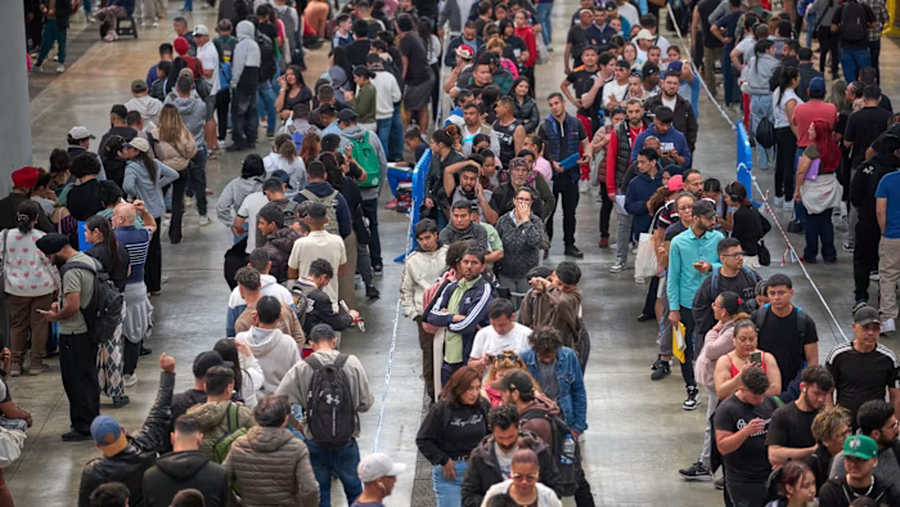
One in 42 Spanish residents is in the country illegally, according to demands for a controversial migrant amnesty introduced by Prime Minister Pedro Sánchez. Almost 1.2 million unauthorized immigrants have applied for legal status under the amnesty program, the left-wing government said on Thursday, far exceeding its own estimates that up to 500,000 would apply.
The program has become a symbol of Sánchez's status as the last leader of a major European country to maintain an open-door immigration policy, as other governments across the continent and in the US impose new controls on their borders.
The amnesty, which Sánchez has called "an act of justice and a necessity," offers migrants without legal status a one-year, renewable residence permit if they have lived in Spain for five months and have a clean criminal record.
This has increased the power of immigration as a political issue ahead of general elections that Sánchez, who is being rocked by corruption scandals, must call no later than August 2027.
The prime minister faces an uphill battle to stay in power, as the right-wing populist Vox party, which is third in the polls but on the rise, seeks to capitalize on growing concern about large-scale immigration.
Although Africans arriving by small boats in the Canary Islands are the focus of attention, the largest group of unauthorized immigrants in Spain are Latin Americans who have entered the country legally at airports - where they do not need visas - and then overstayed the 90 days allowed.
The 1.17 million amnesty applications equal just over 2 percent of Spain's population of 49.7 million. The country has a much larger population of legal immigrants.
In less than a quarter of a century, the total foreign-born population in Spain has grown from one in 20 residents to almost one in five, a percentage higher than even the U.S. As Spain’s native population ages, Sánchez has repeatedly argued that immigration is vital to maintaining the country’s long-term economic health.
The Spanish migration ministry said on Thursday that the amnesty was allowing thousands of people already working in the informal economy to formalize their status. It said 159,097 of the amnesty applicants had joined Spain's social security system, which helps pay state pensions, as of June 30.
The ministry said the largest group of amnesty applicants by nationality were Colombians, who made up 25.9 percent of the total. They were followed by Moroccans, who made up 13.3 percent, then Venezuelans, who made up 11.8 percent, and Peruvians, with 8.8 percent.








Lini një Përgjigje