


 Shkruar nga Cecilia Strada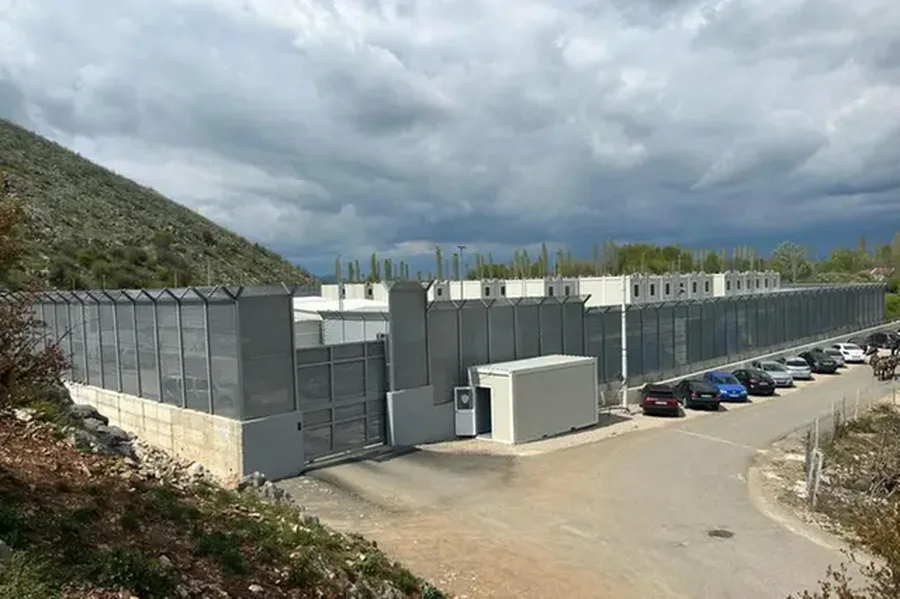
A center built to manage immigration has become a space of isolation and indefinite waiting. Political promises of thousands of transfers per year clash with the reality of a few dozen people and a system that doesn't work...
A flock of sheep slowly descends the hill, enters the narrow path along the perimeter wall and passes by the steel gate, above which the Italian flag flutters. The triangular signs, placed by the Central Directorate of Rome's Police, bear a drawing of a snake and the warning: "Beware of reptiles!"
This is the migrant center in Gjadra, a project strongly supported by the Italian government. A costly, useless and harmful structure. Since its construction, the life of the shepherds has also become difficult.
These 70,000 square meters of prefabricated buildings have changed the landscape, interrupted the flow of small streams and the natural paths of livestock. However, not the reptiles, which continue to persistently pass through the territory of the center.
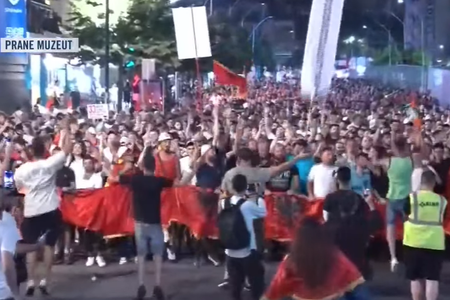
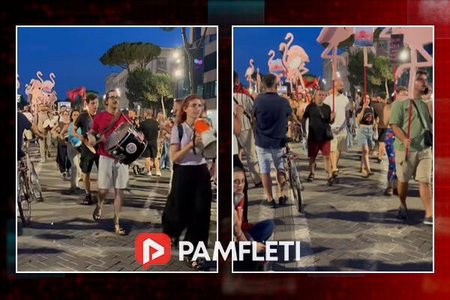
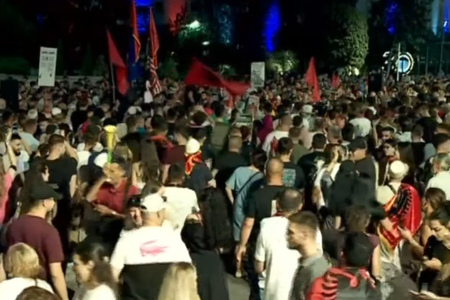
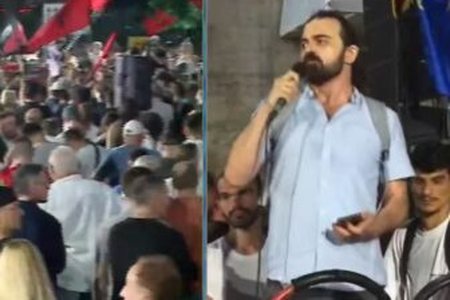
That's why the warning signs have been put up. Gjadri is isolated, and not by chance. It was built far from the eyes of Albanian public opinion. From here, the protests that fill the streets of Tirana, amid the silhouettes of flamingos and the cries of " Rama, resign!" are not heard.
However, it is clear that the situation surrounding the Italy-Albania Protocol could not be more problematic than this. To change the function of this center once again, the Protocol itself would have to be changed.
The idea of turning it into a "repatriation center," as envisioned by new European legislation, seems difficult to realize by a government that faces massive street protests every evening.
-Visit
Meanwhile, the center remains there, a monument to wasteful spending. This week, along with colleagues from the European Parliament, we visited it and found only a few dozen people. The Italian government had promised “36,000 migrants a year.”
Since the opening of the CPR, just over 600 people have passed through. Today, only one or two transfers are organized per week, just enough to avoid leaving the structure completely empty. Most of the people sent to Albania end up returning to Italy, without any practical result.
They arrive with plastic handcuffs on their hands on Guardia di Finanza planes. They then leave for Italy, escorted by police, on regular ferries, among tourists.
-What does all this mean?
And it is precisely between one transfer and the next that Gjadri's brutality emerges. The people we meet ask us: "Why? What am I doing here? Do you want to take me back to a place I don't even remember anymore?"
Many of them have lived in Italy for ten, fifteen, even thirty years. They have Italian spouses and children, and they tell us the pain of video calls, where children kiss the phone screen, hoping to hug their parents.
One young man had lived in Italy for less than eight years, but spoke better Italian than most of those who attack me on social media, shouting against “immigration.” He told us that Italy is the place he wants to live. He has a job and has set up a small business.
If he returns to his country of origin, he risks facing persecution because of his sexual orientation. For this reason, he has sought asylum. Another is a chef. His Emilian accent and characteristic Bolognese expressions come naturally as he recounts the hardship of the days spent there.
“ Keep your sense of humor,” we tell him. “You’ll need it!” “Of course I use humor. Otherwise I would end up attempting suicide like the others. And I don’t want to end up like that,” he replies.
-Feeling of injustice
The numbers speak for themselves. The record of critical incidents in the Gjadri center includes cases of self-harm and attempted suicide. Protests due to delays in procedures at the immigration office, fights and other episodes of tension have been recorded.
But above all, a deep sense of injustice prevails. Those who have served their prison sentences ask why they are not allowed to return to their homes in Italy, to their Italian families, just like their former Italian fellow prisoners.
There are also those who have not committed any criminal offense. The only problem is the loss of their residence permit for various reasons, often as a result of the endless Italian bureaucracy. The only thing that unites them all is the feeling that their time is being stolen.
Days, weeks or months lost in this country - "like an animal," a young man tells us, clutching a photograph of his family - waiting for a repatriation that will probably never happen or, much more often, release and a ferry to return to Italy.
“ What does all this mean? ” they ask us. No meaning.
*Note: Cecilia Strada is a member of the European Parliament, part of the Group of the Progressive Alliance of Socialists and Democrats (S&D Group). / Adapted "Pamphlet" from "Domani.it"



Lini një Përgjigje