


 Shkruar nga Pamfleti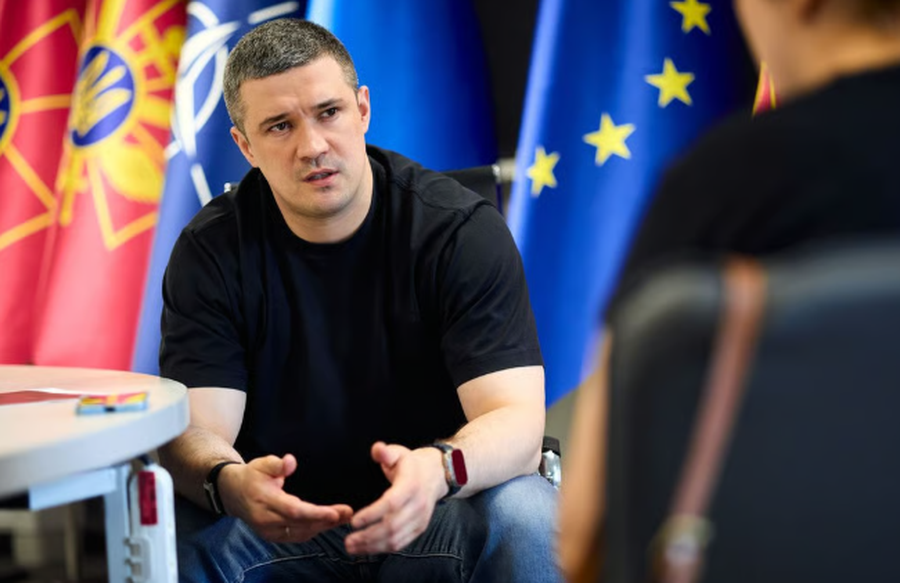
Ukraine believes it has regained the initiative on the battlefield by striking Russian troops, logistics centers and oil infrastructure. Now it is rushing to secure billions more dollars in Western military aid before Moscow adjusts.
Kiev is asking its allies to seize what officials describe as a short window of opportunity: to finance a new wave of drones, missiles and military technology that could keep Russia off balance and deepen Ukraine's recent advances. The goal is to force Vladimir Putin to realize he can't win.
“We need the next level of assistance to be able to finish the job. If we have enough resources to launch a new cycle of innovation in warfare before Russia adapts to the current one, we will have another six months ,” Defense Minister Mykhailo Fedorov told POLITICO.
The 35-year-old minister has overseen a comprehensive overhaul of Ukraine's war effort. He took office in January as the fourth defense minister since Russia launched its full-scale invasion of Ukraine in February 2022. He has brought his experience in technology and private business to shake up the defense sector, accelerating innovation and mass production of drones and missiles that have helped Russia outpace Russia.
He is also working to improve air defenses and fix the country's weak military recruitment system, which has seen thousands of people turn away from military conscription, while underpaid soldiers hold the front line against Russian attacks.
But this transformation needs money, and Fedorov wants Ukraine's allies to urgently increase aid flows.
"In a technological war, you can see how quickly you can change the course of events. It all depends on the speed of financing and our actions. Ukraine is protecting all of Europe from the Russians," Fedorov said.
Last week, Ukraine sent an urgent request to EU countries to receive all of the 6.6 billion euros recently released into the European Peace Fund. The PFEP was blocked for years by Viktor Orbán’s former Hungarian government; the money is supposed to partially reimburse EU countries for military aid sent to Ukraine. However, instead of returning to national treasuries, Fedorov wants the money sent to Kiev.
“ The PF could become a game changer for us, an accelerator of our current success on the battlefield. So I think we should start consultations with any country that will hesitate,” said Fedorov, dressed in jeans and a black T-shirt and sitting against a backdrop of Ukrainian military flags and the blue-and-gold star-studded flag of the European Union.
He credited the EU for the greater speed in processing aid for Ukraine, calling it “EU 2.0.” Brussels is not the only source of funds.
Ukrainian President Volodymyr Zelensky will also be on the sidelines of next week's NATO leaders' summit in Ankara, where allies are expected to agree on another aid package.
Kiev says its military spending needs this year will be 136 billion euros, of which it can only cover 53 billion euros from its own resources. The Ukraine Support Loan, recently approved by the EU, promises about 28.3 billion euros in military aid this year, part of an overall two-year loan of 90 billion euros. There are also additional bilateral military aid packages, as well as the NATO-led Priority Requirement List for Ukraine, under which allies buy American weapons for Kiev.
But that's still not enough, Fedorov said. The country needs billions more in targeted aid, and we need it tomorrow.
Fedorov has clear ideas about how to use that money. One is to refocus aid on what Ukraine needs, rather than on what it is convenient for donor countries to give.
He gave an example of Denmark, which has changed orders for 155-millimeter artillery ammunition to longer-range variants more useful on the front lines.
"They quickly signed a contract and made the first delivery in just a week. If there is desire and strength to overcome bureaucracy, anything is possible ," Fedorov said.
He also tells allies that he would prefer to transfer 200 million euros from aid earmarked for tank repairs - useless in the current state of the war - to invest in medium-range attack drones capable of hitting trucks and logistics supplies about 100 kilometers behind the front lines.
"Let's review existing contracts, let's abandon non-priority ones," Fedorov said.


Lini një Përgjigje