


 Shkruar nga Giuseppe Sarcina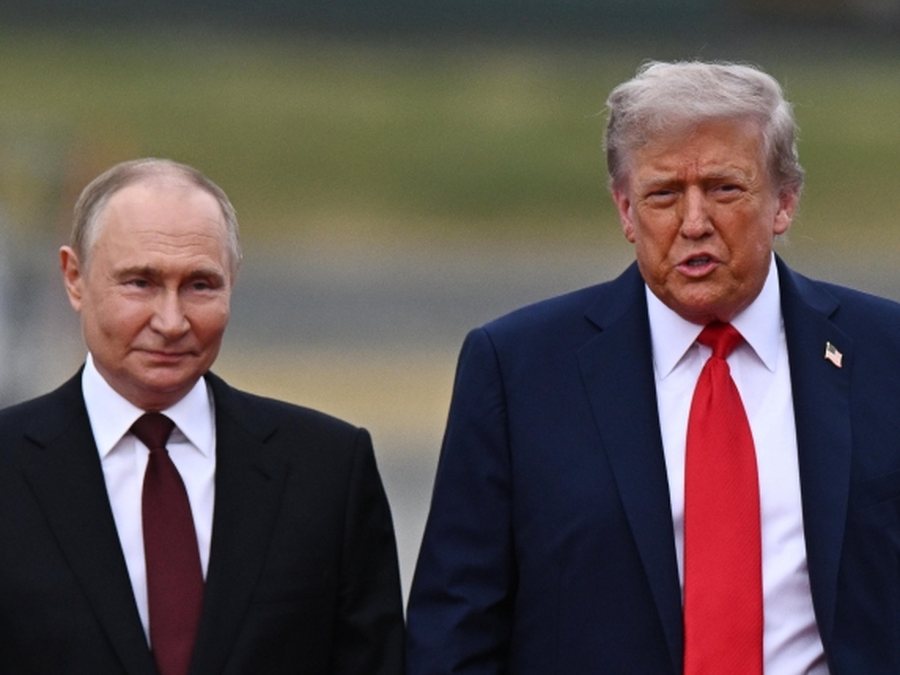
Among the economic beneficiaries of the conflict are states, above all Russia and the US, but also banks, energy companies, and arms manufacturers.
Every war can be turned into an opportunity to increase profits. Who is benefiting from the conflict in Iran? The answer is twofold: several states and many private companies.
The “Derasat” think tank, supported by the Bahraini government, has prepared a detailed analysis of five economic “winners” and five “losers” of the conflict. The report, explained Abdullah Alabbassi, director of Derasat, during a seminar organized by ISPI and the Doha Forum in Milan, calculates the additional income and costs generated by the war. It is a constantly updated balance sheet. The figures speak for themselves.
The Iran War: Winners and Losers
Russia topped the list of winners, with an additional $5.2 billion in gains. This is due to the easing of sanctions by the Donald Trump administration and a 50% increase in demand from India.
The decline in Arab supplies has boosted shale gas production in the United States, generating $4.5 billion in additional revenue. The same trend, albeit on a smaller scale, has been recorded in Norway with $1.8 billion and Canada with $1.2 billion.
The case of Indonesia is interesting. The new revenue, about $800 million, comes not from oil, but from coal, which has returned as a highly sought-after raw material, especially in Southeast Asia.
On the other hand, the list of losers does not bring many surprises, but the numbers remain significant. China has faced an additional cost of $16.8 billion to replace 40-45% of the oil and 13.9% of the steel it imported from the Persian Gulf with higher prices.
Japan has incurred a cost of $7.7 billion, while India has incurred $6.7 billion, also hit by a shortage of chemical fertilizers. South Korea has spent $5.4 billion to secure oil and helium from alternative markets and at higher prices.
At the bottom of the list is the Eurozone, which has spent an additional $4.2 billion since the start of the war, mainly to compensate for the lack of gas supplies from Qatar.
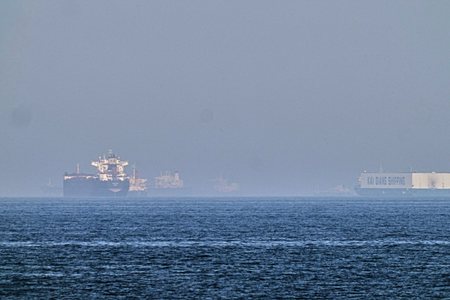
However, not all Gulf monarchies are at a loss. Saudi Arabia and the United Arab Emirates are seeking alternative routes to the Strait of Hormuz. Saudi Arabia has maximized the capacity of its East-West pipeline, which carries about 7 million barrels per day to ports on the Red Sea.
According to Eleonora Ardemagni, a Middle East expert and researcher at ISPI, the emergency "has pushed Saudi Arabia to resume dialogue with the Houthis to guarantee the safety of navigation in the Bab el-Mandeb Strait and to cooperate with the Emirates, despite the rivalries between the two countries."
Company balance sheets
Within national balance sheets, the profits of private companies also move, not always in the same direction.
The sector that has benefited the most is energy. A BBC investigation shows that at this stage the biggest profits are being made by European multinationals.
According to the BBC, BP (British Petroleum) profits doubled in the first three months of 2026, reaching $3.2 billion.
Shell and French company TotalEnergies also exceeded expectations during the first quarter of this year, with profits of $6.92 billion and $5.4 billion, respectively.
US giants ExxonMobil and Chevron have not recorded significant profit growth compared to last year, but analysts expect results to improve in the coming months.
In Italy, ENI reported operating profit of 3.54 billion euros and a 9% increase in production.
Renewable energy companies are also on the rise, not only in China, but also in Europe, such as the Danish Vestas and Orsted in the wind energy sector, or the British Octopus Energy in solar panels.
Banks and the defense industry
Fluctuations in financial markets have fueled intense trading in stocks and financial instruments, boosting bank profits, especially the six largest US banks: JP Morgan, Bank of America, Morgan Stanley, Citigroup, Goldman Sachs and Wells Fargo.
According to the BBC, these six financial institutions have collectively made $47.7 billion in profits.
The third pillar of this “golden triangle” is the defense industry. Following Russia’s aggression against Ukraine, the war in Iran has further increased global demand for air defense systems — from missiles to drones.
The three American giants of the sector, Lockheed Martin, Boeing and Northrop Grumman, have announced that they have secured record orders in the first quarter of the year.
British company BAE Systems also expects "strong growth in revenue and profits."
In Italy, Leonardo closed the first quarter of 2026 with a 6.9% increase in revenue and 33.2% in operating profit. Orders reached 9 billion euros, or 31% more compared to the same period in 2025./ Adapted from "Pamphlet", from "Corriere della Sera"




Lini një Përgjigje