


 Shkruar nga Pamfleti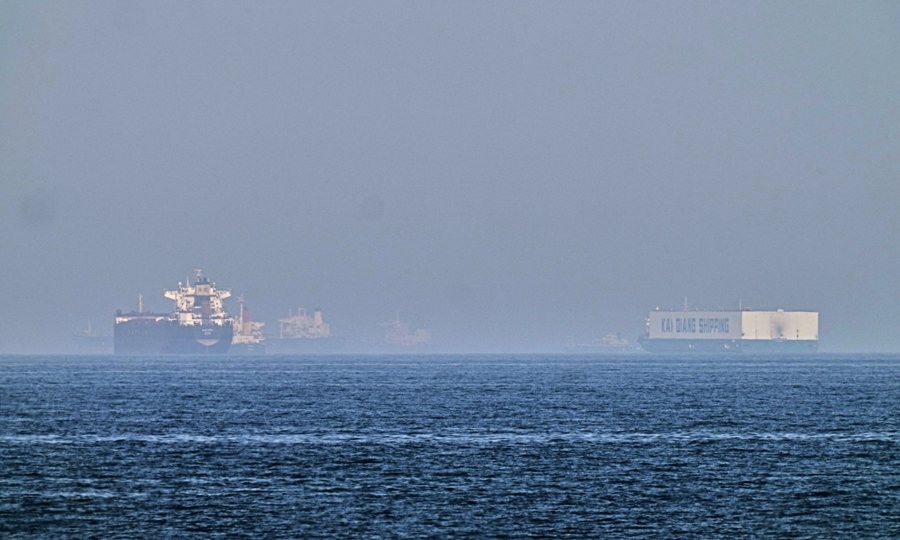
Tehran imposes new maritime surveillance measures near Larak Island and demands mandatory coordination for commercial ships passing through one of the world's most strategic energy corridors
Iran is tightening operational control over the Strait of Hormuz, imposing a new maritime surveillance regime on one of the most important routes for global oil and gas transportation.
According to new instructions from Iranian authorities, commercial ships passing through the Strait of Hormuz must coordinate with Iranian structures and follow designated corridors near Larak Island. The new measures are expected to significantly change the way maritime traffic moves in the area.
According to the new navigation model: ships entering the Persian Gulf will pass north of the island, near the Iranian coast; while ships exiting will move south of Larak.
In this way, Tehran aims to increase its surveillance and control capacity over commercial traffic passing through the strait.
The measures are reportedly being implemented by the Islamic Revolutionary Guard Corps (IRGC), while Iran has also designated limited monitoring zones between sea lanes, moving away from the international navigation system that until now relied mainly on Omani waters.
The situation has created uncertainty in the maritime and energy markets. Some companies are avoiding requests for transit permits from Iranian authorities, fearing US sanctions or involvement in geopolitical tensions.
Iranian MP Saeedi said that around 1,500 ships are waiting for authorization to leave the region. Maritime security company Diaplous reports that commercial activity is mainly limited to: small cargo ships serving Iran; as well as a few small vessels under the flags of India and the Comoros.
According to reports, the Iranian zone of control is also affecting regions near the strategic ports of the United Arab Emirates, including: Khor Fakkan and Fujairah.
These ports have become important centers for the transfer of goods and energy supply in recent years, especially to avoid dependence on the Strait of Hormuz.
The strategic Habshan-Fujairah pipeline, through which the Emirates exports oil bypassing the strait, also remains in focus. The stronger Iranian presence in the area is adding to concerns about the security of this energy corridor.
According to NBC News, Saudi Arabia refused to allow the United States to use Saudi military bases and airspace for Operation Freedom. The report notes that this development contributed to Donald Trump's suspension of the operation.
Analysts believe that Riyadh is trying to avoid direct involvement in a military clash with Iran, for fear of attacks on Saudi energy infrastructure.
According to Signal Ocean data, cited by Xclusiv Shipbrokers, there are currently 128 cargo ships and 58 oil tankers in the Strait of Hormuz and Persian Gulf area.
Of the tankers: 25 are MR2 category; 11 MR1; while the rest includes VLCC, aframax, suezmax and panamax/LR1.
About 40% of tankers are considered vessels connected to networks under international sanctions. For dry cargo ships, the percentage reaches about 11%.
Market experts warn that the real situation may be more complex, as some ships move with AIS systems deactivated, creating so-called "shadow sailing" conditions.
Developments in the Strait of Hormuz are being closely followed by governments, energy companies, and the maritime industry, as any further escalation could impact: international oil prices; global supply chains; and the safety of commercial maritime transport.





Lini një Përgjigje