


 Shkruar nga Pamfleti
In this context, Europe risks remaining squeezed, as a "herbivorous species in a world increasingly dominated by carnivores."
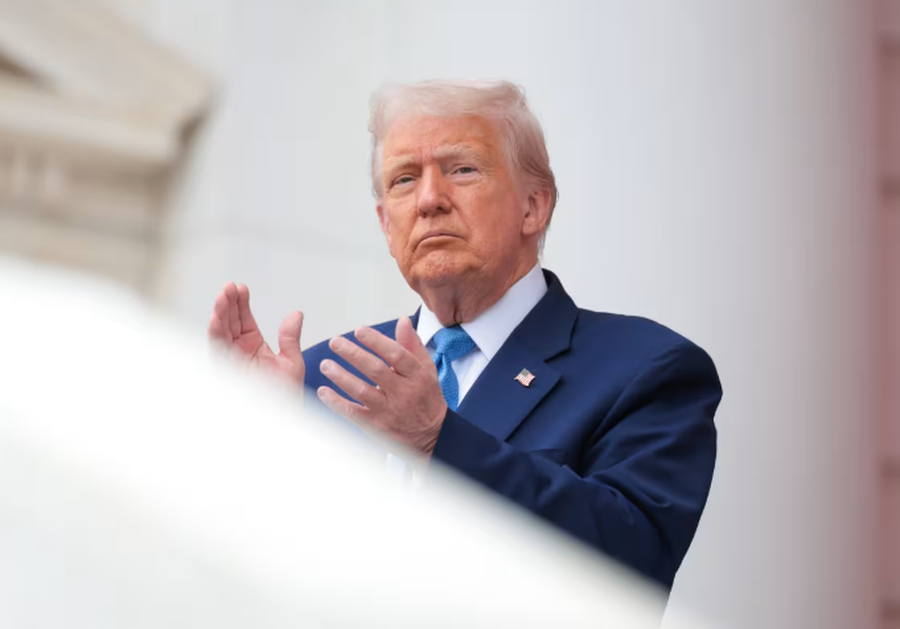
Reports critical of Wall Street have increased significantly following Donald Trump's recent public appearances. However, the facts show that it was not the American markets that were hit hardest by the volatility, but the European stock markets.
“Sell America,” suggested a Reuters article at the end of January. The logic was clear: after Trump’s new threats to impose tariffs on European countries, especially those that had sent troops to Greenland, the situation could resemble that of the so-called “Liberation Day” in April 2025. But the opposite happened: European markets lost significantly more than Wall Street. This shows that the American stock market tends to see a positive side to the economic and neocolonial policies of its president. Another reason is the support that the S&P 500 index has received from small investors, who are less sensitive to the risks of the so-called “Donroe doctrine”. Their optimism, measured by the individual investor confidence index (AAII), has reached its highest levels in the last four years.
Optimism dominates fear
If the VIX index is considered a gauge of investor fear, then the markets look relatively calm: it has risen to 20 points, about six points below the peak of last October, when no major event occurred. The new global order that Trump aims to build, accompanied by incentives, tax cuts and perhaps very easy monetary policy for domestic use, is being viewed with sympathy by Wall Street. Optimism remains high among institutional investors as well.
According to a Bank of America survey for January, a “vast majority” of them have chosen not to hedge against a potential market decline in the next three months, showing a confidence not seen since July 2021. Meanwhile, in the bond market – where investors have longer-term horizons – there has been a sell-off: the yield on the 10-year US bond rose by 18 basis points to 4.3%, the highest level since August. In comparison, pressure on German Bunds or Italian BTPs has been minimal.
The dollar's weakness
The "Sell America" thesis has been most clearly manifested in the currency market. The dollar has weakened against the euro and especially against the Swiss franc, considered a safe-haven asset. A similar behavior has been observed in gold and silver, which have increased by 6–8% in just three sessions, this time more as a hedge than as a speculation.
According to the Wall Street Journal, the stock market is not taking the scenario of a geopolitical and economic catastrophe seriously. The reason is multiple: some investors are used to Trump's style, others believe that his threats are mostly verbal, some think that the Supreme Court will block his expansionist ambitions and general tariffs, while others are counting on the opposition of some Republican lawmakers to prevent the White House from interfering in the Federal Reserve.
Paradoxically, both Trump supporters and opponents agree that the stock market should rise, thanks to rising profits, a dynamic economy, fiscal subsidies, and expectations of lower interest rates. The risk that this combination will generate inflation, rising deficits, and rising public debt is almost ignored.
A darker situation for Europe
More critical is UniCredit’s analysis, clearly titled: “The Rise of the Predatory American Empire.” According to author Edoardo Campanella, “the era of benevolent American hegemony is over.” What prevails today is not ideology, but mercantilism, with the aim of extracting economic and strategic benefits from countries chosen according to geographical proximity, geopolitical weight or natural resources.
In this context, Europe risks remaining squeezed, as a “herbivorous species in a world increasingly dominated by carnivores.” Deutsche Bank notes that about $8 trillion in US bonds and stocks are in the portfolios of European investors, a weight that could theoretically affect US debt yields and inflation. According to the Financial Times, European investors own about $3 trillion in US Treasury bonds, more than China.
The mere threat of selling some of them or not buying any more would be enough to drive up Treasury yields, adding to the federal deficit, which already stands at about 7% of GDP. Trump has acknowledged that every one percentage point increase in interest rates costs the US budget about $360 billion a year.
For now, the hope remains that Congress and the Supreme Court will rein in Trump's most extreme policies. But, as Canadian Prime Minister Mark Carney warned in Davos, paraphrasing Thucydides, "the rules-based order seems to be fading: the strong do what they can, while the weak are forced to endure what is left." / Adapted from Corrire della Sera








Lini një Përgjigje