


 Shkruar nga Pamfleti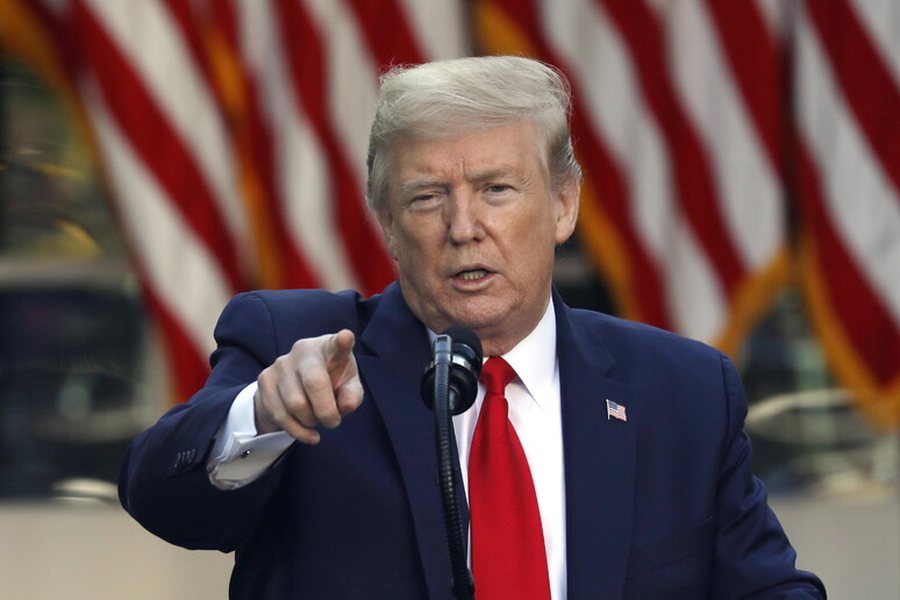
Why has Trump targeted Korea?
A new diplomatic storm is brewing for the United States. Dark, rain-laden clouds are gathering over South Korea: not just any country for Washington, but one of its two main flag bearers in the Indo-Pacific, along with Japan.
A few days ago, Donald Trump threatened to raise tariffs on Made-in-Korea imports from 15% to 25%, after accusing South Korea of “not respecting” the trade agreement reached in 2025. The reason for such anger? The delay in the legislative ratification of the agreement by the South Korean parliament, which was supposed to end all friction between the Washington-Seoul axis.
Trump believes South Korea is playing the bluff. Seoul officials, for their part, have said the bill is still pending in the National Assembly due to internal political processes.
The tycoon wrote in Truth that he would raise tariffs on a range of products, including automobiles, lumber, pharmaceuticals and “all other reciprocal tariffs.” “We acted quickly to lower our tariffs in accordance with the agreed-upon deal,” the Trump tenant added, implicitly accusing Seoul of wasting time.
Diplomacy immediately swung into action. South Korean Prime Minister Kim Min-seok activated a direct phone line with US Vice President JD Vance to seek clarification on the US president's comments.
Meanwhile, Seoul has sent two ministers to the US to better understand what is happening. Trade Minister Yeo Han Koo flew to Washington for a series of meetings, followed a few days later by Industry Minister Kim Jung Kwan.
"The special bill has been blocked in the National Assembly, and the US side has clearly expressed its disappointment. Although no final conclusion has been reached, we have fully explained Korea's position," said Kim, who spent several days talking with US Commerce Secretary Howard Lutnick, but without any concrete results.
For large Korean companies, this economic uncertainty represents a catastrophe. As early as a year ago, when customs tariffs fluctuated, many companies from Seoul were forced to reconsider their production strategies. Of course, if such instability were to continue, the annual business planning of South Korean giants could be significantly delayed. This would undoubtedly have consequences for the entire national economy.
According to the Wall Street Journal, the trade deal may simply be a pretext put forward by Trump. There are at least two other issues that the White House would like to resolve/revise in its favor by putting pressure on Seoul.
The first concerns the Coupang case, the largest e-commerce company in South Korea that was at the center of a sensational data breach (we wrote about it here). We are talking about a giant founded in Korea in 2018, but headquartered in Seattle and employing people close to the Trump administration.
The Amazon-like company was at the center of controversy a few months ago for an unprecedented security breach that potentially affected an estimated 34 million accounts. The investigation is ongoing, and Seoul immediately took action to determine what happened. However, Vance reportedly warned Kim against making any bold moves, such as penalizing American tech companies (including Coupang).
Korean Prime Minister's Response: Any legal issues related to the company - including investigations into the incident, regulatory review by Korean authorities, and complaints from US investors alleging discriminatory treatment that could affect business obligations - will be handled in accordance with Korean law, while maintaining ongoing dialogue with Washington to prevent the issue from escalating into a broader controversy.
The other issue that is hurting relations between the United States and South Korea involves Seoul's foreign policy, which recently began a de-escalation with China and seems determined to engage with North Korea. Elbridge Colby, the U.S. Undersecretary of Defense for Policy and one of the chief architects of the Pentagon's National Defense Strategy, has been clear: the South Korean government must take a leading role in combating Pyongyang and containing Beijing. / Adapted from "Inside Over"



Lini një Përgjigje