


 Shkruar nga Pamfleti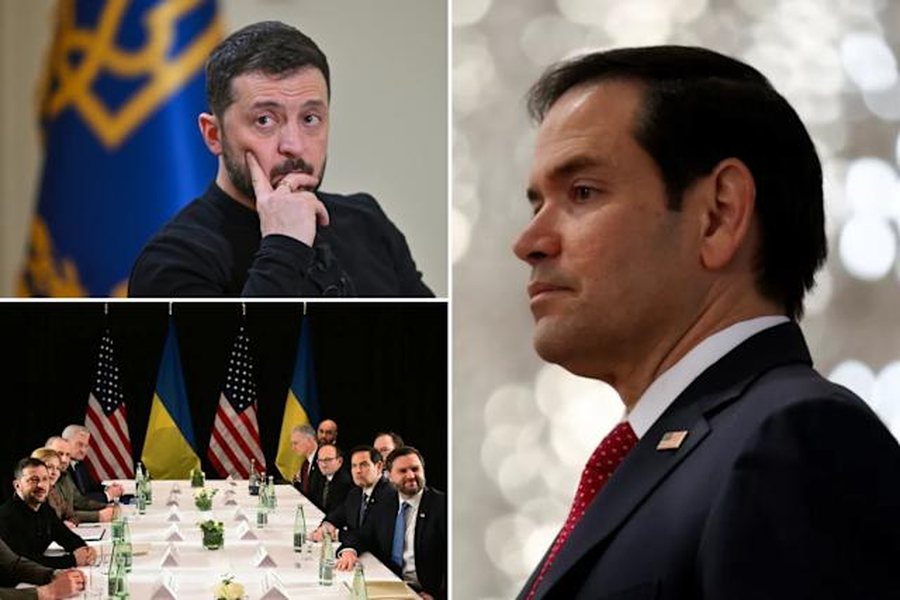
US Secretary of State Marco Rubio has stated that the 28-point plan to end the war in Ukraine, widely criticized as favorable to Russia, was drafted by the US.
His stance comes after several senators said Rubio had told them that the draft, which one of them described as a “Russian wish list,” did not reflect official Washington policy. Rubio later denied this version and stressed that the document is American, based on “contributions” from both sides, Russia and Ukraine.
Rubio made this statement while traveling to Geneva, where talks with Ukrainian and European officials are expected today on the plan, which President Donald Trump wants Kiev to approve as soon as possible.
Skepticism in Europe and opposition to the main points of the draft
Although the document has not been made public, its details have been widely leaked. The draft calls for Ukraine to withdraw troops from the eastern areas that Russia has failed to take by force, as well as reduce the size of its army. These points have provoked strong reactions from Ukraine's allies.
Republican Senator Mike Rounds said Saturday that Rubio had told lawmakers that the plan was not an American position and that it had been presented by “someone representing Russia” to Trump’s foreign envoy, Steve Witkoff. But the State Department immediately responded. Spokesman Tommy Pigott called Rounds’ statement “completely untrue,” stressing that the plan was designed by the United States.
Rubio himself posted a statement on social media. "The peace proposal was drafted by the US," he said.
President Trump has said the document is not a “final offer,” but has insisted that Zelensky “will have to” approve it. When the first details emerged in the media, the Ukrainian president warned that the country was going through “one of the most difficult periods” due to American pressure.
European allies: Plan leaves Ukraine vulnerable
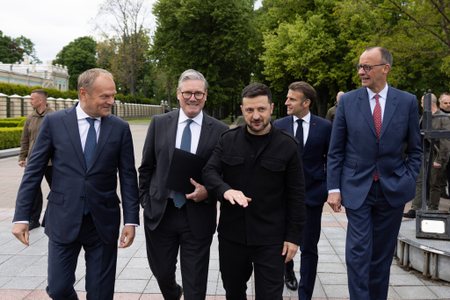
Leaders of Ukraine’s European allies, in a joint statement at the G20 summit in South Africa, criticized the draft, saying it would “leave Ukraine vulnerable to further attacks.” They acknowledged that the plan contains elements “important for a lasting peace,” but stressed that it “requires additional work,” especially on border issues and limiting the Ukrainian military.
The declaration was signed by the leaders of Canada, Finland, France, Ireland, Italy, Japan, the Netherlands, Spain, Britain, Germany and Norway, as well as two senior EU officials.
French President Emmanuel Macron said that "the plan cannot simply be an American proposal," while German Chancellor Friedrich Merz warned that "we are still far from a good solution for everyone."
British Prime Minister Keir Starmer spoke with Zelensky and Trump on Saturday, informing the US president of European positions on the draft.
What does the plan foresee?
According to media leaks, the plan foresees:
• The withdrawal of Ukrainian troops from the eastern part of Donetsk still controlled by Kiev;
• Acceptance of de facto Russian control in Donetsk, Luhansk and Crimea annexed in 2014;
• The “freezing” of the front line in Kherson and Zaporizhia;
• Unclear security guarantees for Ukraine;
• Commitments that Russia “not invade its neighbors” and NATO “not expand further.”
Meanwhile, Zelensky announced that the head of his office, Andriy Yermak, will lead the Ukrainian negotiating team for any future agreements, including those in which Russia may participate.
"Our representatives know how to protect Ukraine's national interests and what needs to be done to prevent another Russian aggression," he declared.


Lini një Përgjigje