


 Shkruar nga Joseph Sarcina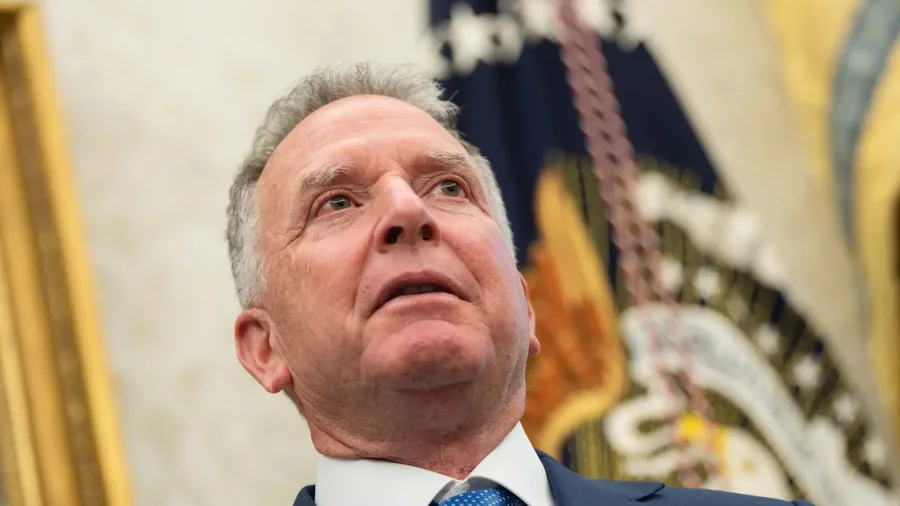
How Witkoff is favoring Putin more in peace negotiations...
Those who have met him in recent months say (unofficially) that, for Steve Witkoff, everything is negotiable. There are no untouchable principles, no inalienable moral values. It is a rule, certainly not particularly original, that the sixty-eight-year-old businessman has developed over more than forty years of work in the real estate sector.
Born on Long Island, New York, to a middle-class family, the young Steve studied law, immediately demonstrating a keen talent for business. The 1980s and 1990s proved to be favorable: Witkoff quickly became one of the most active brokers, navigating New York's turbulent real estate boom. He built his business, buying and building buildings in Manhattan, until he met another rising entrepreneur: Donald Trump, with his hyperbolic projects, debts, legal troubles and all.
Usually, two such people either become implacable rivals or good friends. Steve and Donald form an unwavering partnership. Smart, pragmatic, even cynical when necessary. For Trump, what matters is the “art of doing business.” For Witkoff, it’s extracting the best possible terms in negotiations. When Donald runs for the Republican primary in 2016, Steve is one of the few who believes in him and even supports him financially. Over the years, they have been in constant contact, even in the most difficult moments. For example, when Witkoff lost his son Andrew to an overdose in 2011. They have played golf together for decades, and in September 2024, they founded a company, World Liberty Financial, which deals in cryptocurrencies.
It is perhaps necessary to examine this background to understand why Trump, once he returned to the White House, effectively handed over the keys to American foreign policy to his friend, entrusting him with important files, from the Middle East to Ukraine.
And it is also a sign of the times that the "28-point plan" was not negotiated between the heads of diplomacy, Secretary of State Marco Rubio and Foreign Minister Sergei Lavrov. The protagonist, however, is a man with no political experience, let alone diplomatic experience. But according to Trump, he knows it almost as well as he knows the "art" of negotiation. In his own way, however, as the "plan for peace in Ukraine" demonstrates.
First, Witkoff has cornered the weaker party, Volodymyr Zelensky. The 28 points are not a proposal, but an ultimatum. On the contrary, the real estate developer accepts practically all the demands of the stronger party, Vladimir Putin. And, of course, he takes care to keep a significant fee for the United States, for the intermediaries.
Everything else fades into the background: the international law violated by the Russians, the International Criminal Court arrest warrant against Putin, NATO jurisdiction, the prerogatives of the European Union. This is how the outline of the agreement took shape. Zelensky can only accept the mutilation of the country, even the relinquishment of part of the territory still controlled by his army. A legal abomination. Moreover, Ukraine must abandon the prospect of NATO membership and reduce its army by a quarter. Putin, on the other hand, is rehabilitated. Everything is forgotten: the massacres of civilians, the attempt to subjugate an independent nation. A seat at the G8 table is ready for him.
But Witkoff’s true nature is revealed in the chapter on the reconstruction of Ukraine. The text calls on the Europeans, and especially Belgium, to release $100 billion from Russian monetary reserves for investments in Ukraine led by the United States, which should receive 50% of the profits. The remaining $100 billion should be diverted to joint Russian-American financial projects. That’s not all: Europe should add another $100 billion to contribute to reconstruction.
"Witkoff needs to see a psychiatrist," a diplomat told the website Politico.eu. But, as a good businessman, Steve knows that a deal has to have two sides. The Russian side is full of concrete things. The Ukrainian side, at least for now, is full of promises, which have yet to be verified. Such as defense guarantees similar to NATO's Article 5.
Finally, with the typical ease of an unscrupulous broker, Witkoff also handles instruments that are neither his responsibility nor that of the US government. For example: the green light for Ukraine's entry into the European Union. /Adapted from "Pamphlet" by " Corriere Della Sera "



Plere tregtar frutash