


 Shkruar nga Awni Etaywe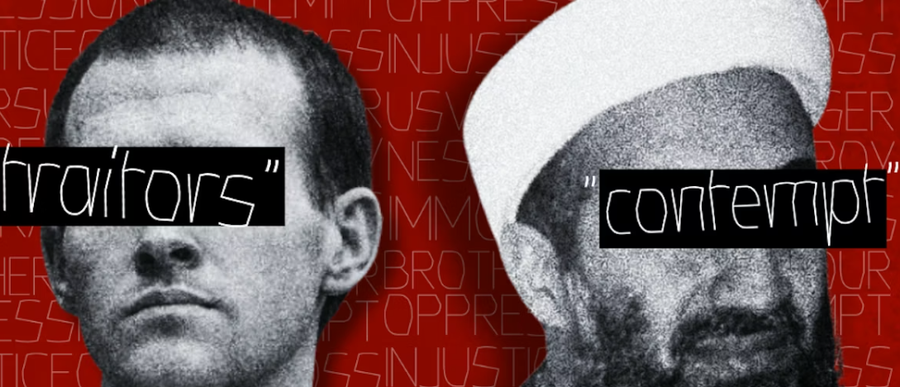
We have identified 6 main tactics that terrorists use to mobilize people who support their cause.
Words are powerful tools. Violent extremists know this all too well, which is why they often choose their words very carefully to encourage the continued loyalty of their followers.
When words are used in exactly this way, they can cause great damage.
Because their words are so deliberately chosen, researchers can look for patterns, trends, and warning signs. But what exactly is it that extremists say that increases their following, incites hatred and violence, and ultimately can lead to deadly attacks?
Our study examined the rhetoric of extremists behind some of the most serious terrorist attacks in recent history. We identified six key tactics that terrorists use to mobilize people to support their cause.
By being able to distinguish tactics, we can dismantle the language and protect people and communities from radicalization.
Divide and rule
In previous studies, we analyzed the inflammatory language of the far-right in the 87-page manifesto of the Christchurch, New Zealand, attacker. This time,
we examined jihadist texts. These include speeches by former al-Qaeda leader Osama bin Laden after 9/11 and statements by former Islamic State leader
Abu Bakr al-Baghdadi in the extremist organization’s magazine.
We used linguistic analysis to focus on how language was used strategically, both to minimize and to accentuate cultural differences. And we found two main types of inflammatory messages: those that strengthen bonds within the group to build a common purpose, and those that divide the group from outsiders and portray others as enemies.
These types of messages can divide society and make people identify strongly with the group. Consequently, following group rules—even extreme actions—can seem like proof that someone truly belongs to that group and is loyal.
But in violent extremism, commands alone are often not enough to inspire violence or mobilize support. So how do extremists use these basic strategies to persuade people to act?
1. The difference in weapons
Ekstremistët nuk i etiketojnë të huajt vetëm si të ndryshëm nga ata, por i paraqesin të tjerët jashtë grupit të tyre si të pamoralshëm dhe të rrezikshëm. “Ne” përkundrejt “atyre”, bëhet sfondi për thirrjet e mëvonshme për veprim. Nxitësit e lidhin besnikërinë dhe nderin me kërcënimet nga të huajt.
Osama bin Ladeni nxiti dhunë kundër qeverive arabe pro-amerikane, duke i quajtur ato “qeveri tradhtare dhe bashkëpunëtore… të krijuara enkas për të zhdukur Xhihadin”. Autori i masakrës në Kristçërç, Brenton Tarrant, i sulmoi organizatat joqeveritare që mbështesin emigrantët, duke i quajtur ato si “tradhtare”. Ai i quajti emigrantët “si llumi dhe jo të bardhë”, dhe i krahasoi ata me një “fole nepërkash” që duhej asgjësuar. Dehumanizimi i të huajve, forcon lidhjet në grup dhe mund të ketë pasoja vdekjeprurëse.
2. Evokimi i heronjve dhe ikonave
Ekstremistët përdorin njerëz, vende ose ngjarje të famshme për ta bërë audiencën e tyre të ndihet pjesë e një historie më të madhe. Emra si “Saladin” ose vende si “Hagia Sofia” dhe “Londinium”, i lidhin ndjekësit me ikona ose me beteja të së kaluarës, duke i bërë ata të ndihen si mbrojtës ose hakmarrës.
Tarrant shkruante në manifestin e tij ekstremist: ”Ky pushtues mysliman pakistanez përfaqëson tani popullin e Londrës. Londinium është zemra e Ishujve Britanikë. Çfarë shenje më të mirë të Rilindjes së të Bardhëve mund të ketë, se sa largimi i këtij pushtuesi?”.
3. Ripërdorimi i teksteve fetare
Ekstremistët nuk e përdorin vetë fenë, por versione të shtrembëruara dhe të dekontekstualizuara të teksteve fetare për të justifikuar dhunën. Citimi i Zotit ose i figurave fetare, e bën mesazhin të duket legjitim dhe e paraqet dhunën si një detyrë morale ose shpirtërore.
Kjo gjë e forcon besnikërinë dhe besimin e ndjekësve se aktet e dhunshme u shërbejnë vlerave “tona” të përbashkëta. Kështu Tarrant citoi Papa Urbanin II të Kryqëzatës së Parë, ndërsa El-Baghdadi e citoi gabim Allahun.
4. Ankesa të personalizuara dhe një gjuhë nxitëse
Nxitësit i përshtatin ankesat përpara se audienca t’i shprehë ato. Fjalët si “poshtërim”, “padrejtësi” ose “humbje kulturore”, ndihmojnë në lidhjen e ndjekësve me një kauzë të përbashkët. Osama bin Laden foli dikur për myslimanët që jetojnë në “shtypje” dhe “përbuzje”.
Ndërsa autori i sulmit në Kristçërç paralajmëroi për “politikanë pedofilë” dhe se emigracioni do të “shkatërronte komunitetet tona”. Emërtimi dhe etiketimi i bashkon ndjekësit dhe i ndan ata nga të “jashtmit”.
5. Metafora dhe mesazhe të lidhjes familjare
Osama bin Laden greeted his audience with the metaphor of “soldiers of Allah,” while describing his enemies as people living “under the banner of the cross.” Such contrasts intensify both loyalty and hostility.
On the other hand, terms of family connection draw people in. Words like “brothers,” “sisters,” “we,” and “ours” make strangers feel like family. Calling followers “our Muslim brothers” turns a political duty into a personal and moral duty—like protecting one’s family.
Tarrant did the same, albeit in reverse. His line, “Why should you have peace with Muslims when your other brothers in Europe face a certain war with them?” links violence to family security and future generations.
In contrast, the terms “they” and “them” mark strangers as non-relatives. This harsh, “us versus them” linguistic grammar weakens empathy and makes exclusion or harm easier to justify.
6. Compulsion to commit violent acts
In addition to orders, recommendations, or warnings that explicitly instruct someone to do something, there is also coercion. It makes violence feel like a concern for the group. Extremists do this by presenting violence as a duty.
Phrases such as “it is permissible” in jihadist texts shift violence from taboo to obligation, as in the case of “it is permissible to take their property and shed their blood.” They also present the outgroup as an existential threat.
This justifies preventive violence as self-defense or necessity, as in Tarrant's expression that "mass migration will disenfranchise us, subvert our nations, destroy our communities, destroy our ethnic bonds...".
Of course, extremist rhetoric doesn't just exist online. It resonates in protests, forums, and political debates. The "Great Replacement" theory, once limited to extremist manifestos, now appears in mainstream anti-immigration protests.
Combating extremism means understanding its tactics. Policymakers, educators, and community leaders can help by identifying and deconstructing these tactics if they encounter them./ Adapted from "Pamphlet"





Lini një Përgjigje