


 Shkruar nga Pamfleti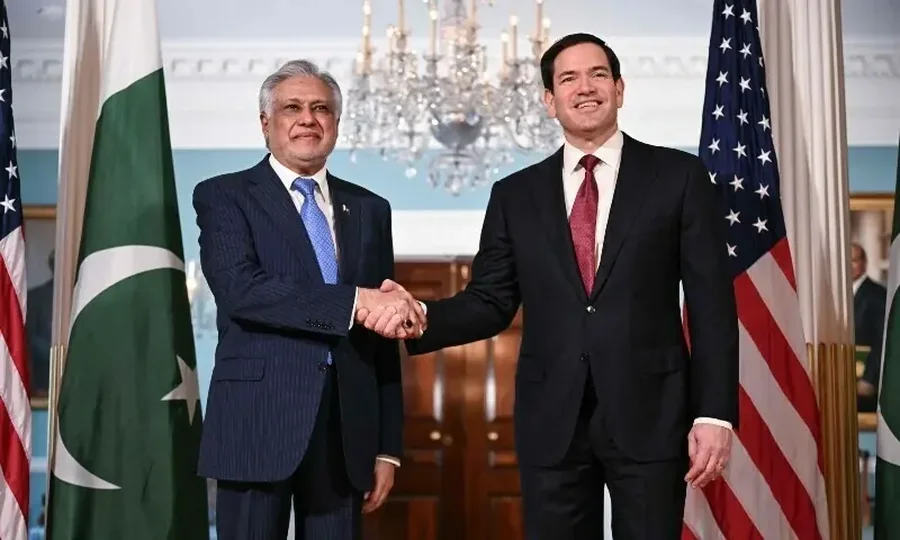
Pakistani Foreign Minister Ishaq Dar arrived in Washington on Friday, where he is expected to meet his US counterpart Marco Rubio, as Islamabad steps up mediation efforts to reach a permanent deal that would end the war between the United States, Israel and Iran.
The Pakistani Foreign Ministry said Dar will meet Rubio "to review bilateral relations and exchange views on regional and international developments of mutual interest, as well as the US-Iran negotiations."
For its part, the US State Department confirmed that Rubio will welcome the Pakistani foreign minister to State Department headquarters.
According to a Wall Street Journal report, talks between Washington and Tehran are continuing despite the recent US strikes on Iran's southern Hormozgan province, which is considered an indication that both sides remain committed to de-escalation and that communication channels have not been cut.
Vance: "We are close to an agreement"
US Vice President JD Vance said a deal with Iran has not yet been reached, but the two sides are close to an understanding. "It's not easy to know when or even if President Donald Trump will sign a framework agreement with Tehran," he said.
Vance also argued that the United States has the ability to significantly slow down Iran's nuclear program. As he explained, the main points of disagreement concern Iran's stockpile of highly enriched uranium and the enrichment program itself.
"There are two main issues: the highly enriched uranium stockpile and the enrichment issue," he said, adding that negotiators are trying to agree on general principles within the framework of an interim agreement, while details will be discussed later.
"We are in a position to delay their nuclear program not only during the current presidential term, but also in the long term. And that is positive for the American people," he added.
Washington's "red lines"
US President Donald Trump told Fox News he prefers a deal with Iran, but reiterated that "all options remain on the table."
US Treasury Secretary Scott Besant made it clear that Washington would not back down from its key demands, which include preventing Iran from acquiring nuclear weapons and ensuring freedom of navigation in the Strait of Hormuz. "President Trump will not accept a bad deal," he stressed.
Tehran's response
For his part, Deputy Foreign Minister Kazem Gharibabadi stressed that Tehran will not accept any request that does not serve its national interests.
He said the Iranian leadership attaches more importance to the official messages it receives from the United States than to the public statements of American officials.
Plan to extend the ceasefire
According to four sources familiar with the negotiations, the framework agreement being discussed provides for an extension of the ceasefire for another 60 days and the resumption of navigation in the Strait of Hormuz.
During this period, both sides will continue negotiations on the toughest issues, the most important of which is Iran's nuclear program.
If approved by the political leaderships in Washington and Tehran, the agreement would be the most significant step towards peace since the conflict began on February 28.




Lini një Përgjigje