


 Shkruar nga Pamfleti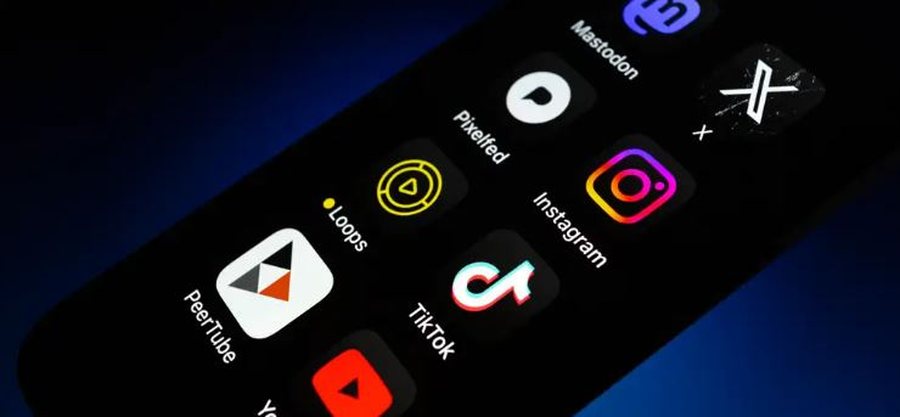
The Meta concern may sound familiar to you, but be honest: ByteDance? You've never heard of it, right? This may be the case for many social media users, yet billions of people use their products every day: Meta's Instagram and Facebook, Elon Musk's "X", formerly Twitter, or TikTok - and the latter comes, precisely, from ByteDance. These and other technology companies have become big and powerful over the years. In Europe, major efforts are being made to limit their influence. Here are the most important questions and answers.
Why are big tech companies criticized?
Large companies like Meta or ByteDance not only have great market power – up to three billion Instagram users and almost two billion TikTok users speak for themselves. Their influence goes beyond market dominance, because the platforms' algorithms influence what information reaches us and, to some extent, how we perceive the world through the filter of social networks. Critics say that the platforms do not do enough to combat fake news, encourage polarization, favor extreme content in their algorithms and do not pay enough attention to data protection – such as in personalized advertising or in training their artificial intelligence.
In Europe, several countries are debating banning social media for young people; Australia has already imposed such a ban. There has been a years-long clash between the EU and Meta founder Mark Zuckerberg over how to moderate content. Twitter, especially after its sale to Elon Musk and rebranding as X, has seen many users and advertisers leave. China's TikTok is accused of being close to the state and the Chinese Communist Party, raising concerns about censorship. European security authorities also warn that TikTok/ByteDance stores data on an unspecified scale, and it remains unclear whether and how China could use this data.
What European alternatives exist?
There are already European alternatives to Instagram, X and TikTok: Germany's Mastodon is among the most popular. France offers PeerTube, an alternative to Alphabet's YouTube. The French app BeReal had a brief popularity in 2022, limiting users to posting only one photo per day without editing - to reduce addiction. The Dutch network Eurosky aims to store data in a decentralized and GDPR-compliant way.
A newer alternative is “W Social” from Sweden, launched on May 9, 2026, which presents itself as a network governed by EU law, with data stored in Europe and real verified users.
Many European politicians welcome these alternatives, as they aim to ensure digital sovereignty. Henna Virkkunen, vice-president of the European Commission, has been active on Mastodon since June 2025. The Green party in the German Bundestag has also proposed that public institutions only use products that are not under the control of non-European governments.
What do European platforms do differently?
The example of Mastodon shows the differences: it operates in a decentralized manner, where data is stored on different servers, not on a single one. It uses the “ActivityPub” protocol and is part of “Fediversit”, a network of independent, mainly European platforms. The platforms are based on open source software, which makes them cheaper and more transparent. Algorithms avoid endless recommendations and the favoring of extreme content, helping to protect young people and prevent addiction.
What are the disadvantages?
The main advantage of social networks is the large number of users, which ensures reach and visibility. This is also the weakness of the European alternatives: they are still too small to have a global impact. Their use is often seen as more complicated. According to Jochim Selzer from the “Chaos Computer Club”, it requires convincing users to break away from the way they are accustomed to the big social networks and accept the different layouts of these new platforms.
Mastodon has about 10 million accounts and only about 1 million monthly active users. The PeerTube platform has about 1 million videos. Even so, they are considered among the European "big ones." However, at the moment it does not seem that the European alternatives can seriously compete with the American or Chinese giants./ DW







Lini një Përgjigje