


 Shkruar nga Pamfleti
Russia is suspected of having conducted a large-scale espionage operation against European countries for about a year and a half, using hundreds of drones launched from ships of the so-called "ghost fleet", which sailed in the English Channel, the North Sea and the Baltic Sea.
The conclusion comes from a report by the International Institute for Strategic Studies (IISS) in London, cited by The Guardian, according to which the operation took place almost without hindrance, highlighting the shortcomings of NATO air defense systems in the face of threats posed by small, low-cost drones.
The report identifies the United Kingdom, France, Germany, Belgium, the Netherlands, Sweden and several other Alliance member countries as targets of the operation.
"It is highly likely that this was a campaign planned and coordinated by the Kremlin," said Charlie Edward, the researcher who led the report.
According to him, more than 12 European countries have been affected by this activity, which is considered a tactical victory for Moscow and a strategic failure for NATO. The report argues that current defense systems are built primarily to deal with aircraft and missiles, not small drones flying at low altitudes.
The study's authors say the operation had several objectives, including monitoring nuclear power plants, collecting data on military bases, detecting critical infrastructure, and exerting psychological pressure on Western countries.
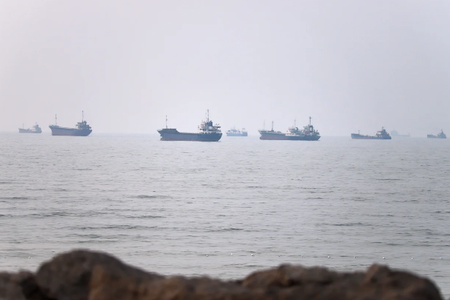
According to the investigation, the drones were launched from various vessels of the Russian "ghost fleet", including oil tankers, merchant ships and other private vessels, which sailed near the coast of northwestern Europe.
The report states that over 140 drone flights have been recorded near nuclear power plants and military facilities in the countries involved, without measures being taken to neutralize them.
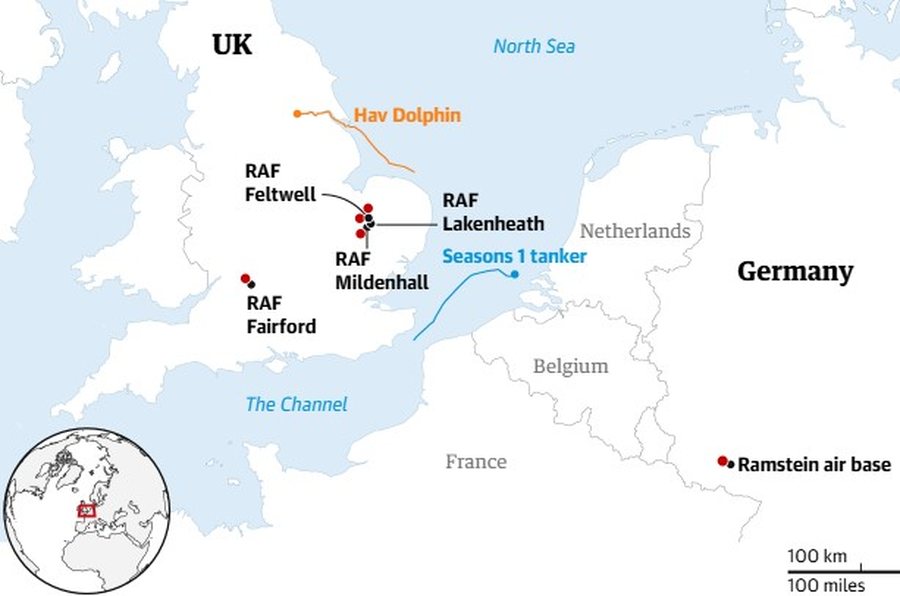
Among the documented cases are flights over the British air bases of Lakenheath and Fairford, the French naval base of Île Longue, where nuclear submarines are located, the Kleine-Brogel bases in Belgium and Volkel in the Netherlands, where American nuclear weapons are stored, as well as a submarine base in northern Germany.
Another incident occurred in September 2025, when Copenhagen Airport was temporarily closed after reports of drones in the area. During the same period, four tankers linked to the "ghost fleet", registered under flags of other countries but identified as Russian-owned, were sailing near the Danish coast. They were later seized by French special forces.
The report notes that the peak of activity was recorded between September and November last year, when an average of around 30 suspicious drones were identified near military facilities and civilian infrastructure in Europe each month.
According to the authors, incidents have decreased significantly in recent months, as the British Navy and the naval forces of other European countries have increased operations against ships suspected of being part of the Russian "ghost fleet".






Lini një Përgjigje