


 Shkruar nga Pamfleti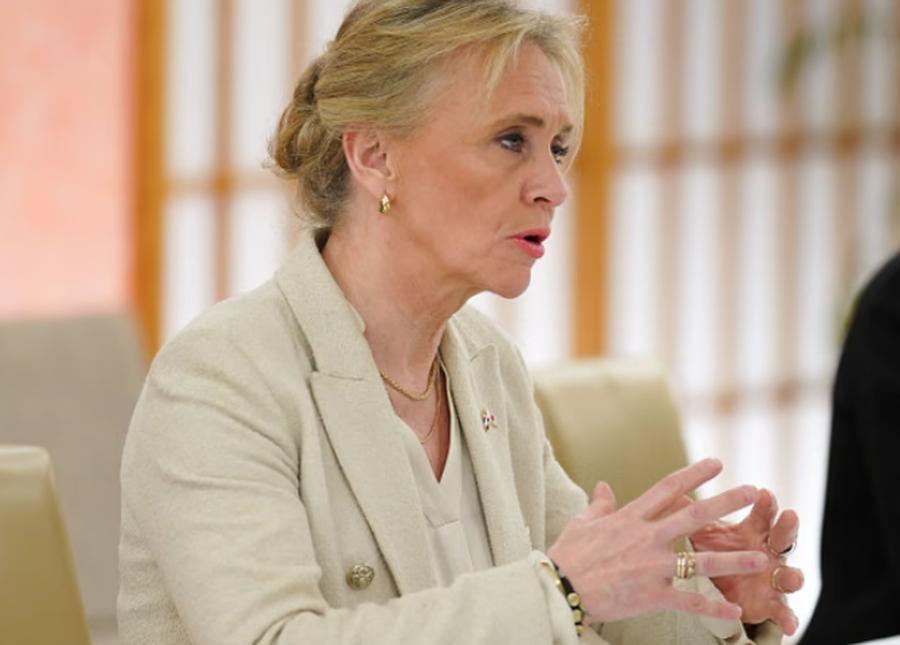
Torgerdur Katrin Gunarsdottir accuses opponents of spreading fear amid warnings about disinformation and artificial intelligence
Iceland's foreign minister has said she fears her country could face a "Brexit moment" in the upcoming European Union referendum, amid warnings of disinformation, foreign interference and the use of artificial intelligence.
With just over three months until Iceland votes to decide whether or not to continue membership negotiations with the EU, developments are being closely watched in Washington, Moscow and Brussels.
Torgerdur Katrin Gunarsdottir accused individuals and groups, both at home and abroad, of "spreading fear", saying Iceland is facing disinformation and rhetoric taken "from the Nigel Farage and Reform playbook".
She said the referendum risks becoming a target of Russia and “actors seeking to negatively influence our public debate.” Foreign interference and the spread of disinformation could ultimately affect the outcome of the vote, the minister warned.
“I fear we are going to face a Brexit moment,” she told The Guardian, adding, “from my perspective, that would be a pretty dangerous path to take, because during Brexit there were a lot of lies spread by Leave supporters.”
Torgerdur said that Brexit "should serve as an example of how not to run a campaign," and not as something to be imitated.
Iceland's coalition government, made up of the Social Democratic Alliance, the People's Party and the liberal Reform party, announced in March that the EU referendum would be held on August 29.
This decision was prompted in part by US threats to Greenland, Iceland's closest neighbor.
Torgerdur said that the international order that guaranteed Iceland's security and well-being for decades is facing serious pressure.
She added that old international relationships are being tested and that trade is increasingly being used as a "political weapon."
However, the minister stressed that relations between Iceland and the US remain strong and that EU membership does not conflict with the partnership with Washington.
In the August referendum, Icelanders will not vote directly on EU membership, but on the resumption of negotiations with the European bloc.
Iceland applied for EU membership in 2009 and negotiations began in 2010, but the process was suspended in 2013. Polls show a close race: 42% of citizens support resuming negotiations, while 39% are against.
Supporters of membership argue that it would strengthen Iceland's security and European integration, while opponents express concerns about fishing, agriculture and national sovereignty.
Fishing remains one of the most sensitive topics of debate, as it constitutes a key sector of the Icelandic economy and identity.
Torgerdur called on citizens to form their own opinions and be careful about information sources.
She accused some political forces of using methods similar to those used by Ukip before the British Brexit referendum. Meanwhile, Prime Minister Kristrun Frostadottir warned that foreign influence in the referendum "will not be tolerated", whether from the EU, China, Russia or the US.
President Hala Tomasdottir warned about the dangers of artificial intelligence, saying it could produce deceptive content that appears convincing and influence public opinion.
Professor Hafstein Einarson from the University of Iceland also expressed concern about how artificial intelligence models could spread inaccurate information about the referendum and related issues.




Lini një Përgjigje