


 Shkruar nga Pamfleti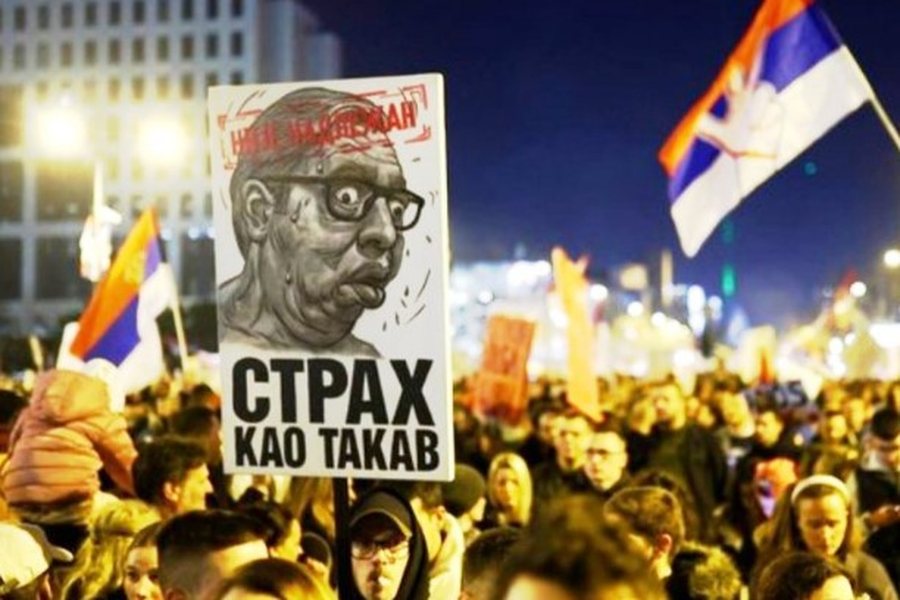
The regime in Serbia is constantly trying to suppress editorial offices engaged in investigative journalism.
The pressure on independent media in Serbia is entering a new and more dangerous phase, with investigative newsrooms facing SLAPP lawsuits and Serbian President Aleksandar Vučić attempting to influence decision-making at United Media.
A recording of a conversation between Vladimir Lučič, CEO of Telekom Srbija, and Stan Miller, CEO of United Group, recently published by the Raskrikavanje portal, revealed details of an attempt to dismiss Aleksandra Subotic, CEO of United Media, the company that owns N1, Nova.rs, Danas and Radar, professional media outlets that criticize the government in Serbia.
This conversation has raised concerns in the media community, as it indicates direct political pressure on independent media.
New directors, Vladica Tintor, Timothy Lincoln Pennington and Gilbert Marie Schroen, have taken over decision-making at United Media Production, United Cloud and Direct Media, further fuelling doubts that the government will succeed in taking over United Media. KRIK journalist Vesna Radojevic, one of the authors of the article “ Behind Closed Doors: Telekom and United Group Directors Agree on How to Weaken the Media of This Group ”, tells Danas that Vučić’s efforts to suppress the media have existed since the beginning of his political career.
"For years, we have witnessed attempts to suppress independent journalism in Serbia through a combination of pressure, smear campaigns, financial exhaustion and even the murder of journalists. What we are witnessing today is just a new phase of the same process: the systematic destruction of citizens' trust in any editorial office that dares to investigate government abuses," says Radojević.
However, she believes that the government's goal of closing down professional and independent media will not succeed.
"There are journalists and editorial offices that have survived worse times and do not work because they are allowed to, but because they feel a responsibility to the public," says Radojevic.
According to her, the government in Serbia is trying to discredit the reputation of the journalism profession because it is worried about professional journalism. As she says, they have created a system that operates only on the basis of propaganda, and any real information threatens them because of this.
“When government representatives or their collaborators speak disparagingly of journalism, when they boast that they fabricated the news, they are not just talking about themselves, they are saying that lies are a legitimate tool of political warfare. This is dangerous. And it shows how little these people care about the common good, not at all,” says Radojevic, adding that the regime wants to confuse citizens and make them feel uncomfortable so that they will no longer trust anyone.
In addition to the pressure on United Media, the regime in Serbia is constantly trying to suppress editorial offices engaged in investigative journalism. Vesna Radojevic emphasizes that the government uses all available methods to exert pressure on investigative newsrooms, from media campaigns and public attacks to abuse of institutions.
“KRIK is currently fighting approximately 16 or 17 lawsuits, some of which seek prison sentences for journalists. We are constantly targeted by tabloids that publish outright lies. Our journalists have been followed and the apartments of two female journalists have been raided. The pressure will only increase as the government continues to lose ground ,” says Radojevic, adding that Serbia’s geographical proximity to Western Europe is currently preventing further escalation of the situation in Serbia.
Perica Gunjic, editor-in-chief of the Cenzolovka portal, believes that for 13 years the government has systematically destroyed media outlets that report professionally and responsibly, starting with the destabilization of the local media scene.
"Now that there are only a few media outlets left that have miraculously survived despite the pressure and difficulties, the government is fulfilling its mission with these media outlets as well, which provide information in the public interest. The goal is to leave only propaganda channels on the media scene," says Gunjic.
He recalls a situation when Suzana Vasiljevic, an advisor to the Serbian president, admitted during a television appearance that in 2000, when she worked as a journalist for the BBC, they invented a war in Montenegro in order to spend three months in Sveti Stefan and thus reduce the importance of the journalism profession. Meanwhile, the BBC has denied that she was ever employed by them. In his opinion, the future of the media in Serbia looks very bleak.
Mihailo Jovicević, director and editor-in-chief of the Nova portal and newspaper, believes that the government's current efforts to take control of United Media represent a strong blow to free journalism in Serbia.
“Aleksandar Vučić is not really interested in who the journalists are, nor who the editors are, and even less who the media directors are: what matters to him is eliminating news critical of himself and his regime. He has been working tirelessly towards this goal since 2012 and is succeeding. He will never succeed in silencing all critical voices, but in this round, for now, he is on the path to victory,” says Jovićević, emphasizing that he and his colleagues will do everything they can to prevent this from happening./ Adapted from "Pamphlet" by "TheGeopost"



Lini një Përgjigje