


 Shkruar nga Pamfleti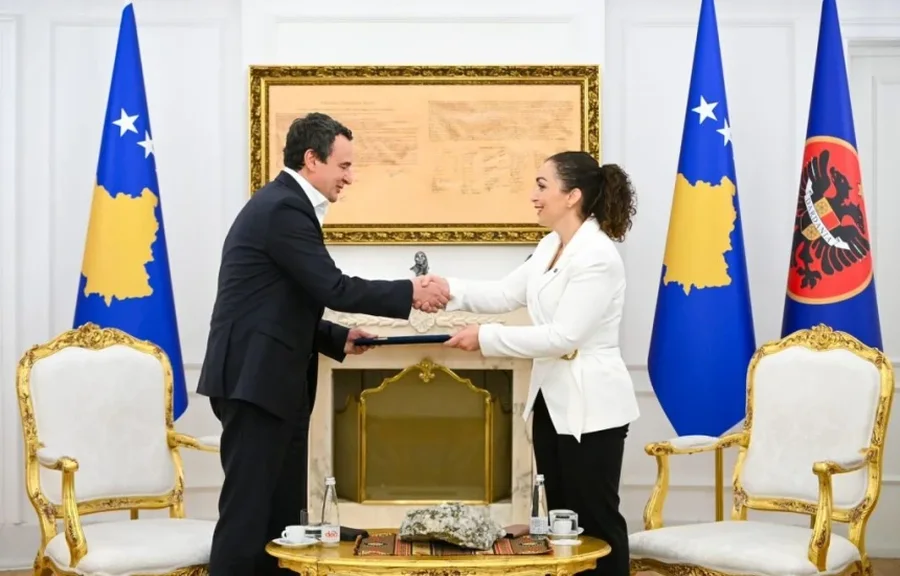
Albin Kurti seeks an even stronger mandate for Vetëvendosje, while on the other hand, Vjosa Osmani's return to LDK is reforming the opposition and creating a new political balance...
The June 7 elections are bringing back a familiar scenario of Kosovar politics, but with changed roles and a clash that is now not only for power, but also for control of the country's political and institutional narrative. On the one hand, Albin Kurti is seeking an even stronger mandate for Vetëvendosje, while on the other hand, the return of Vjosa Osmani to the LDK is reforming the opposition and creating a new political balance.
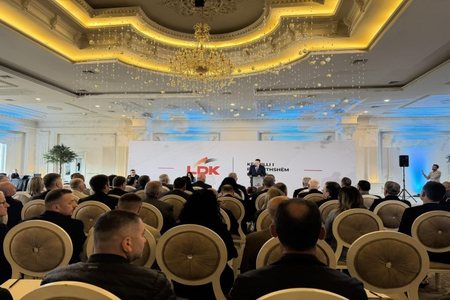
Kosovo is entering its third parliamentary elections in just 18 months, in a climate that brings back memories of the traditional clash between the Vetëvendosje Movement and the Democratic League of Kosovo. However, unlike previous political cycles, this time the relations have been transformed by the movements of key figures and the ambition for institutional dominance.
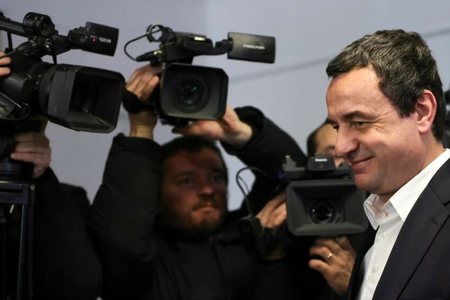
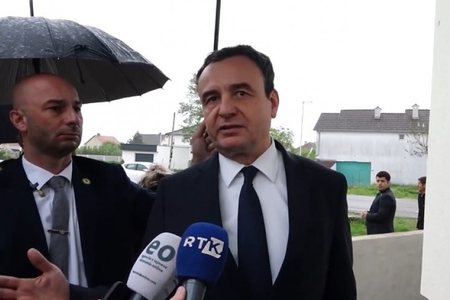
At the center of this race is Albin Kurti, who is entering the elections with the aim of further consolidating Vetevendosje’s power. His political discourse is based on the idea of continuity of government and on the argument that the country needs institutional stability. Kurti has built his campaign on the economic and social results of his government, citing the increase in the state budget, the minimum wage, employment programs and social schemes as evidence of the success of the previous mandate. In parallel, he is presenting the opposition as a factor that has produced a political crisis and that has hindered the normal functioning of the institution, creating the narrative that Vetevendosje is facing attempts at political deadlock.
This approach has reinforced the perception that Vetëvendosje is not only seeking electoral victory, but also full legitimacy to control key state institutions. This is precisely where the main political debate of the moment lies: the opposition accuses Kurti of a tendency to centralize power and create a “party-state” model, while Vetëvendosje argues that political opponents are using institutional blockades to hinder stability and the continuation of reforms.
In this political atmosphere, the return of Vjosa Osmani to the LDK list is the development that has most changed the balance of the race. Her return has not only an electoral effect, but also a strong symbolic weight. Osmani had left the LDK after clashes with the traditional party structures and after the fall of the Kurti Government in 2020. She then became part of the Vetëvendosje political project and the figure who gave this project greater legitimacy in the political center, before being elected president with Kurti's support.
Now, her return to the LDK marks the end of one political cycle and the opening of another. The figure who once helped Vetëvendosje expand beyond its traditional electorate is now being used by the LDK as a stronger counterweight to Kurti. Lumir Abdixhiku is trying to present this return as a unification of the institutionalist spectrum and as a return of the reformist spirit within the party. Meanwhile, Osmani himself is trying to present her return as a response to civic demand and not as an internal political compromise.
However, despite the public message of unity, internal tensions within the LDK continue to be visible. The absence of several important figures at decision-making moments in the party has raised questions about the real level of internal consensus and how Osman's return to the party structures will be managed.
In essence, the clash between Vetëvendosje and LDK is going beyond the traditional competition for power. It is turning into a battle for Kosovo’s political and institutional model. Vetëvendosje is seeking a new mandate, arguing that progress is being hindered by the traditional opposition and a lack of institutional cooperation. On the other hand, LDK is trying to portray Kurti as a leader who is leading the country towards deep political polarization and back-to-back elections due to a lack of compromise.
In this confrontation, Vjosa Osmani remains the element that can most influence the electoral balance. For years, she has been a figure who has attracted the urban, institutionalist electorate and voters disillusioned with the traditional political establishment, precisely the segment that once helped raise Vetëvendosje. Now, with Osmani on the side of the LDK, the June 7 race is taking the form of a deeper political battle, where not only parties clash, but also two different visions of how the state of Kosovo should be run.


Kjo shtupa e ka mendjen si Ktyemadhi Agushit, te mbaje linjat e trupit e te rregulloje surratin. Politike zeza thuaj me mire.
Po C’politike mendone se mundet te bejne keto?Zonjat jane per Shtepi Shoke jo gje tjeter…
Ashtu është, nga 120 kg ka vajtur 55 kg. Per shkak të kesaj bibës, Kosova duhet të shkojë edhe njëherë në zgjedhje. Kolltuku u dashka jashtezakonisht shumë.