


 Shkruar nga Pamfleti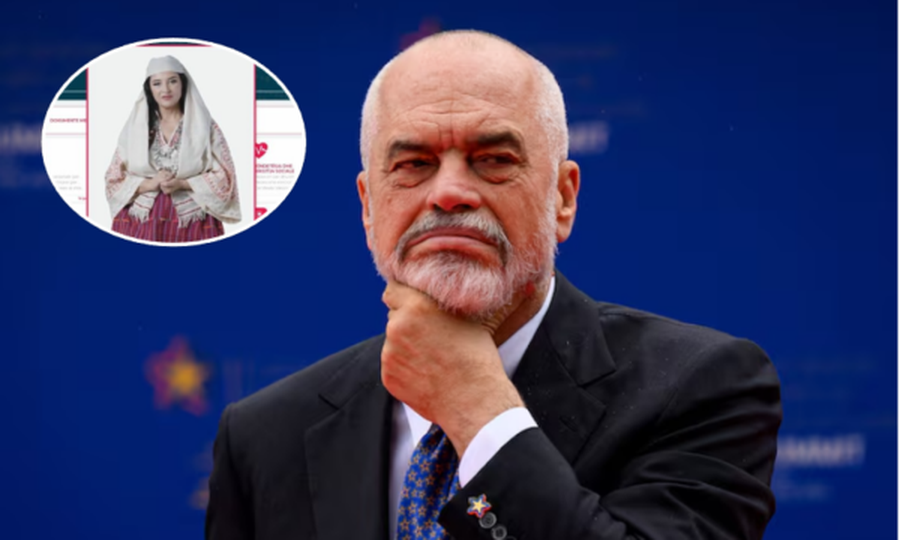
Diella's wrong decisions will not have clear ownership and could be "explained" as system errors; legal responsibility is unclear...
Diella is Albania’s new minister for public procurement, appointed by Prime Minister Edi Rama. The decision is seen as unconstitutional, as the Constitution clearly states that ministers must be citizens with full mental capacity and at least 18 years old. Diella, however, is an artificial intelligence, a “bot” with a name that sounds like a pop star and means “sun” in Albanian.
The Prime Minister, now in his fourth term, presents this innovation as a “world first” with the aim of making public competitions in Albania 100% free from corruption. According to official data, Diella claims to have facilitated around one million applications on the e-Albania platform, processed 36,000 digital documents and provided around 1,000 services to citizens since January 2025. Gazment Bardhi of the opposition described the appointment as “a propaganda fantasy”. When the appointment was brought to a vote, the Socialist Party voted in favour, while the opposition did not participate.
Albania has long been grappling with deep corruption problems; media headlines have alleged that certain systems represent avenues for laundering drug and weapons money, and that corruption affects even the highest levels of government. Rama’s ambition to see Albania join the European Union by 2030 depends largely on restoring the country’s reputation and credibility.
This major move demonstrates a clear goal: to repair, in one fell swoop, the credibility of the procurement system.
Could it work? To begin with, an obvious benefit is that a bot is not tempted by bribes in the classic monetary form. The system can be codified so that the rules are transparent at every step and applied uniformly, eliminating nepotism and bias. Applications, delays and bureaucracy, typical problems of many government systems, can be reduced as AI has the capacity to process large volumes of data, detect irregularities and provide solutions quickly.
But there are many shortcomings. Diella’s wrong decisions will not have clear ownership and could be “explained” as system errors; legal liability is unclear. The system will be vulnerable to cyberattacks, data “poisoning”, algorithms with unspoken or intentional biases, and the risk that corruption will move into darker areas, under the “veil” of false transparency, is real. Moreover, the legal shortcomings are obvious and require rapid correction, something that may be inaccessible in the early stages. Diella, developed by the National Agency for the Information Society in collaboration with Microsoft, is modeled after actress Anila Bisha and speaks in her voice.
On a lighter note: in noisy cabinet meetings, Diella’s answers will be precise and measured; she will demand that details of procurement payments be uploaded to the procurement portal, without partial answers. Re-election campaigns will increasingly become a demand for the “right click”, and downloading prohibited files could become a source of future scandals. Of course, Diella will be a huge energy consumer, and how she will react to human surveillance is expected to be extremely interesting.
Is there a precedent? Diella’s appointment as a minister is unprecedented. However, there are similar cases around the world: Estonia, a pioneer in digital governance, created KrattAI as a virtual civil servant to assist citizens with public services. In 2018, the city of Tama in Japan had an activist run for mayor as a human representative of an AI program; although the program quickly analyzed citizen petitions, voters chose a human candidate. China, since 2017, has been operating “internet courts” for intellectual property, e-commerce and other cases, with 3D holographic judges powered by AI operating 24/7, a concept that raises questions about the backlog of court systems in countries with millions of backlogs.
The bigger question to be answered is whether a technological solution can fix systemic problems without deep political and institutional reforms. The Albanian government remains particularly vulnerable due to its history in public procurement. While the system can try to correct behaviors related to patronage, vested interests/lobbies and distributed responsibility, will the political will withstand when the dynamics of power and money fundamentally change? What can a bot do if the political terrain, the judicial system, the administration, the media and civil society remain infected with corruption? Technology is only an aid; without a deep and integrated transformation, the new initiative may remain largely symbolic. /Adapted from “ Financial Express ”
*Editorial title, original title: "An algorithmic antidote to corruption?"





Rama tregoi ne keto 12 vjet ne pushtet qr vetem shtet nuk di te bej. Mundohet gjithmone ti jape vemendje protagonizmit vete, dhe askush tjeter rreth tij nuk ka vlere. Eshte individualist demagog, i semure, manjak pervers deri ne ekstrem. Mbolli Shqiperine me droge, shkaterroi Tiranen, ka bere Shqiperine vendin me te shtrenjte ne europen jugore, ka hapur portat e ekonomise shqiptare per leket e pista, ka ngritur nje adminiatraze parazite e korruptuar ne kocke. Ka deshtuar ne cdo aspekt. Nje psikopat qe mban peng nje shtet te tere.
Me mllef nuk luftohet Rama.Sot tenderat fitohen me rreth 98 përqind të vlerës fillestare.pra ka paracaktim të fitusit emarrëveshje mes konkurentëve.Nëse futja e diellës në lojë do bëjë që fitimi i tenderave të bjerë në 90 përqind të vlerës fillestare ,ky do jetë një sukses.Koha do provojë efektin Diella.Tani kemi vetëm hamendje e mllefe.