


 Shkruar nga Pamfleti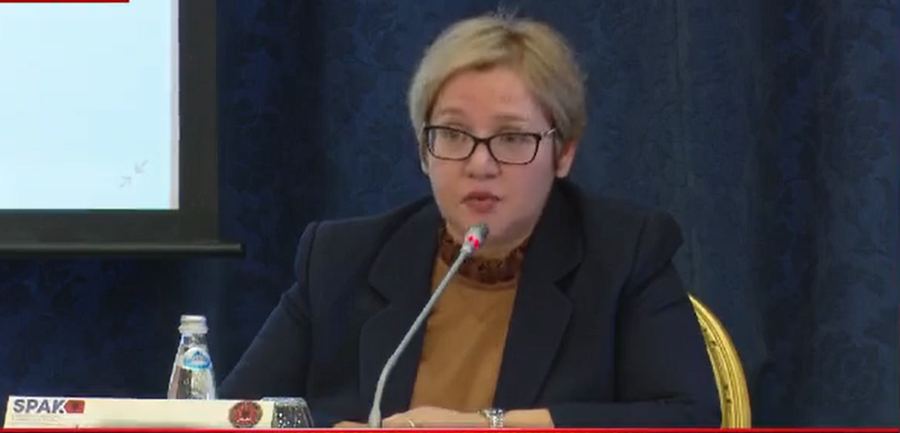
In reports to the US-EU, the former director of BKH accuses SPAK leaders of secret collaboration with Edi Rama. Forbidden files, dictated investigations and agreements to protect people in power...
On September 1, 2025, the head of the National Bureau of Investigation, Aida Hajnaj, will officially leave office. But she is not leaving empty-handed. In her hand and in her memory, Hajnaj holds files, reports and evidence that surpass any public reporting made by SPAK or its own prosecutors.
According to information provided by Pamfleti, Aida Hajnaj has filed a series of reports with international partners from the US-EU and the High Prosecutorial Council that shed light on secret agreements and direct political influences on the activities of the Special Prosecutor's Office. At the center of her accusations is Altin Dumani himself and his predecessor, Arben Kraja.
According to Hajnaj, in many cases, every report and every sensitive file was previously discussed with Prime Minister Edi Rama, to receive a tacit "ok" from him on what could be investigated and what should be archived. An unacceptable practice in a supposedly independent justice system.
In other words, SPAK has functioned as a political office within the Prime Minister's Office, where its leaders have received prior verbal permission from Bablok to decide which cases would go for investigation and which would be silenced.
In these reports, Aida Hajnaj has listed specific cases for which it has been decided by political order not to be investigated. Among them, the following stand out:
The “Gaçi-Xhaçka” case, where Dumani publicly opposed the decision of the Court of First Instance and in agreement with Rama, was finally closed in the Appeal on May 14, 2025.
The “PPP-Sterilization” file, where Ilir Beqja was initially excluded from the investigation, but only after pressure from US-EU partners and after the Court's decision on EU funds, was he forced to be included as a defendant.
The “Krifca-AZHBR” case and the construction in Himara, where investigations were stopped or diverted under direct political orders.
The agreement not to prosecute the builder Salillari, even though there were concrete reports of affairs with public funds.
In several other cases, Hajnaj has documented direct orders from SPAK to the BKH, which came as a result of a signal from the Prime Minister's Office. So, the National Bureau of Investigation was commanded as a structure that had to act, or be stopped, according to the interests of the ruling political establishment.
For Aida Hajnaj, this was not acceptable. She, in accordance with the law and international agreements for the functioning of the BKH as an independent structure, has repeatedly refused orders that conflicted with the Constitution, and for this reason, has become undesirable for the clans that are now controlling SPAK from within.
Her departure and the process of appointing a new leader – which according to sources was predetermined by a simulated competition – is a move to clear the field of figures who are not politically controllable. Because Hajnaj was not controllable, and because the files she left in the hands of her partners are a silent bomb for SPAK and for Rama himself./ Pamphlet






Lini një Përgjigje