


 Shkruar nga Pamfleti
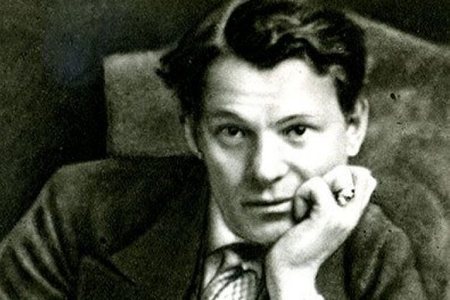
Berlin. Young, beautiful, free and courageous to the point of madness, Larisa will give everything to this venture. Next to a figure who was a real figure in Soviet history.
We are in Kabul in the early 1920s. The fragile King Amanullah Khan must navigate the British Empire and his ambitions for autonomy. Precisely for this reason, he was among the first to recognize the newly formed Union of Soviet Socialist Republics. That is why Larisa Reisner was sent there with her husband, Fyodor Raskolnikov, former commander of the Volga Fleet, with whom she performed some of the most daring feats during the war against the Whites.
Not without consequences, Larisa is destroyed by malaria, her husband by vodka. But Larisa, however weakened, remains herself: the "Valkyrie of the Revolution" and a fearsome spy. While wandering through the city, hidden in a burqa, she stumbles upon the secret plans of the German officer Oskar von Niedermayer, who, a few years earlier, had tried, starting in Afghanistan, to overthrow the British Empire, striking it in the most unexpected place: India, a key piece in the Great Game between East and West.

Now, in defeated Germany, subversive fermentation is boiling, and Larisa devises the crazy plan to make Niedermayer the liaison with General Tuchayevsky, the "Red Napoleon" of the Bolshevik Revolution, and thus to cement a pact of steel between Moscow and Berlin.
Young, beautiful, free, and courageous to the point of madness, Larisa will dedicate herself entirely to this endeavor.
Around a real figure in Soviet history, a revolutionary and talented writer, a friend of Lenin and Trotsky, transformed by Pasternak into Lara in Doctor Zhivago, admired by Mandelstam and Blok, Steffen Kopetzky, a German writer of many talents, builds a novel where intrigue and seduction narrate the attempt to change the world in the name of "singing tomorrows."
Larisa died in 1926 when she was struck by typhus, already weakened by malaria.
Where did the plan to bring Germany and the USSR closer come from, one must ask Ribbentrop-Molotov. /Adapted from Il Giornale /






Lini një Përgjigje