


 Shkruar nga Pamfleti
What happened at Marilyn Monroe's house before the police arrived?
The heart of Hollywood's most famous woman weighed 300 grams. Coroner Thomas Noguchi noted in the autopsy report: " Epicardium and pericardium smooth and shiny ." At the age of 35, he had already examined more than a thousand bodies, but the one in front of him on August 5, 1962 was different from all the others.
The woman being autopsied was Marilyn Monroe. She was 5 feet 11 inches (1.66 meters) tall, weighed 110 pounds (53 kilograms), and had bleached blonde hair and blue eyes. When Noguchi examined her liver, he noticed something that would go down in history. The organ weighed 6.1 pounds (1.890 grams) and contained 246 milligrams of pentobarbital, a barbiturate with sedative and hypnotic effects.
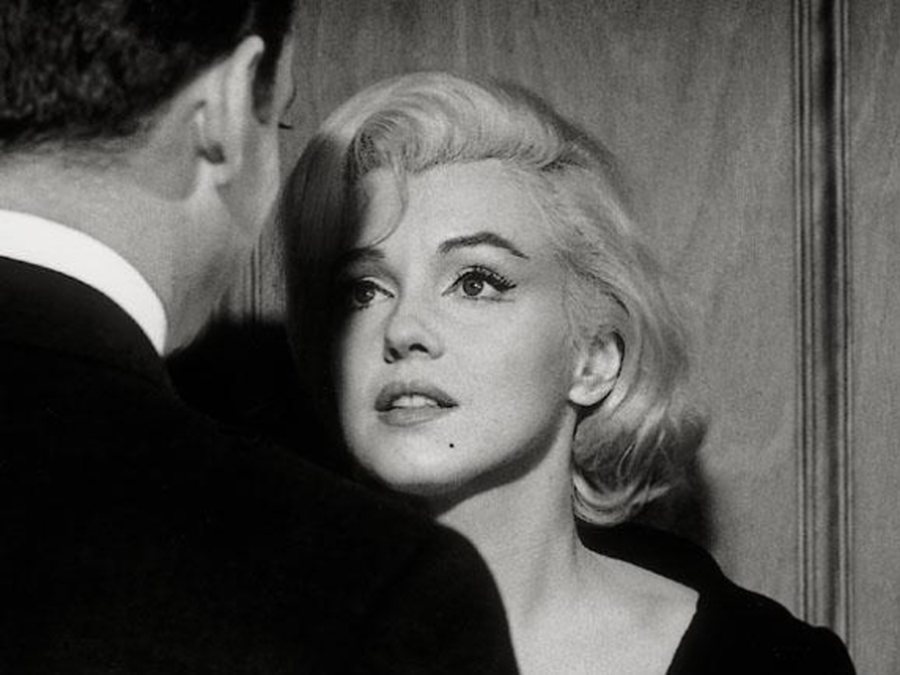
From that day on, the drug's trade name, "Nembutal," became part of one of the greatest mysteries of the 20th century.
Marilyn Monroe died from an overdose of a medication that had helped her cope with insomnia, anxiety, depression and fatigue for years. Her personal physician, Hyman Engelberg, had prescribed her a sleeping pill at night, but she often took more. Another powerful sedative, chloral hydrate, was also found in her system.
Yet, even after 64 years, the question remains the same: was it suicide, an accidental overdose, or something darker?
A night that was never explained
On August 4, 1962, Marilyn was at her home in Brentwood, Los Angeles. During the day, she was visited by psychiatrist Ralph Greenson, and in the evening, she received a call from actor Peter Lawford, the Kennedy family's brother-in-law.
According to contemporary accounts, Monroe appeared depressed and declined an invitation to dinner. Later that night, her caretaker, Eunice Murray, stated that she saw the light on in the actress's room and noticed the telephone cord under the door. When she got no answer, she called her psychiatrist and doctor.
Greenson arrived at around 3:40 a.m., broke a window and entered the room. According to his testimony, he came out two minutes later and said, "We lost him."
However, the police were only notified at 04:25.
This delay of more than half an hour, along with gaps in the night's chronology, became one of the most contentious elements of the case.
Why did the mystery arise?
The first police officer to arrive at the scene, Jack Clemmons, later stated that Marilyn's body appeared to have been carefully placed on the bed.
"The body was covered with a sheet. The legs were perfectly straight and aligned. It looked like someone had arranged it," he recalled years later.
Another element that fueled suspicions was the fact that a full criminal investigation was never conducted. Practically, the investigation was limited to the autopsy and the forensic report.
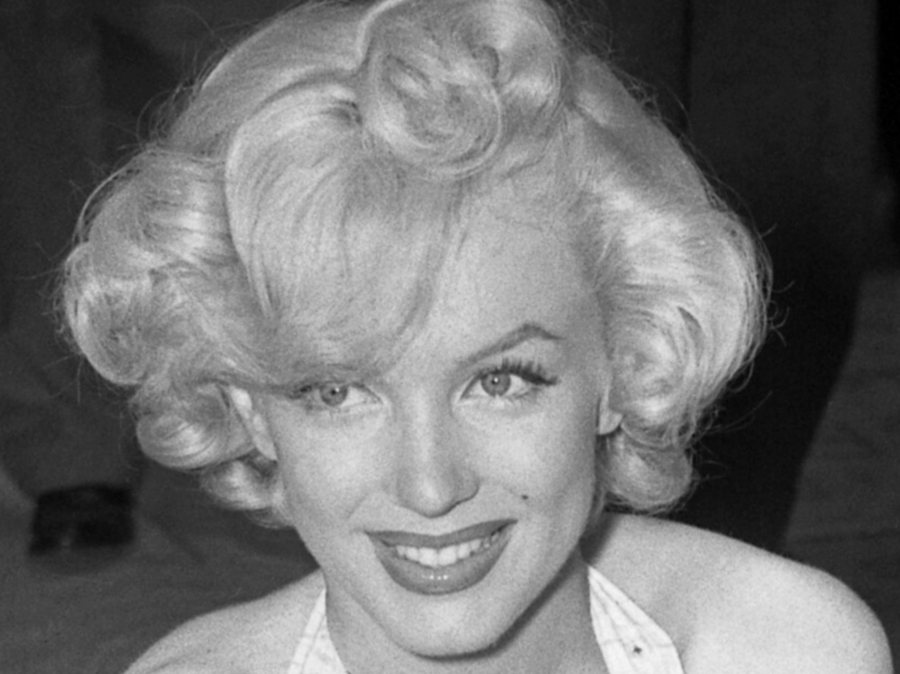
The autopsy revealed no signs of violence or injections. The stomach was empty and no tablet residue was found, a detail later used by supporters of alternative theories to argue that the drug could have been administered in other ways.
Later, most of the biological samples were destroyed and no autopsy photographs exist.
On August 17, 1962, just 12 days after her death, authorities announced the official conclusion: "probable suicide."
Kennedy, the mafia and endless theories
Since the 1960s, dozens of alternative theories have emerged. Some authors have claimed that Marilyn was killed to protect Robert Kennedy. Others have implicated the FBI, the CIA, the Mafia, or a combination of all of these.
A widespread theory suggests that after her death the house was "purged" of compromising documents and objects that could damage Robert Kennedy's political career.
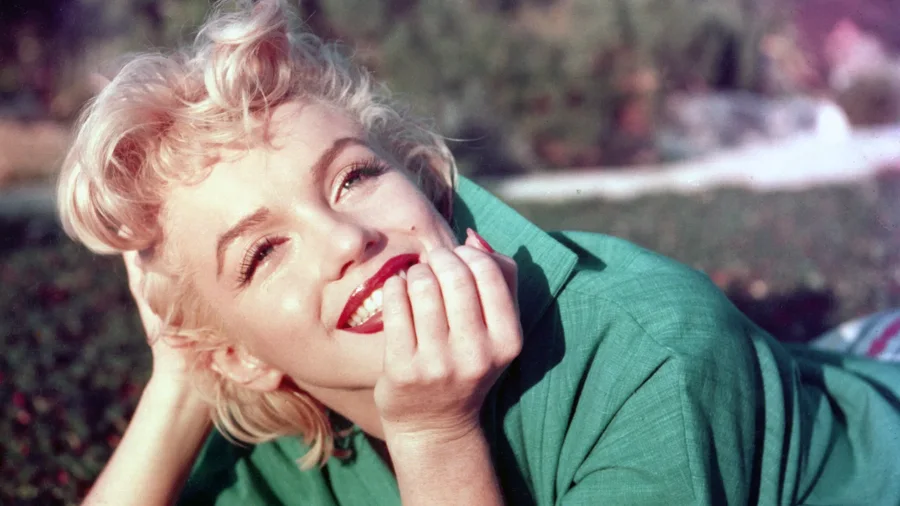
Investigative journalist Anthony Summers argued in his biography "Goddess" that there is no convincing evidence of murder, but there are serious indications that after the actress's death, powerful people may have intervened to destroy sensitive material.
Private investigator Freddie Otash also claimed years later that Peter Lawford had told him that Robert Kennedy had been at Monroe's house that night and that people close to him had removed compromising material before the police arrived. None of these claims were ever proven.
Reopening the case
In 1982, the Los Angeles County District Attorney's Office conducted a full review of the case. After analyzing the documents, experts concluded that there was insufficient evidence to reopen the investigation as a homicide.
However, the report acknowledged several serious inconsistencies: the chronology of the night was unclear, the testimony often contradictory, and phone records had been seized by the Los Angeles police chief without ever explaining why.
The review concluded that accidental overdose remained as plausible as suicide.
A mystery that never dies
On June 6, 1968, the same medical examiner, Thomas Noguchi, performed the autopsy on Robert Kennedy, who had been assassinated in Los Angeles. The two names that had fueled America's biggest conspiracy theories for years met again, this time in the autopsy room.
Today, more than six decades after Marilyn Monroe's death, there is no conclusive evidence to refute the official version. But it is equally true that many questions remain unanswered.
Between 246 milligrams of pentobarbital, seven unclear hours of the last night and the lack of a full criminal investigation, the Monroe case continues to remain one of the greatest mysteries of modern American history. / Adapted from “Corriere Della Sera”



Kur politika implikohet me persona Te njohur boteror , per Te ruajtur mosdeskriditimin e politicians te rendedishem , organizohen dhe vrasje Te tilla qe I egsekuton mafia ose institutions e shtetit Te vertetat e vrasje e Te tilla archives per Te mos u hapur kurte