


 Shkruar nga Georgios Samaras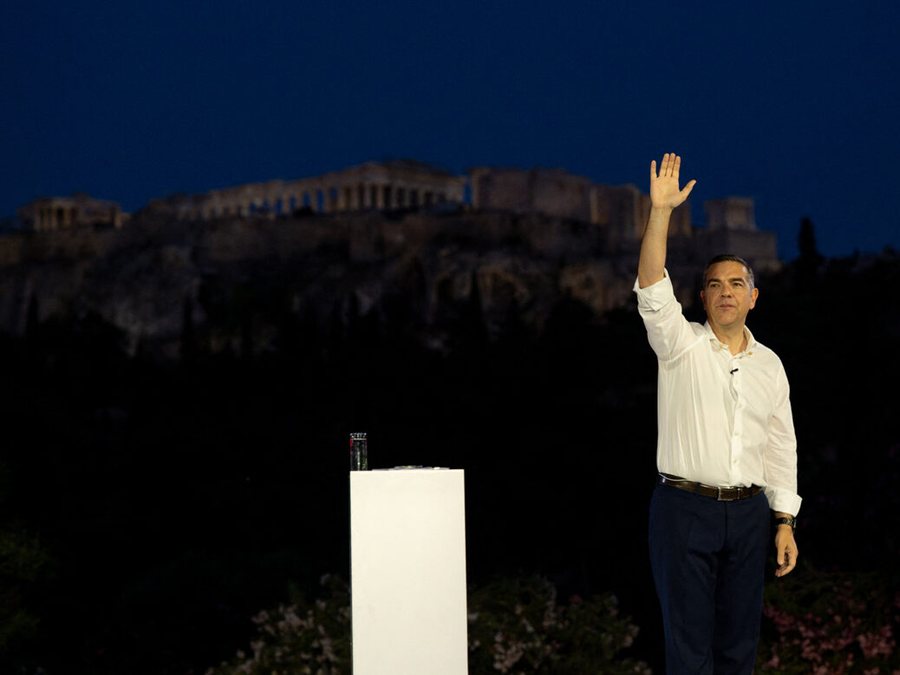
The return of charismatic leaders to active politics is often presented as a solution to the crises of parties and democracy. But the Greek experience shows that political messianism can delay true renewal, holding the future hostage to the figures of the past...
Alexis Tsipras returned to the center of Greek politics on a warm May evening in Thiseio, in the shadow of the Acropolis. The former prime minister and former leader of Syriza announced the creation of the Greek Left Alliance, marking his return to active politics after three years away. His return comes after Syriza’s devastating defeat in the 2023 parliamentary elections, when New Democracy secured a landslide victory and reduced the party that once promised to transform Greece to a peripheral political force.
The presentation of the new party was carefully thought out to convey a message of renewal and self-confidence. Even its acronym, ELAS, carries a special historical weight, recalling the Greek People's Liberation Army, the communist-led resistance force during the Nazi-fascist occupation.
Early polls show that Tsipras' new formation is gaining ground, helped by the vacuum that has characterized the Greek opposition since 2023. While New Democracy and Kyriakos Mitsotakis have governed with little parliamentary pressure, parties on the left have been weakened by internal conflicts.
Tsipras is trying to retake this political space. However, his new initiative carries a heavy political burden. Thus, Tsipras once again presents himself as a figure who can save and reorganize the left.
But many in the Greek progressive camp view him with great suspicion. For them, his name is associated with a history of divisions and disappointments, from the famous turn to austerity in 2015 to the collapse of Syriza after 2023.
The new party may be presented as a new beginning, but the question remains the same: is Tsipras here to rebuild the left or to complete the process of its destruction? His political career can be read as a story of continuous fragmentation.
In 2013, Syriza went from a coalition of political forces and tendencies to a single, centralized party, a move that strengthened Tsipras' leadership but exposed and weakened internal critical currents, especially the Left Platform.
However, the biggest divide occurred in 2015. After winning the election on the promise of ending harsh austerity policies, Tsipras organized the famous referendum where 61 percent of citizens voted against the conditions of international creditors.
Vetëm pak ditë më vonë, ai pranoi një paketë të tretë shpëtimi financiar. Për një pjesë të madhe të krahut të majtë të Syriza-s, kjo u perceptua si një tradhti e dyfishtë: militantëve iu kërkua të mbronin një mandat radikal që më pas u braktis, ndërsa rezultati i referendumit u anashkalua praktikisht.
Përçarja që pasoi shënoi fundin e epokës së Tsipras si udhëheqës i së majtës radikale. Pas humbjeve në zgjedhjet europiane dhe parlamentare të vitit 2019, si dhe në të dy raundet e zgjedhjeve të dyfishta të vitit 2023, Tsipras dha dorëheqjen nga drejtimi i Syriza-s, duke lënë pas një parti në krizë pa bërë asnjë analizë serioze të dështimeve të tij.
Në këtë boshllëk politik hyri Stefanos Kasselakis, një ish-punonjës i bankës amerikane Goldman Sachs dhe figurë pothuajse e panjohur në politikë, fushata e të cilit u mbështet kryesisht te marketingu personal dhe rrjetet sociale.
Kasselakis mposhti Effie Achtsioglou, ish-Ministren e Punës që konsiderohej si përfaqësuese e vazhdimësisë së partisë, dhe e shndërroi pothuajse menjëherë Syriza-n në një organizatë që ngjante më shumë me një kompani startup të dështuar sesa me një forcë politike serioze.
Deputetë dhe figura të rëndësishme u larguan, u formalizua një tjetër ndarje e brendshme dhe në nëntor 2024, Syriza e humbi statusin e opozitës kryesore, duke u kaluar nga PASOK-u pasi grupi i saj parlamentar u reduktua në vetëm 29 deputetë.
Për më shumë se dy vjet, Tsipras e pa në heshtje partinë e tij të shpërbëhej, ndërsa ndërtonte paralelisht imazhin e tij të ri publik. Ai mori pjesë në një program kërkimor në Harvard dhe priti deri në tetor 2025 për të dorëzuar mandatin e deputetit.
Edhe kjo tërheqje e pretenduar nga politika zgjati më pak se tetë muaj. Në thelb, sjellja e tij nuk jep përshtypjen e një politikani që kërkon të shkëputet nga e kaluara. Përkundrazi, krijimi i ELAS-it e vendos Syriza-n përballë një dileme ekzistenciale: ose të shkrihet gradualisht në projektin e ri të Tsipras, ose të mbijetojë si hija e partisë që dikur e bëri atë lider kombëtar.
Që të dyja rrugët çojnë drejt një tjetër përçarjeje në të majtën greke. Pikërisht për këtë arsye simbolika e ELAS-it ka kaq shumë rëndësi. Ajo i referohet kujtesës historike të rezistencës së majtë, ndërsa gjuha politike e projektit të ri huazon elementë nga e djathta.
Gjatë prezantimit, Tsipras foli për sigurinë kufitare, promovoi idenë e një “patriotizmi të ri” dhe përdori një diskurs kombëtar mjaftueshëm elastik për të qetësuar pothuajse çdo segment të elektoratit. Ai kërkon besnikërinë e ish-bashkëpunëtorëve të tij pa adresuar dëmet që ka lënë pas.
Nuk është çudi që disa nga aleatët e tij të dikurshëm e kanë pritur me përçmim nismën e tij.
Politika greke ka ndryshuar që kur Tsipras u largua në vitin 2023, por jo në drejtimin që ai mund të kishte shpresuar.
Demokracia e Re ka mbijetuar pjesërisht duke mbajtur gjallë kujtesën e qeverisjes së Syriza-s si një paralajmërim për votuesit. Sipas Mitsotakis, Greqia nuk duhet të rikthehet kurrë më në atë periudhë.
Many citizens accepted this argument in 2023, giving him such a landslide victory that the left seemed not just defeated, but discredited. Since then, the government has faced financial scandals and accusations of state corruption.
However, none of these developments have brought the decline that its opponents had predicted. Many Greeks who once saw the left as an alternative no longer do so. Far-right parties are gaining ground, and recent polls suggest that together they could represent nearly a quarter of the electorate.
Tsipras's comeback could have begun with humility and an attempt to repair the damage he himself caused. Instead, he offers yet another act of political messianism, without making any serious attempt at unity.
What Tsipras seems to fail to understand is the broader damage he has done to the Greek left itself. The record of his government alienated many citizens from progressive politics. The promise of anti-austerity was shattered by the same leader who had promised an end to the memoranda with international creditors, while his government abandoned the very social strata that had brought him to power.
The result is a political fatigue that continues to be felt in Greek society, where each new division brings back the same old wounds. A phrase by political theorist Ernesto Laclau rings particularly relevant today: in moments of political fragmentation, unity can be created through a name, because “the name is the foundation of the thing itself.”
Tsipras is trying to make his name carry the weight of a left that no longer knows how to unite. His comeback asks people to treat his political history as a new beginning.
But for many, he remains simply a familiar figure returning to the ruins he himself has caused, seeking once again to be considered the only man capable of repairing them./ Pamphlet from the "New Statesman"
Note: Georgios Samaras is an associate professor of Public Policy at the Policy Institute and International School for Government at King's College London.




Lini një Përgjigje