


 Shkruar nga Pamfleti
Trump administration announces new trade regime affecting dozens of countries; some products and partners exempted from measures...
President Donald Trump imposed a new global tariff of 15% on many imports, just hours after the Supreme Court struck down a broad package of emergency tariffs previously approved by his administration. The president announced the news on social media. The court's decision ended tariffs announced last spring, which in some cases reached as high as 50%.
According to an analysis published by The New York Times, the new tariff is higher than the initial 10% rate the President had previously announced and, for some countries, harsher than previous duties. However, the administration envisages exemptions for some products and countries, while it has warned of other additional measures.
Legal basis and limitations
The Supreme Court found that the President did not have the authority to impose tariffs under the International Emergency Economic Powers Act (IEEPA), a 1970s law that does not explicitly mention tariffs. The administration had used that law to set a global base tariff of 10% and to adjust rates for specific countries.
Following the ruling, the White House used another legal provision, Section 122 of the Trade Act of 1974, to impose the new 15% tariff. This provision allows tariffs of up to 15% and only for a 150-day period, unless Congress extends them. It can be used for limited issues, including trade deficits.
The new tariff does not apply to goods covered by the U.S.-Mexico-Canada Agreement (USMCA). It also excludes certain agricultural products and goods already subject to other tariffs imposed on national security grounds.
Affected countries
Referring to the new tariffs, Albania and Kosovo are affected because with the act announced in April 2025, they were charged 10%. Meanwhile, with the new announcement, this tariff increases by 5%. While countries such as Serbia, North Macedonia and Bosnia and Herzegovina are favored, since out of the over 30% they had to pay, they are charged 15%.
According to data compiled by The New York Times based on statistics from the US Census Bureau, countries are divided into several categories:
58 countries face new regulations in force, including Canada, Brazil, Israel, Norway, Turkey, South Africa and Thailand.
38 countries pay lower rates after reaching agreements with the US, including China, Japan, Germany, France, the United Kingdom, South Korea and Switzerland.
96 countries are subject to a base tariff, including Albania, Kosovo, Ukraine, Saudi Arabia, Argentina and Egypt.
Mexico has a future deadline for implementing the tariff, while no additional duties apply to goods covered by the USMCA.
Sectoral fee
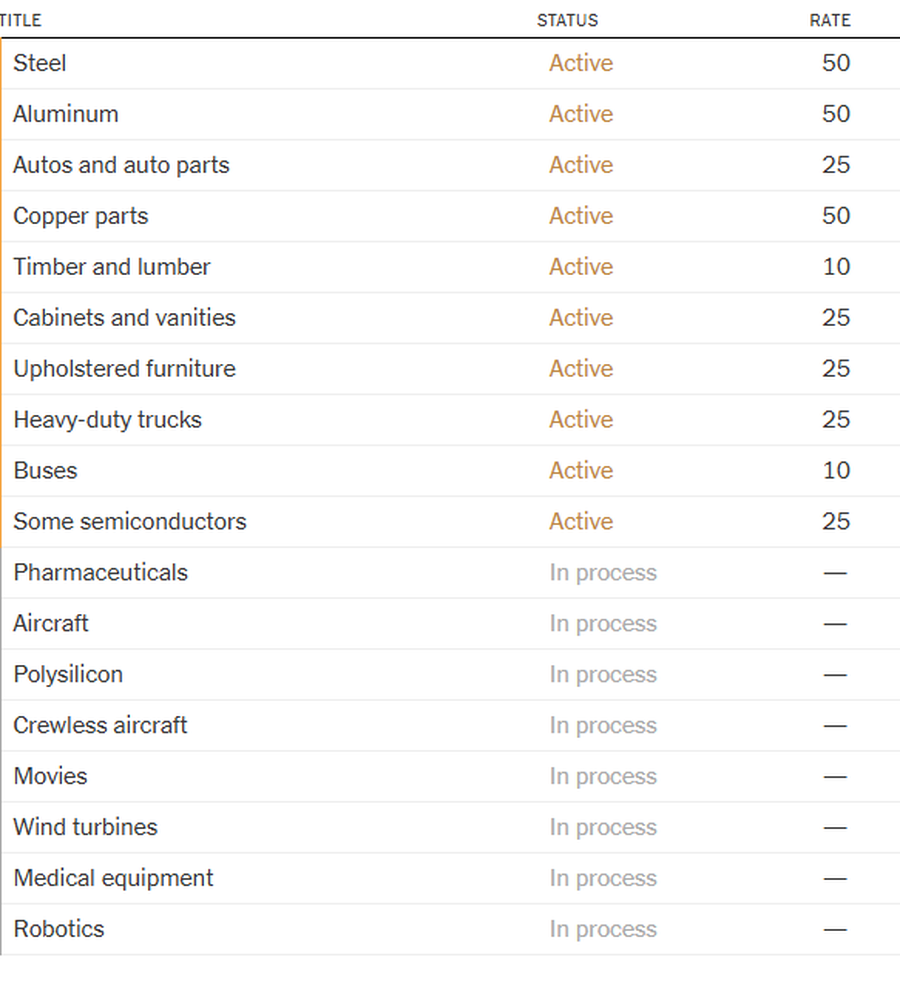
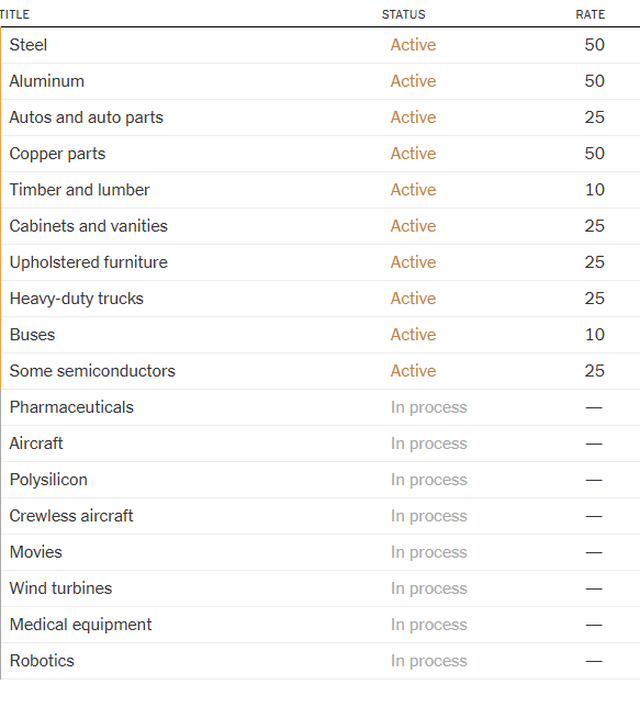
The Supreme Court's decision does not affect tariffs imposed on specific products for national security reasons (Section 232). Currently in force are, among others:
Steel and aluminum: 50%
Vehicles and their parts: 25%
Copper parts: 50%
Certain wood products and furniture: 10–25%
Certain semiconductors: 25%
The administration has also launched investigations into possible tariffs in other sectors such as pharmaceuticals, wind turbines, medical devices and robotics.
China
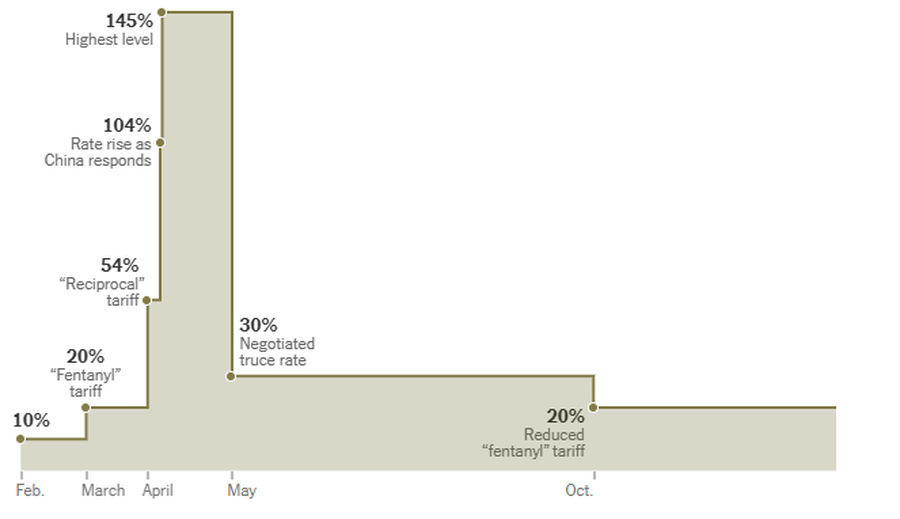
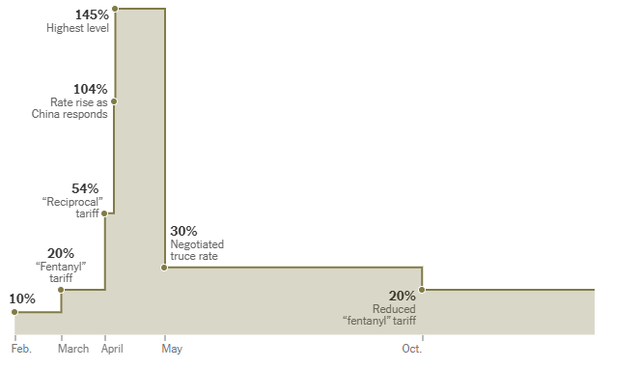
China remains the main target of the Trump administration's trade policy. Over the past year, the two countries have engaged in a tariff escalation that reached as high as 145% at its peak, before reaching a truce that lowered the rate to 30%. Some of the tariffs have been justified by the issue of fentanyl trafficking and trade practices that the US considers unfair.
Canada and Mexico
In early 2025, the President imposed a 25% tariff on all imports from Canada and Mexico, arguing that those countries had not done enough to curb fentanyl trafficking. The administration later modified the measure to align it with the USMCA agreement. A review of that agreement is expected later this year.
Removal of the “de minimis” exemption
The administration ended the “de minimis” exemption in late August, which allowed imports of up to $800 to be duty-free. According to The New York Times, about 60% of these shipments came from China and Hong Kong. The removal of this exemption directly affects e-commerce and American consumers.
Economic consequences
According to an analysis by The New York Times, the President's objectives remain the same: increasing federal revenue, boosting domestic manufacturing, and overhauling the global trade order.
However, financial markets have reacted with volatility to the uncertainty, while economists warn that the tariffs could increase costs for American businesses and consumers, who usually bear the ultimate burden of customs duties. /Adapted from Pamphlet /







Lini një Përgjigje