


 Shkruar nga Pamfleti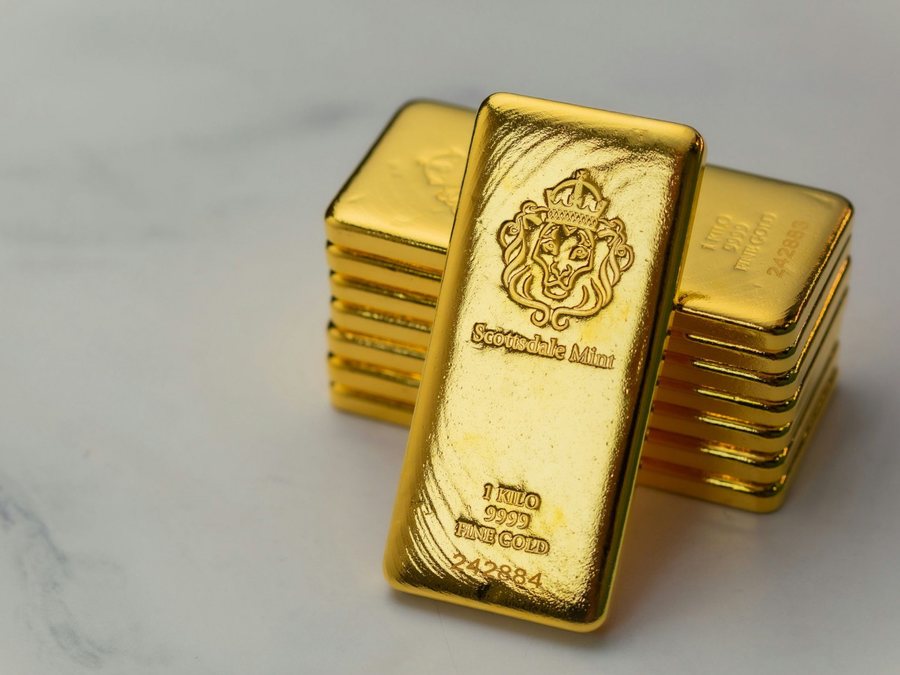
Gold, the new haven of capital...
"The simple fact that prices have risen by more than a thousand dollars since the beginning of the summer is an indication that we are in the stratosphere," the Financial Times wrote yesterday in an article dedicated to the fall in the price of gold by more than 5%, the biggest daily drop since 2020.
Today, prices are recovering slightly, but historical data from recent years has driven the value of the yellow metal to particularly high levels. So what should you do if you own this asset class in your portfolio or are considering investing in it, perhaps taking advantage of the recent decline?
Two-thirds reassessment since the beginning of the year
2024 was a bullish year for gold, with a 27% gain that put it among the top asset classes. Analysts attributed this to widespread geopolitical uncertainty and concerns about the sustainability of growth in both stocks and bonds.
Thus, few predicted further growth this year, which has so far seen its value increase by about two-thirds, while the S&P 500 (the main index on Wall Street, and therefore worldwide) has appreciated by 12% and the Eurostoxx by 15%.
Several factors are driving this boom. First and foremost, the weakness of the dollar (-11% against the euro since the beginning of the year): given the uncertainty surrounding the US currency created by the decisions of the Trump administration (trade war, attempts to subject the central bank to political control), one of the two traditional assets considered safe havens is disappearing and many investors are transferring capital to the other: the yellow metal.
Markets are particularly important for central banks, with those in emerging markets also moving for geopolitical reasons: to counter the excessive power exercised by the US through its currency.
Moreover, the expectation of further interest rate cuts by the Federal Reserve, in response to conflicting economic data and inflationary pressures, jeopardizes the prospects for further growth in financial assets, increasing the attractiveness of gold, which is a physical commodity.
Prospects for the near future and how to invest in gold
The aforementioned dollar weakness means that euro investors have benefited significantly from the price increase. Looking back, analysts seem confident that the upward trend will continue.
Goldman Sachs recently revised its forecast upward, raising the price to $4,900 per ounce by December 2026, from $4,300 previously.
This revision is based on several factors: strong inflows into commodity-linked ETFs, additional purchases by central banks, and a possible interest rate cut by the Federal Reserve over the next year.
The World Gold Council confirms that 95% of central banks surveyed expect to increase their gold reserves next year, with 43% planning to significantly increase their reserves, the highest percentage since 2018. According to Lombard Odier, "the market is technically overvalued, but tight supply and strong demand continue to support prices."
Tools for small savers
Those wishing to invest in gold have several options, each with its own advantages and disadvantages.
It is possible to purchase ingots or coins, with the advantage that this investment is exempt from VAT and property taxes, but this involves storage costs and lower liquidity compared to financial assets.
Another option is to buy shares of companies that deal in gold (mainly mining companies), given that in this case, prices depend not only on the performance of the commodity, but also on the conditions of the companies themselves. For those who want to diversify their exposure, there are mutual funds, ETFs and ETCs - the former are actively managed, the latter are passively managed.



Lini një Përgjigje