


 Shkruar nga Pamfleti
Four years of decline: fragile export structure deepens in 2026
Exports of goods have started 2026 with a decline, extending a four-year downward trend. According to INSTAT, in January 2026 exports reached 26.7 billion lek, down 4.5 percent compared to January of the previous year and 0.3 percent compared to December 2025. The decline confirms the structural difficulties of the main exporting sectors and the high exposure to external demand.
The annual contraction of 4.5 percent was mainly driven by the groups “Minerals, fuels, electricity” with -2.9 percentage points, “Textiles and footwear” with -1.8 percentage points and “Chemical and plastic products” with -0.4 percentage points. The growth of the group “Machinery, equipment and spare parts” with +1.4 percentage points and “Leather and articles thereof” with +0.1 percentage points partially mitigated the negative effect.
The multi-year performance remains unstable. In 2025, exports reached 346 billion lek, a decrease of 6.1 percent. In 2024, they fell by 16.2 percent and in 2023 by 9.5 percent. Historical data shows that since 2015, exports have fallen in seven years and have increased only in the periods 2017–2018 and 2021–2022, mainly as a recovery effect after previous crises.
The textile and footwear sector, which accounts for about 30 percent of total exports, generated 8 billion lek in January, down 5.8 percent year-on-year. According to industry representatives, weak demand in European markets, the shift of investors to lower-cost countries, and uncertainty in German industry have negatively affected orders. The sector remains sensitive to exchange rates and domestic labor costs.
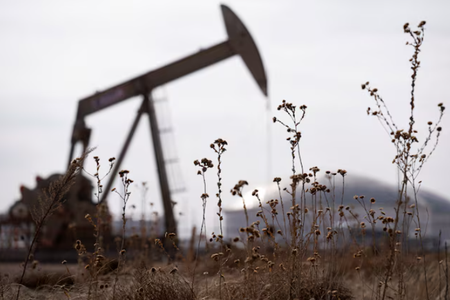
The group “Minerals, fuels, energy” exported 5.4 billion lek, down 13.2 percent. The contraction is related to the limited activity of one of the main oil exporters, in a context of unstable international prices and unresolved fiscal issues. This group accounts for about 20 percent of total exports, which increases its impact on the aggregate figure.
Exports of “Food, beverages and tobacco” reached 3.7 billion lek, down about 2 percent, impacted by the January floods that affected agricultural production in greenhouses. Meanwhile, “Construction materials and metals” recorded 3.8 billion lek, almost at the same level as a year ago, temporarily halting the deep decline of 2025, linked to the suspension of the activity of a major steel producer.
On the positive side, the “Machinery, equipment and spare parts” group grew by about 13 percent, to 3.4 billion lek. The automotive support industry has reported an increase in orders since the end of last year. However, companies face pressure from labor shortages, the depreciation of the euro against the lek, and rising wage costs.
Imports also declined. In January 2026, they reached 57.9 billion lek, down 4 percent year-on-year and 27.5 percent compared to December 2025. The contraction was mainly driven by the groups “Construction materials and metals”, “Minerals, fuels and electricity” and “Chemical and plastic products”, while “Machinery, equipment and spare parts” contributed positively.
As a result, the trade deficit reached 31.1 billion lek, down 3.6 percent compared to January 2025 and 41.3 percent compared to December 2025. The improvement in the deficit is related to the contraction of imports to a similar extent as exports, not to an expansion of the export base.
In terms of geography, exports to Italy and Kosovo fell, while they increased significantly to Germany and Greece. Imports decreased mainly from Italy and Greece, while they increased from China and Turkey. European Union countries account for 55.4 percent of total trade. In January, 74.1 percent of exports were directed towards the EU and 46.8 percent of imports came from it, which confirms the high dependence of Albanian trade on the European economic cycle.




Lini një Përgjigje