


 Shkruar nga Pamfleti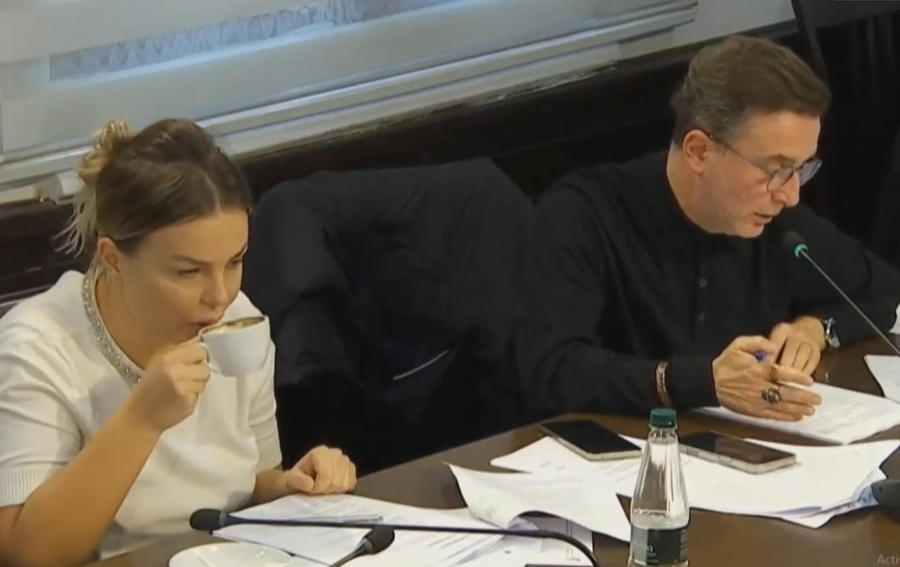
The Economy Committee discussed the draft law on "Concessions and Public Private Partnerships", which provides for new restrictions on the conclusion of contracts.
In the proposed draft law, institutions are required to make public the bid price, price list, catalog, information regarding bid selection criteria, and public documents.
The draft states that for each concession, a feasibility study must be conducted in advance and approved by the Ministry of Finance, after all costs-benefits and risk implications for the state budget have been analyzed.
During the discussion in the Committee, Socialist MP Erion Braçe focused on Article 4 of the draft law, which, among other things, lists prisons as an option that can be granted with concessions.
"I am reading in Article 4 that the prison system is also there. This is a public service, of national importance. It has to do with national security and no one can imagine giving prisons on a concession basis. Likewise, public administration buildings that are given on a concession basis, then what is left for the state, if even one building of a public institution is built by a private company? What is left for the state if a private company builds them all. This Article 4 is aligned or similar to any EU law," said Braçe.
But Emiliano Gjika, director of ATRAKO, responding to the socialist MP's concerns, said that this is the EU directive.
"This article is a copy paste of the EU directive," said Gjika.
He also said, "in the new draft law, we have removed from the list of concessions the point that was for symbolic contracts for 1 euro."
According to the Government, the draft law establishes clear rules for the planning, awarding, administration and supervision of concession contracts, based on the principles of transparency, non-discrimination, proportionality and legal certainty.
"The draft law aims to unify competitive procedures; strengthen ex-ante and ex-post control by the Ministry of Finance; guarantee transparent rules for the implementation and monitoring of contracts; manage risks and share them between parties; harmonize with EU standards; increase the supervisory role of the Ministry of Finance, APP and ATRAKO, as well as promote best value for money and protect the public interest," said Blerta Rama, Deputy Minister of Economy.
According to her, the draft law supports the government's priorities for economic growth by mobilizing private capital in areas such as infrastructure, energy, environment, tourism, health and education.
"It is part of the General Analytical Plan of Draft Acts for 2025, the National European Integration Program and the public finance management strategy, contributing to fiscal consolidation and improving the business climate," she stated.








Lini një Përgjigje