


 Shkruar nga Pamfleti
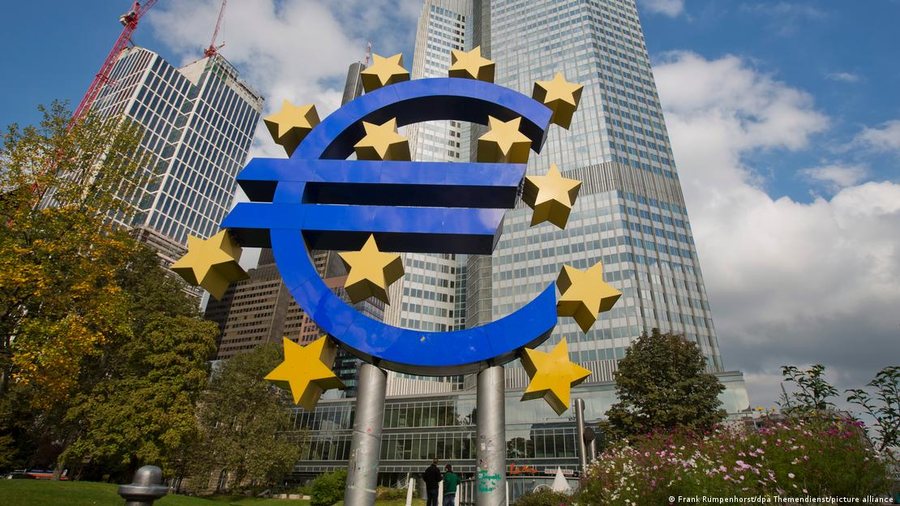
The euro against the US dollar is at its highest level since 2021. This has implications for European businesses and consumers. Should the European Central Bank (ECB) intervene?
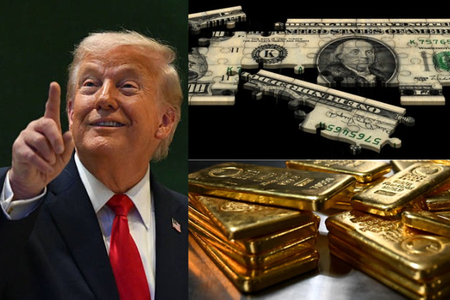
The US dollar continues to lose value against other major currencies, following the trend of 2025. Last year, the US currency recorded its strongest loss in almost a decade.
The minus against a group of other currencies in 2025 amounted to about 10 percent. Since the beginning of 2026, the decline has been another minus 2.6 percent.
The dollar's loss of value has repercussions for the euro and other currencies. The European single currency has reached $1.20 for the first time since 2021. The British pound and the Japanese yen have also risen against the dollar to record levels.
Some economists and analysts explain the continued losses in the dollar's value with investors' lack of confidence in the US currency, as the unpredictability of President Donald Trump's policy continues to give cause for concern.
There is another perspective, according to which Trump himself and many members of his economic team want a loss in the value of the dollar, in the hope that exports from the US will be at more favorable prices and thus increase competitiveness.
Trump has not attempted to refute this speculation. On the contrary, when asked this week if he was worried about the weak dollar, he replied: "No, it's very good."
Stephen Miran, former chief of staff to Trump's economic advisers and now a member of the board of governors of the US Federal Reserve Bank, published a "Guide to Restructuring the Global Trading System" in November 2024. Tariffs and dollar depreciation were presented as important instruments to reduce the US trade deficit.
Why does this affect Europe?
The weakening dollar has an effect not only on the US economy, but also has consequences for the eurozone economy and the euro. The common currency has gained 13 percent in value against the dollar in 2025, the strongest increase since 2017.
The strengthening of the euro plays "an important role for economic performance, the labor market and the financial position of budgets" in the EU, says Jack Allen-Reynolds, deputy chief economist for the eurozone at Capital Economics.
"A stronger euro reduces the competitiveness of exports, which hurts producers in the region. On the other hand, imports are cheaper, which leads to lower prices for consumers," Allen-Reynolds tells DW.
Ricardo Amaro, chief economist for the eurozone at Oxford Economics, draws attention to the fact that a further increase in the euro against the dollar could increasingly affect the competitiveness of European companies that export to the US.
This is indeed offset by the favorable price of US products in Europe, according to Amaro. But overall, the current exchange rate, if it remains like this, would have a negative effect on economic growth in Europe.
"According to our calculations, the eurozone's gross domestic product this year would be around 0.2 percent lower if the euro-dollar exchange rate remains at the current level (1.20 USD), instead of the 1.16 dollar rate that served as the reference point in the EU-US trade agreement at the end of July," says Amaro.
Should the ECB intervene?
The rise of the euro against the dollar has fueled speculation about whether intervention by the European Central Bank is necessary.
Martin Kocher, governor of the Austrian Central Bank, considers the current rise of the euro to be "moderate." If the value of the euro continues to rise, the ECB must intervene.
Now the ECB is trying to influence market expectations, while high-level ECB representatives state that they are "monitoring the situation and expressing reservations regarding recent developments. This raises the topic of lowering interest rates to curb the growth of the euro," says Ricardo Amaro.
Jack Allen-Reynolds also believes that there is no need to intervene at the current level of exchange rate movements. But he believes that further changes could prompt the ECB to lower interest rates later this year.
While Zsolt Darvas argues that the current consequences related to inflation are almost zero and no sector is particularly sensitive.
"Exchange rates have fluctuated strongly in recent decades. Businesses are prepared to withstand even stronger fluctuations than those we are currently seeing," Darvas estimates./ DW






Lini një Përgjigje