


 Shkruar nga Pamfleti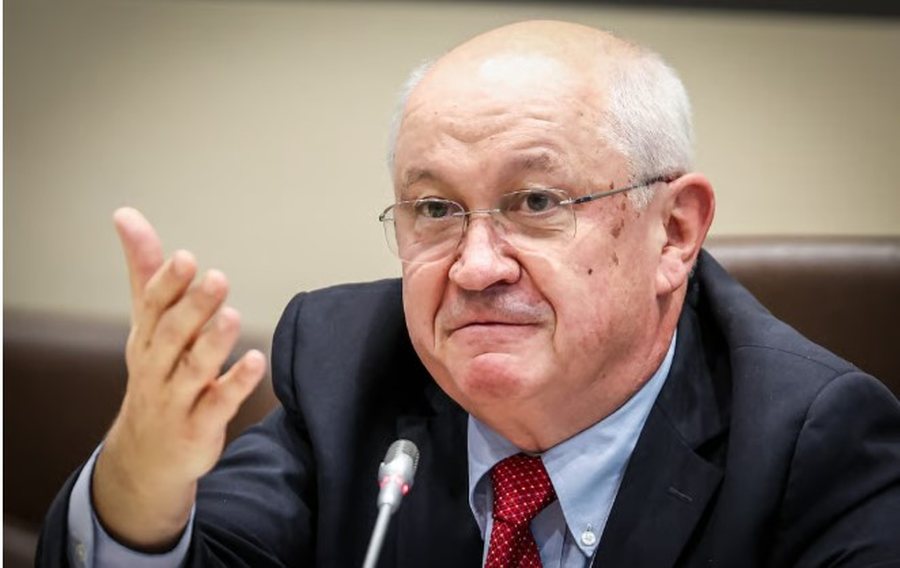
President Maia Sandu will consult with party leaders next week on the appointment of a new Prime Minister, emphasizing that the pro-European Union course remains unchanged...
Moldovan Prime Minister Alexandru Munteanu announced his resignation on Friday, ending the pro-European government he had led since November last year.
In a Facebook post, Munteanu said he had accepted the position with the belief that he could contribute to improving the situation in the country, but decided to leave when he realized that he could no longer exercise his mandate in accordance with his principles and beliefs.
President Maia Sandu appointed him prime minister in November. Both supported policies aimed at accelerating Moldova's accession process to the European Union.
However, Munteanu's rule was accompanied by a series of scandals in ministries and state-owned enterprises.
Last month, the director of the civil aviation safety agency MOLDATSA, Dumitru Vangeli, was dismissed after authorities found that his university degree and pilot's license were forged. On Thursday, the state secretary at the Ministry of Agriculture, Tatiana Nistorică, was detained on suspicion of taking bribes.
Vangeli has publicly denied the allegations, while Nistorică has not yet commented on the case.
After announcing her resignation, President Sandu stated that she expects from the next government "more commitment in making difficult decisions and a stronger public presence to listen to the concerns of citizens."
She also rejected the implicit claim by Munteanu that he had not had full freedom to face the country's challenges.
"Suggestions that he wanted to combat abuses but was not allowed to do so are untrue. The Prime Minister had a free hand to run the government as he saw fit," Sandu said.
The President announced that next week she will hold consultations with political party leaders to appoint a new prime minister, who will continue the country's pro-European orientation.
"Moldova's path remains unchanged: reforms and membership in the European Union," she wrote on the X platform.
Moldova was granted EU candidate status in 2022. Last month, the bloc's member states voted to open the first round of accession negotiations with Chisinau. Sandu remains a key figure in the pro-European course and leads the political opposition to the pro-Russian Party of Socialists, which is currently the second-largest political force in the country.



Lini një Përgjigje