


 Shkruar nga Freddy Gray
In his attempt to project absolute power through airstrikes and tariffs, Donald Trump is facing a harsh reality: rising oil prices and chaos in the Middle East are threatening his domestic stability. The strategy of unpredictability is backfiring politically for his administration…
“Donald Trump is a complicated person with simple ideas,” Kellyanne Conway once said. This remains the most accurate formula for deciphering the 45th and 47th president of the United States.
While his turbulent personality produces constant chaos, his political compass has remained unwavering: protecting American trade, forcing NATO allies to pay their defense bills, and eliminating terrorism.
However, when it comes to implementing these ideas, his more complex side emerges. Trump believes in a strange cocktail of intimidation and diplomacy, of war and peace. “We Americans must be unpredictable!” he warned back in 2016.
Today, his second administration has turned the “madman theory” into an operational doctrine. To shake up the financial system, he used trade tariffs as a sledgehammer; to show the narco-states that he was serious, he kidnapped Nicolas Maduro; and to scare NATO, he threatened to annex Greenland.
But nothing compares to what is happening now in the Middle East. Operation Epic Fury, his frontal assault on Iran, has exposed the limits of American power. A bold president with the most powerful military in history can destroy targets, but he cannot dictate the price of oil or control the survival instinct of a hostile regime.
"I knew oil prices were going to go up..." Trump declared on Monday, with a bravado that didn't sound very convincing. His great obsession has always been to lower the price of fuel for American voters, but the war with Iran is having the opposite effect.
At Mar-a-Lago, advisers and donors made it clear: rising oil prices bring inflation, and inflation drives away votes. This also explains why Trump went overnight from demanding “unconditional surrender” to promising that this “excursion” would end very quickly.
However, the midterm election campaign has begun, and Republican strategists know that war is not a winning message. Trump tried to calm markets by promising security in the Strait of Hormuz, but his social media posts - in which he threatened Iran with strikes "20 times stronger" - only increased tensions.
Kur Sekretari i Energjisë, Chris Wright, postoi një video të anijeve luftarake amerikane që shoqëronin një cisternë, çmimi i naftës ra për momentin, por fshirja e menjëhershme e videos dhe sulmet e reja ndaj anijeve në brigjet e Omanit e rikthyen pasigurinë.
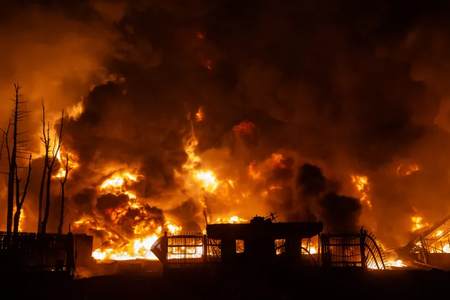
Kriza ka nxjerrë në pah edhe mosmarrëveshjet me Izraelin. Kur avionët izraelitë bombarduan 30 pika nafte iraniane, Pentagoni reagoi me zemërim. “Ky nuk ishte domosdoshmërisht objektivi ynë” - u shpreh Sekretari i Luftës, Pete Hegseth, duke treguar se është i dobët koordinimi mes Uashingtonit dhe Tel Avivit.
Trump dhe Netanyahu kanë vënë bast për shembjen e regjimit të Teheranit, por deri tani, Irani nuk po jep asnjë shenjë dorëzimi. Siç vëren Jennifer Kavanagh nga Defense Priorities, Irani po aplikon një strategji me kosto të ulët por me ndikim të lartë global.
Mjafton të lëshojë disa dronë për të mbyllur aeroportet rajonale dhe për të goditur infrastrukturën energjetike, duke e mbajtur Trumpin “të bllokuar në një cep”. Iranianët e
kanë quajtur përgjigjen e tyre “Operacioni i Çmendur”, duke përdorur logjikën se e vetmja mënyrë për të luftuar çmendurinë është të jesh edhe më i çmendur se kundërshtari.
Problemi me këtë lloj përballjeje, është se nëse Amerika dhe Izraeli nuk mund të imponojnë një ndryshim regjimi, ata thjesht po “kositin barin”. Dhe me fanatikët islamikë, sa më fort që të kositësh, aq më të shumë rriten ata.
Në Venezuelë, zëvendësimi i Maduros me Delcy Rodriguez dukej se funksionoi, por në Iran, vrasja e Khameneit dhe bashkëpunëtorëve të tij ka prodhuar një strukturë edhe më radikale dhe të decentralizuar. Teherani ka emëruar djalin e Khameneit, Mojtaba, si Udhëheqës Suprem - një figurë edhe më pak e prirur për kompromis.
Kjo do të thotë se mund të jenë hedhur në erë rrugëdaljet diplomatike nga kjo krizë. Strategjia e “realizmit fleksibël” e Donald Trumpit po duket gjithnjë e më shumë si një dështim epik. Ai do të përpiqet të shpallë fitoren dhe të kthejë anijet në shtëpi, por historia mund ta gjykojë ndryshe.
Trump po përgatit tashmë justifikimin zyrtar: ai u detyrua të vepronte sepse Irani ishte gati të ndërtonte bombën bërthamore. Dhe si gjithmonë, përgjegjësia do t'u mbetet këshilltarëve – Jared Kushner, Steve Witkoff, Pete Hegseth dhe Marco Rubio.
“Shtetet e Bashkuara e konsideruan të patolerueshme situatën” - tha ai, duke lënë të kuptohet se thjesht dëgjoi njerëzit e tij. Megjithatë, mbështetësit e tij më besnikë po pyesin pse ai injoroi zërat e kujdesshëm dhe dëgjoi “skifterët” e vjetër si senatori Lindsey Graham.
Kjo luftë e ka tronditur lëvizjen MAGA. Qarkullojnë zëra për dorëheqjen e shefes së stafit, Susie Wiles, dhe po bie në sy heshtja e J.D.Vance, i cili filozofikisht është kundër ndërhyrjeve të tilla.
Trump thuhet se po bën sondazhe mes të ftuarve të tij në Mar-a-Lago se kush do të ishte pasardhës më i mirë: Vance apo Rubio? Ky interesim për pasardhësin, sugjeron se ai mund të jetë duke humbur entuziazmin për punën.
Instead of a 2026 full of celebrations for the 250th anniversary of the founding of America and the World Cup, Trump finds himself scattered among coffins returning to the Dover military base and difficult questions about the mistakes of Artificial Intelligence on the battlefield.
"No other president could do any of the things I'm doing," he boasted.
And maybe he's right: no other president would want to be in this position./ Prepared by Pamphlet


Dikur perdorej shume fjala bimbo per tipa rrmbythje.