


 Shkruar nga Pamfleti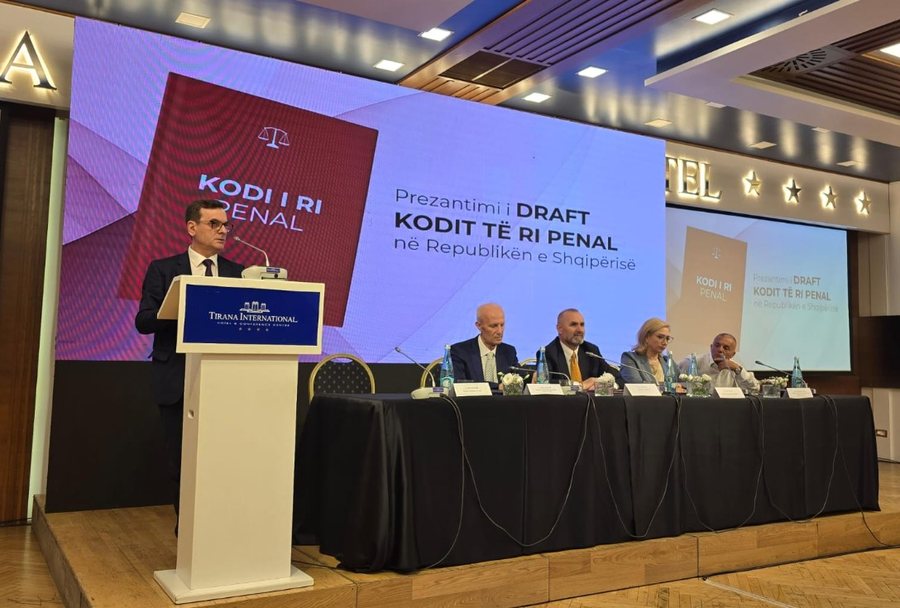
While the majority talks about modernizing criminal legislation, behind the scenes, a silent amnesty is being prepared for abuse of office and public procurement affairs...
In the middle of a hot July, when the country is facing fires, social tensions and a lack of public peace, an unexpected meeting and a draft eagerly distributed by Prime Minister Edi Rama on social media brought a sensitive topic into the spotlight: changes to the Penal Code. Called by the government an "academic discussion", the activity involved several figures who are actually better known for their connections to power than for their professional independence.
Despite the fact that the meeting was presented as an expert roundtable, there was neither transparency about the origin of the draft, nor a real discussion about the consequences of the changes. In other words, what was presented as a consultation process was nothing more than a prelude to a premeditated political initiative.
Meanwhile, the position of the prosecutor general, who spoke of a "Norwegianization of justice" and strongly opposed the idea of tightening measures for certain crimes, raises questions about his role in this debate. Instead of demanding a reinforcement of penalties for corruption and abuse of office, he positioned himself as a critical voice towards the initiative, but avoiding its real essence.
Behind this facade, a much more important move is being prepared. Reliable sources claim that the most significant part of the changes to the Criminal Code has not yet been published. It is expected that in the "second version" of the project, the key article will be released: the decriminalization of the criminal offense of "abuse of office" and the decriminalization of violations in public procurement.
This change is not accidental. If it happens, it will serve as a "silent amnesty" for many officials involved in serious justice files, including investigations opened by SPAK. In this way, a good part of the characters who are currently at the center of investigations for abuse of public funds or for flagrant violations of the law will be removed from the radar of criminal punishment.
The amendments being prepared may be sold as compliance with EU standards, citing that some European countries do not include abuse of office in the Criminal Code. But this is only a formal justification. In reality, Central and Northern European countries do not have the same widespread level of corruption and use other mechanisms for punishment. Meanwhile, in Mediterranean countries and the Balkans, abuse of office remains one of the most effective tools for investigating and punishing public corruption.
With this initiative, the majority is expected to carry out a double maneuver: in public it will appear as a force that improves the Criminal Code in accordance with European recommendations, while in reality it will build a path of salvation for its compromised officials.
If this scenario comes to fruition, it is expected that not only will important investigative processes be interrupted, but the credibility of the justice reform and the rule of law itself will also be fundamentally damaged.
For this reason, it is imperative that this initiative comes to light in open public debate and be faced with transparency. Because any change that directly affects the way corruption is punished in the country cannot be made silently, in the corridors of power or in offices funded by foundations./ Pamphlet








Lini një Përgjigje