


 Shkruar nga Gjergj Zefi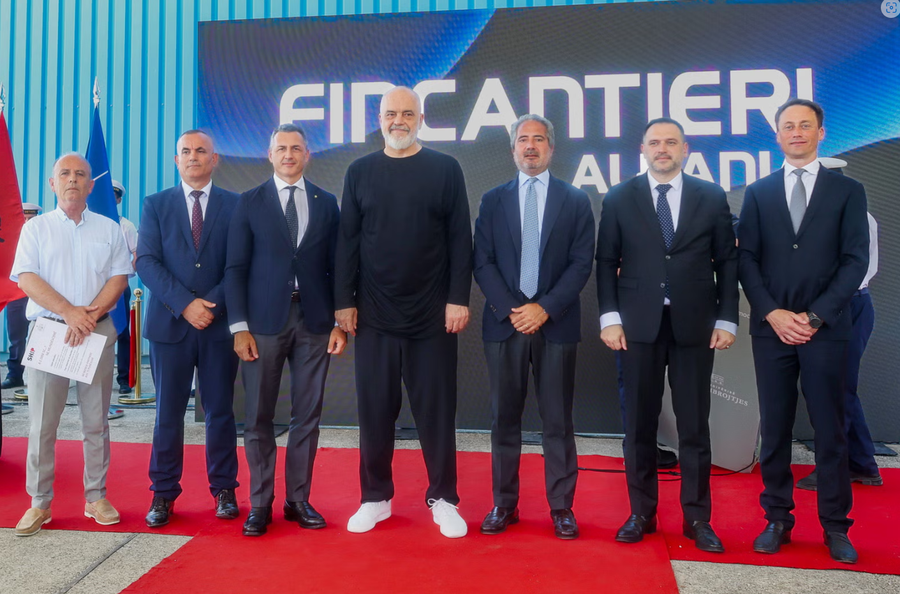
Faced with growing popular discontent at home, Edi Rama is using the defense budget as a bargaining chip to woo the great powers. But this gamble with the state's fragile finances could quickly turn into the boomerang that will seal his political downfall...
In today's geopolitics of the Western Balkans, security and arms trade are no longer simply matters of national defense. They have become instruments of Edi Rama's survival and political legitimacy.
Under constant pressure from Washington to meet NATO objectives and increase defense spending to 2 percent of Gross Domestic Product, the Albanian prime minister has built a multi-port diplomacy, maneuvering simultaneously between Paris, Rome, Ankara, and Tel Aviv.
This model of diplomacy, sold to Albanians as a great strategic success, in reality reflects pure Machiavellian pragmatism.
Rama buys silence and international support, while passing the financial bill to Albanian citizens, who are increasingly opposing him due to poverty, corruption, and misgovernment.
In his political vision, the path to the European Union does not pass through real reforms, the fight against organized crime, or the strengthening of the rule of law.
It is paved with multi-million dollar military contracts that directly feed the defense industry of major European powers.
This logic was clearly seen with the agreement to purchase the Mobile Air Surveillance System from France.
The main political benefit of this transaction appears to be getting closer to President Emmanuel Macron and securing his support for the European integration process.
But behind the facade of modernization lies a very high maintenance bill for a limited state budget.
The same scheme is being followed with Italy, through the joint venture "Fincantieri Albania" at the historic base of Pashaliman.
On the other hand, the relationship with Recep Tayyip Erdoğan's Turkey proves that Edi Rama's arms geopolitics is not guided by ideological principles, but by the interest of the moment.
Although political relations with Ankara have cooled significantly in recent years, Rama has not hesitated to sign a contract with the Turkish state-owned manufacturer MKE for the purchase of six BORAN 105 mm cannons and related ammunition.
It remains to be seen whether this transaction will serve to smooth relations with Erdoğan.
On the one hand, it modernizes Albanian artillery at a lower cost than Western alternatives.
On the other hand, it risks increasing distrust in some European capitals.
Berlin and Paris view with reservation the expansion of Turkey's political and military influence in the Balkans.
In this diversification strategy, the partnership with Benjamin Netanyahu's Israel constitutes another important move.
The registration in Albania of the Elbit Systems company branch followed a contract worth around $400 million to supply the armed forces with mortars, drones and the establishment of an aviation school in Vlora.
The technological benefit is indisputable.
Albania gains access to one of the most advanced defense industries in the world.
But even here serious problems arise.
The lack of transparency in decision-making indicates a strong concentration of power.
Meanwhile, the use of sovereign guarantees, where the state assumes the financial burden of loans, increases long-term liabilities on Albanian taxpayers.
Likewise, the fact that Elbit Systems has faced procedural suspensions from the NATO Procurement Agency (NSPA) raises questions about how these partnerships are being managed.
This creates the impression that, for Edi Rama, maintaining political relations with Tel Aviv is more important than rigorously respecting the Alliance's standards.
In the end, the geopolitics of the arms trade is turning into a high-risk gamble played at the expense of Albanians.
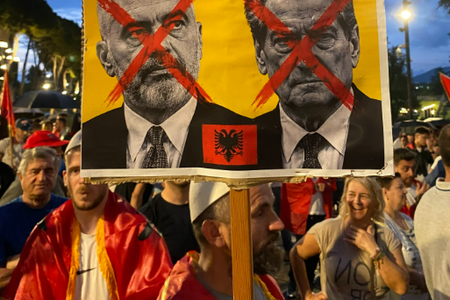
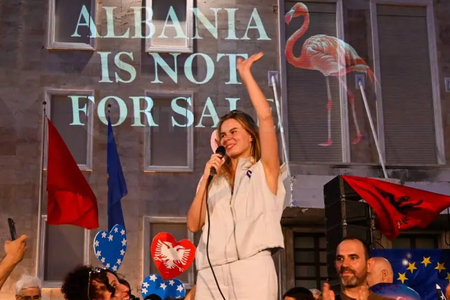
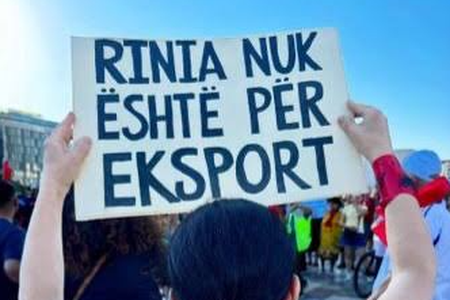
And this happens precisely at a time when the government is facing deep internal dissatisfaction, with protests, poverty, lack of perspective, and ongoing depopulation.
While the prime minister seeks to shine at international tables and present himself as an important geopolitical actor, the cost of this image is being paid with transparency, accountability, and the money of Albanian citizens./ Pamphlet


Lini një Përgjigje