


 Shkruar nga Pamfleti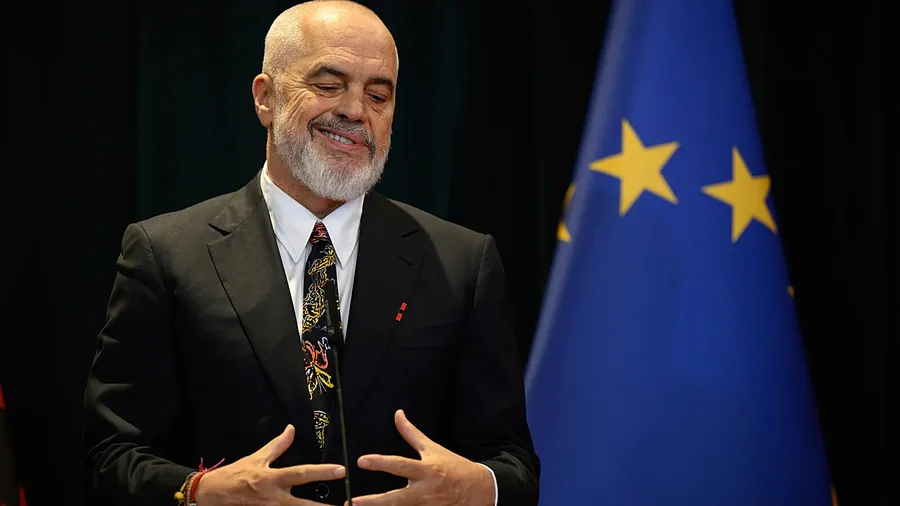
Corruption scandals among the ruling elite threaten to slow Albania's progress towards the EU...
The past year has been a dynamic one for transatlantic ties, and the Western Balkans was no exception. In 2025, countries in the region continued to look to the United States, the European Union, and each other for increased economic investment, expanded infrastructure links, and greater regional stability. At the same time, Washington sent mixed signals about the nature and sustainability of its future engagement with Europe, while Brussels remained unclear about the EU membership timeline for several Western Balkan countries.
If the trends of 2025 continue into the current year, the countries of the Western Balkans may increasingly need to take on greater responsibilities to shape their own strategic directions. Below is a summary of key developments over the past year and issues to watch in 2026 in this important region.
Albania
Albania is expected to continue to be among the leading Western Balkan countries on the path to European Union membership in 2026, along with Montenegro. There is high optimism in Tirana that negotiations can be concluded by 2027, while the country is also in the preparatory stages to welcome the NATO Summit in 2027, a major event that will put international attention on Albania.
However, corruption scandals among the ruling elite threaten to slow the country’s progress towards the EU. In 2025, Tirana Mayor Erion Veliaj was convicted of corruption and money laundering, and the prosecution brought corruption charges against former Deputy Prime Minister Belinda Balluku, leading to her temporary removal from office. Furthermore, the National Agency for the Information Society (NAIS), the main government body for technology and information, is under investigation for alleged manipulation of public procurement.
These developments underscore the deep corruption challenge that Albania faces and the clash between anti-corruption institutions and entrenched political and economic interests. While Prime Minister Edi Rama has made good progress in talks with the European Union, these scandals will exert additional pressure from Brussels and could slow the pace of membership negotiations.
In 2026, it will be essential for Tirana to intensify structural reforms, strengthen the independence of law enforcement institutions, and demonstrate concrete results in the fight against corruption, in order to maintain the opening of negotiation chapters and the trust of European partners.
Other countries
During 2025, relations between Kosovo and the United States deteriorated, while the US–Kosovo strategic dialogue was suspended in September by the US administration for two reasons: lack of visible progress in establishing the Association of Serbian Municipalities under the 2023 Ohrid Agreement and the inability to form a stable government after the elections.
Following early parliamentary elections in December, Prime Minister Albin Kurti's party won a larger number of seats in parliament, which could facilitate the formation of a governing coalition. The presidential elections in March 2026 are expected to be another opportunity to resolve the political deadlock.
For Bosnia and Herzegovina, the year 2025 was also partly a reflection on the past, with leaders celebrating the thirtieth anniversary of the Dayton Peace Agreement, which ended the Bosnian war.
Questions about the future have been raised over the past year, especially after conflicting signals from the White House and the US Congress. For example, the Western Balkans Democracy and Prosperity Act, included in the Defense bill for fiscal year 2026, provides for sanctions against those who threaten peace, security, stability, and territorial integrity in the region. However, a few weeks ago, the US Treasury lifted sanctions on Milorad Dodik, the former Moscow-friendly leader of Republika Srpska, even though he continues to threaten to turn the entity into an independent state, challenging Bosnia and Herzegovina.
The US National Security Strategy for 2025 raises questions about American engagement in Europe in the coming years. A reduction in the US focus on Europe could have consequences for Bosnia and Herzegovina, which has based its institutional stability on international partnerships since the 1990s.
Montenegro moved closer to Europe by 2025, advancing economic development and strengthening its security and defense capabilities. It closed several chapters of EU accession negotiations, welcomed a European Investment Bank office, and contributed to NATO and EU efforts against Russian aggression in Ukraine.
North Macedonia has made limited progress towards EU membership by 2025, marking improvements in the rule of law, public administration reform, and the functioning of democratic institutions. However, the accession process continues to be viewed with skepticism, particularly due to ongoing constitutional demands imposed by France and Bulgaria for recognition of the Bulgarian minority. / Adapted from “Pamphlet” by “ Atlantic Council ”

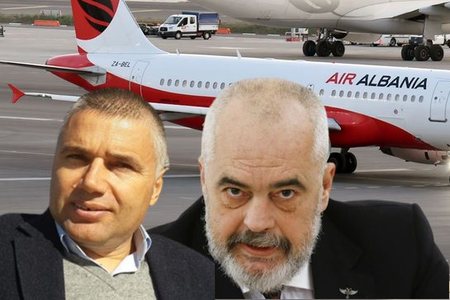





Ato nuk jane afera. Jane megaskandale, jashte cdo lloj tolerance. Eshte ulur kembekryq krimi organizuar i cili mbante lidhje me kryeministrin nepermjet koordinatorit te krimit Gys Agasi. Te gjithe e dinin ne kete vend dhe para se te plaste. U be Gysi si pare kuqe. Te bente minister, drejtor te pergjithshem, lere me poshte. Ka degraduar gjithcka. Zvarritet por me kot. Ja kane cjerr aq shume masken sa me keq e zi nuk behet. I fshehur pas fjaleve boshe, kostumeve super te shtrenjta paska qene nje ordiner, llum qe se ka njohur historia. E ka te afert diten. Nuk kuptoj pse rri akoma. Nuk ka asnje fije dinjitet. Kush na qeveris mjerr ne.