


 Shkruar nga Pamfleti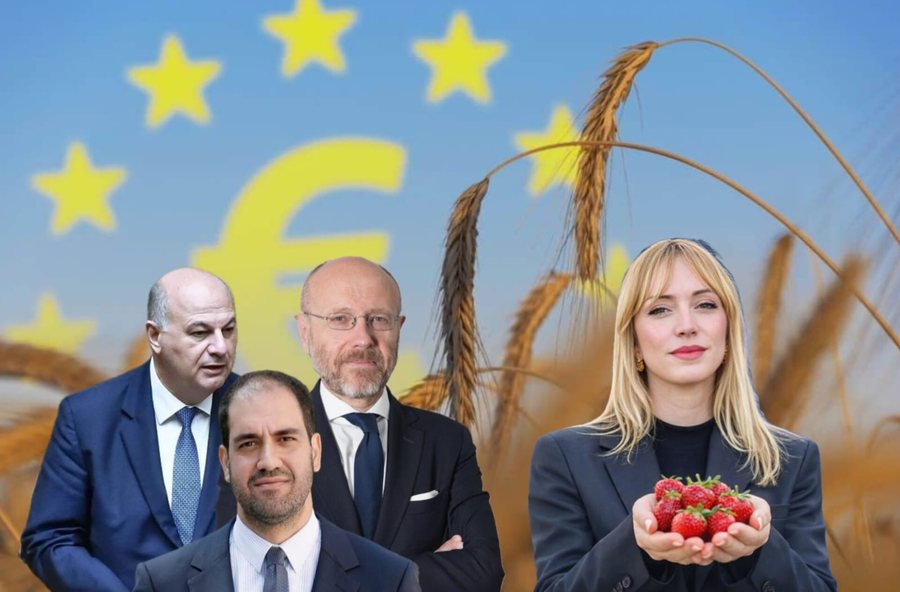
As Prime Minister Rama says, "corruption exists in Western countries too," but unlike the West, we in Albania do not bring the corrupt to justice...
"Such events are even made into movies"; "There is corruption even in Western countries" ! These are some of the most famous phrases of the socialist government used to justify their theft and greed with Albanian funds and taxes, in these 13 years of power.
These comparisons are taken by the government only to justify the negative context and the argument is not continued further to show us how these countries act in such cases.
A scandal similar to the one that occurred with IPARD funds in Albania has erupted in neighboring Greece. After an investigation by the European Public Prosecutor's Office, it was revealed that there was abuse of agricultural funds.
The investigation into the case relates to events dating back to 2021 and involves serious charges, including incitement to abuse of office, computer fraud and falsification of documents for the purpose of unlawful gain. The full file has been prepared by the European Public Prosecutor's Office, which has identified an organised network suspected of illegally benefiting from agricultural funds.
This major scandal has shaken the political scene in Greece, leading to the resignation of 2 ministers and 1 deputy minister: Yiannis Kefalogiannis, Minister of Civil Protection, Kostas Tsiaras, Minister of Rural Development, and Dimitris Vartzopoulos, Deputy Minister of Health. Also involved are 11 MPs, for whom Parliament will meet on Tuesday in the Ethics Committee, which will discuss the lifting of the immunity of the 11 MPs, allowing the launch of investigations against them.
The scandal has also damaged the reputation of Prime Minister Kyriakos Mitsotakis, adding to the political pressure on his government. In the Greek country, there is no longer talk of a cabinet reshuffle, but of early elections.
On the other side of the border, in Albania, the IPARD funds case has been associated from the beginning with a series of actions by the government that have in practice obstructed the criminal investigation and protected the former Minister of Agriculture, Frida Krifca, despite the direct report from OLAF and the existence of evidence submitted to SPAK.
Instead of an immediate institutional reaction, Krifca was not only not dismissed and investigated, but was later returned to government structures as an advisor to the Prime Minister.
Also, the criminal investigation was held for a long time in the preliminary phase by SPAK, without advancing towards concrete charges, even though according to materials submitted by international partners, the file was considered complete.
In parallel, the government has pursued an approach that focuses on recovering funds through administrative and civil processes, filing dozens of lawsuits against beneficiaries. While these actions essentially acknowledge that there were abuses, they avoid addressing the criminal liability of the officials who enabled the scheme, shifting the focus from political decision-making to individual beneficiaries.

At the same time, the SP's refusal to establish a parliamentary investigative commission and the lack of transparency over the progress of the investigations limited institutional and public scrutiny of the issue.
Even on the legal front, the controversial changes to the Criminal Code related to the EU's financial interests have been aimed at favoring suspects in the IPARD funds case.
Only after continued pressure from the European Union and the risk of losing funding have the investigations started to move, with interrogations and delayed procedural actions. However, there is still no clear progress towards criminal accountability for the main figures mentioned in the dossier.

As Prime Minister Rama says, "corruption also exists in Western countries", except that unlike the West, we in Albania do not bring those accused of corruption to justice, but rather we recruit and appoint them as advisors to 'Bablok'./ Pamphlet



Lini një Përgjigje